
Last updated November 24, 2026
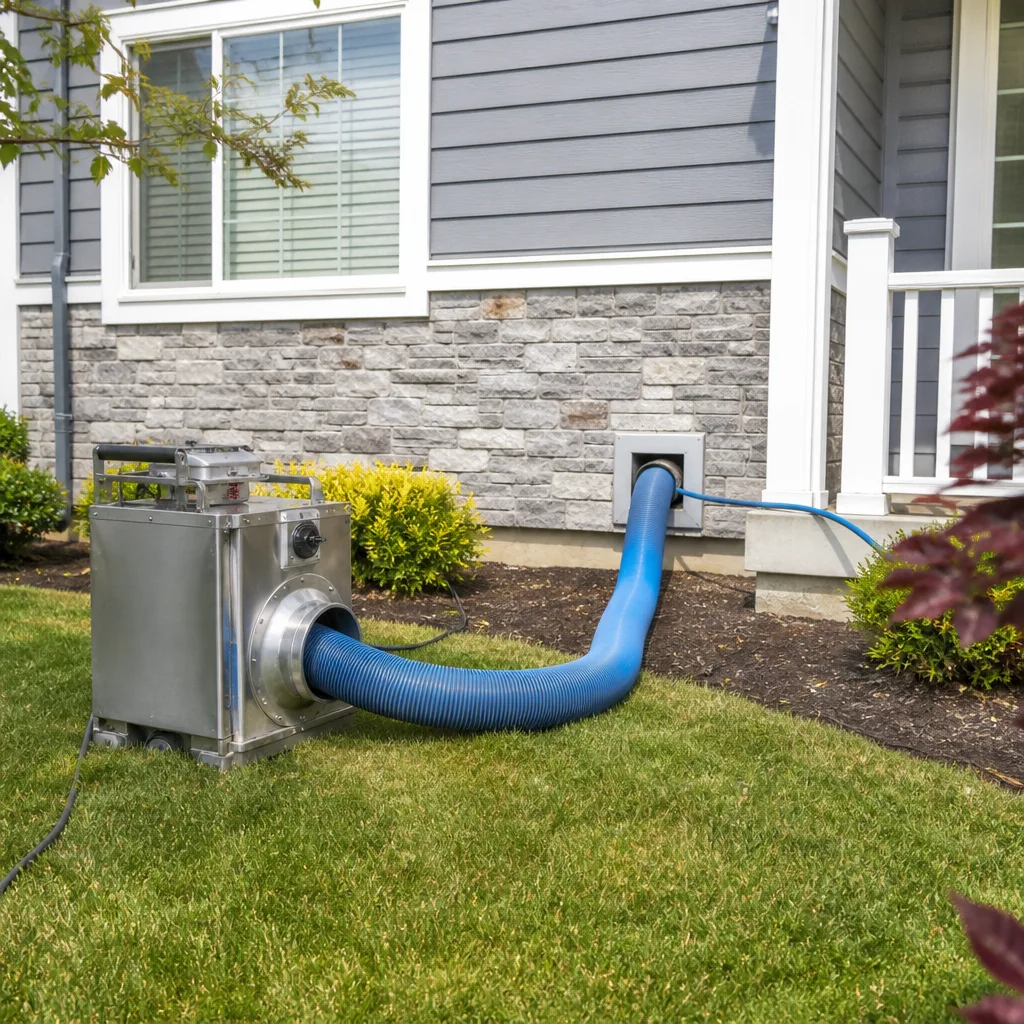 Whole-home duct cleaning
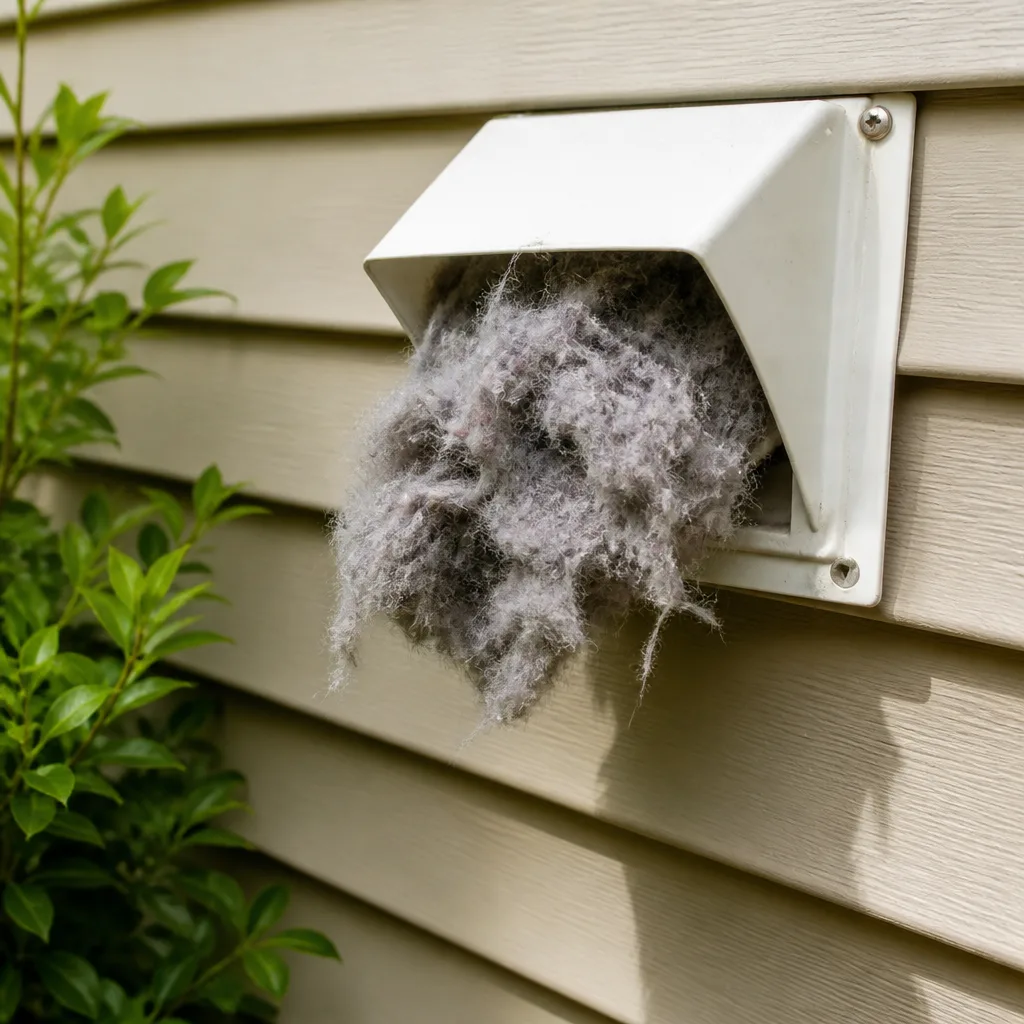 Dryer vent cleaning
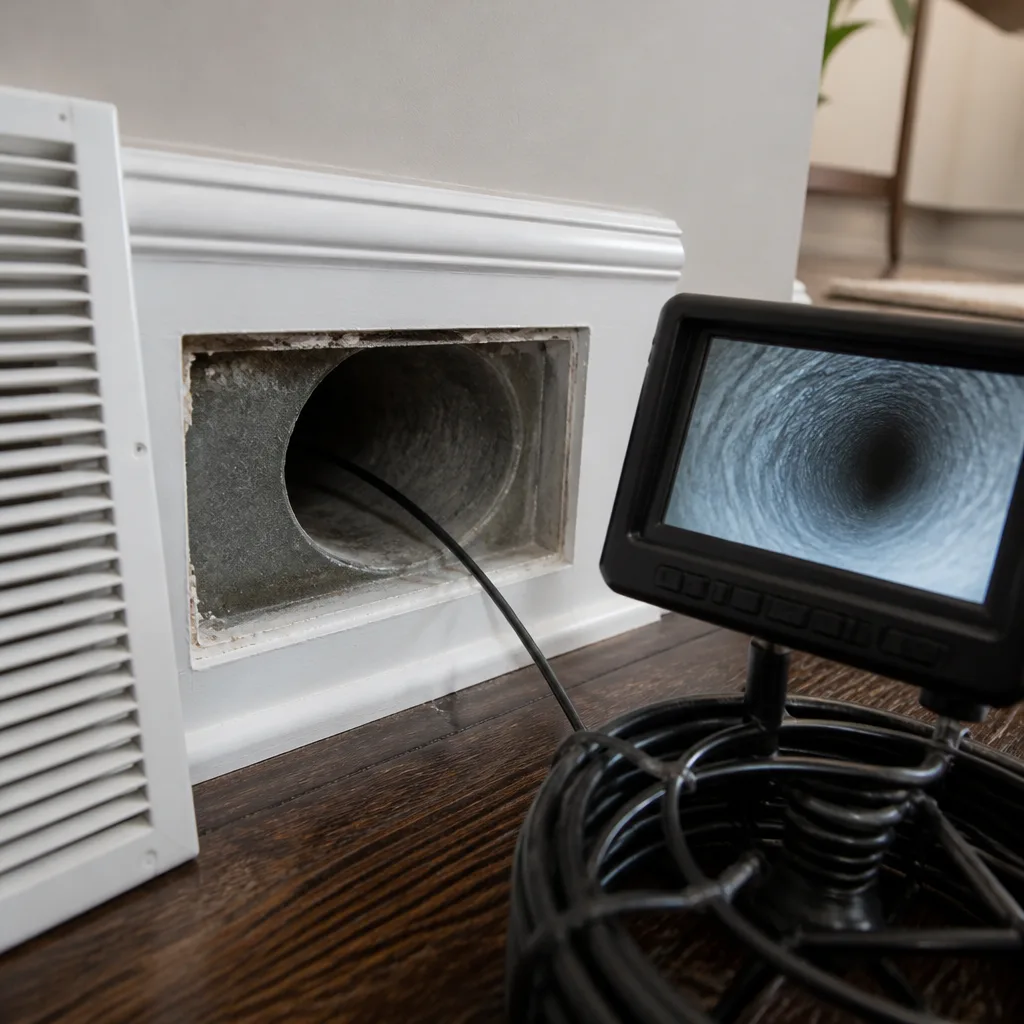 Camera inspection
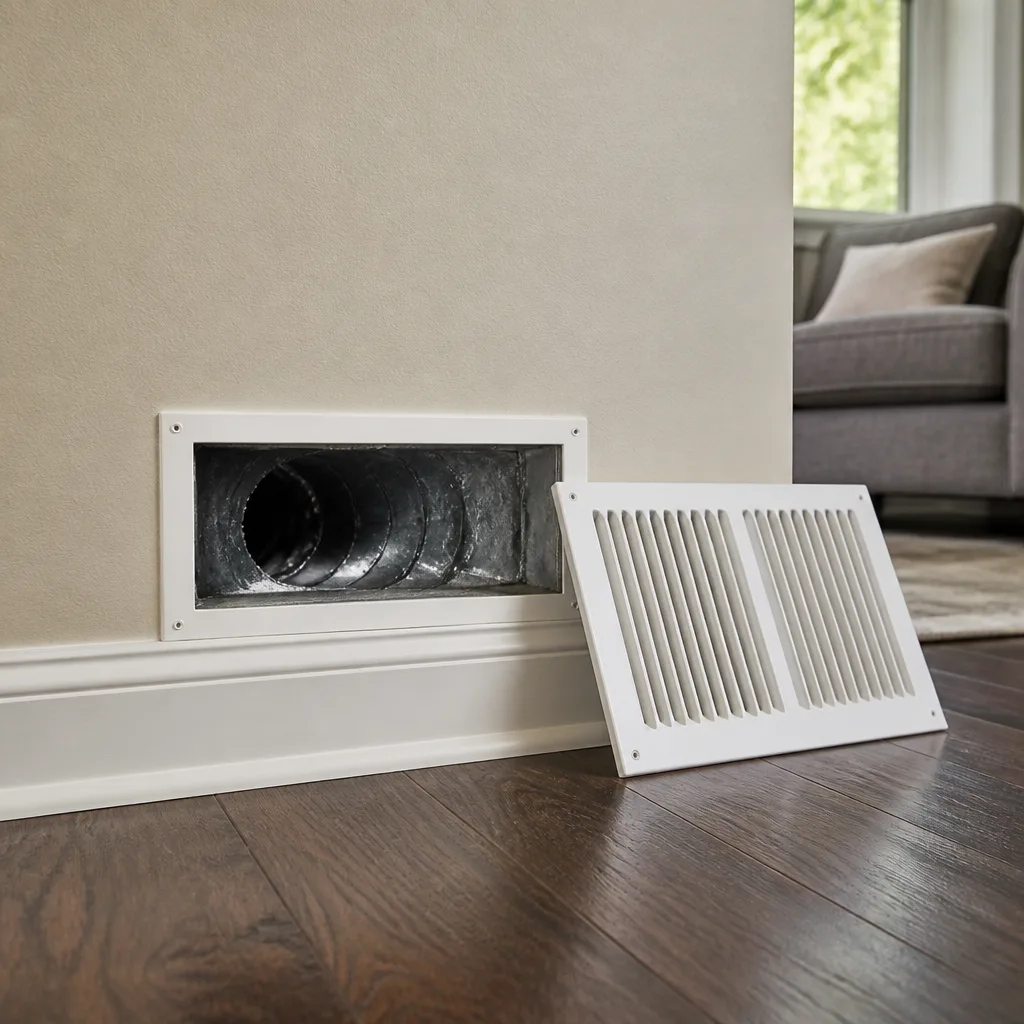 Sanitizing & deodorizing
Whole-system duct and dryer vent check with before-and-after photos - you see exactly what came out of your vents
That "$99 whole-house special" is a bait ad - the real number appears once they are in your hallway, or the "clean" is a shop-vac at the register. We photograph the inside of your ducts before and after instead.
The Complete Guide to Air Duct Cleaning in Anaheim Hills
Most air duct guides are written for Minneapolis basements. Anaheim Hills is not that place. This community sits at the edge of the Puente Hills, where canyon topography channels Santa Ana wind events straight through the neighborhoods below, and where wildfire seasons have left measurable ash fallout in the air more than once in recent years. The national advice to “clean every three to five years” was never written with that in mind. This guide covers what actually drives contamination in Anaheim Hills homes, how a proper inspection and cleaning should run from start to finish, the equipment that separates a real job from a quick one, and how to read the proof a credible contractor leaves behind.
Quick Answer
Air duct cleaning in Anaheim Hills is a diagnostic process, not a checkbox service. It should start with a camera-scope inspection of your supply and return ducts, follow with negative-pressure vacuuming and rotary-brush agitation using professional equipment like Rotobrush and Nikro systems, and finish with a verification walkthrough you can see for yourself. For most homes here, the right interval depends less on a generic calendar and more on what the inspection finds after a heavy fire season, a remodel, or a stretch of windy, dusty weather.
Styles & brands we work with
- Whole-home duct cleaning
- Dryer vent cleaning
- Camera inspection
- Sanitizing & deodorizing
Table of Contents
- Why Anaheim Hills Has Its Own Duct Contamination Profile
- What a Camera Scope Inspection Reveals Before Any Equipment Runs
- Negative-Pressure Vacuuming vs. Hand-Brushing: Why the Tool Matters
- How a Full Duct Cleaning Job Actually Runs, Step by Step
- When Cleaning Alone Isn’t Enough: Repair and Sealing
- Sanitizing and Air Quality: What It Does and Doesn’t Fix
- How to Read Post-Cleaning Verification and Proof of Work
- What Air Duct Cleaning Costs in Anaheim Hills
Why Anaheim Hills Has Its Own Duct Contamination Profile
Anaheim Hills is not flat Orange County. The neighborhood climbs into the foothills of the Puente Hills, and that geography changes how particulate moves through the air and into your home. When Santa Ana winds pick up, they funnel through the canyons and passes, carrying dust and ash at higher velocity than the flatland neighborhoods closer to the coast experience. Homes on the ridgelines and canyon-adjacent streets take more of that load than homes tucked into interior tracts, but the difference is a matter of degree, not kind.
Wildfire seasons have added a second layer. During and after regional fires, Ash fall is not just an outdoor nuisance. A running HVAC system pulls outside air through the return, and fine ash particles are small enough to settle inside duct runs rather than stop at the filter. Once they’re in, normal system operation keeps stirring them back into the airstream. That’s why the calendar-based interval in most national guides misses the mark here: what matters is what your ducts have actually seen.
Housing stock matters too. Much of Anaheim Hills is built on slab foundations with ductwork running through the attic and sometimes through the slab itself. Attic runs in particular see wide temperature swings, which stresses the seams and joints over time. A duct system that has developed small leaks pulls attic air, insulation fibers, and dust into the supply stream every time the system runs. That’s not a cleaning problem on its own. It’s a reason cleaning and sealing often need to be discussed together.
- Canyon terrain: Santa Ana wind events push more dust and ash into foothill neighborhoods than flatland areas see.
- Fire seasons: Fine ash can bypass standard filtration and settle into duct runs.
- Attic duct runs: Temperature swings stress joints and seams, opening paths for attic air to enter the supply system.
- Slab construction: Duct routing through the slab and attic means longer runs and more surface area for debris to accumulate.
What a Camera Scope Inspection Reveals Before Any Equipment Runs
A camera scope inspection is the step that separates a real cleaning from a hopeful one, and skipping it is the single most common shortcut we hear about. Before any equipment is brought in, a small camera is fed into the supply and return runs so the technician can actually see what’s there. Not guess. See. Debris depth, the condition of the duct liner, joint integrity, signs of moisture, and whether the contamination is uniform or concentrated in specific branches all show up on the screen.
In Anaheim Hills, that inspection often turns up three things. First, visible ash and fine dust settling in the horizontal runs and low points of the system. Second, failed or separated joints where attic air has been mixing into the supply. Third, in older homes, deteriorating internal duct liner or flex duct that has begun to sag or tear. None of those are things you can diagnose from a filter change or a good guess at the thermostat.
The inspection also sets the scope of the job. A system with one heavily soiled branch and a clean main trunk gets a different plan than a system that’s uniformly loaded. If the inspection finds moisture or microbial growth, that changes the conversation toward sanitizing and possibly repair before cleaning makes sense. It’s also the point where a professional will tell you if cleaning isn’t the right answer and something else is.
- Visual and camera inspection of supply and return runs, plus the air handler and coil area.
- Documentation of what the camera finds, with photos you can see before work begins.
- A written scope and flat price for the job, agreed before any equipment is switched on.
If a contractor wants to start running equipment without showing you what the camera sees, that’s the moment to ask why.
Negative-Pressure Vacuuming vs. Hand-Brushing: Why the Tool Matters
There are two ways to “clean” a duct system. One is to loosen debris with a hand brush and hope a shop vacuum catches some of it. The other is to put the entire system under negative pressure so that loosened debris is captured and removed rather than pushed into the living space. The difference isn’t marketing. It’s the difference between a job that leaves your home dirtier and one that leaves your ducts cleaner.
We use Rotobrush rotary-brush systems and Nikro HEPA vacuum equipment because they were built for this work. Rotobrush drives a rotating brush head through the duct run, agitating debris off the walls while a high-volume vacuum pulls it back. Nikro equipment, which is specified on a lot of commercial and restoration work, adds the negative-pressure containment that keeps fine particulate from escaping into the room. Both matter more in Anaheim Hills than they might elsewhere, because two-story homes and longer attic runs mean more duct length to keep sealed and under vacuum simultaneously.
Abatement Technologies air-scrubbing equipment rounds this out. It’s the same class of contaminant-capture equipment used in remediation work, and it’s useful when a job involves heavy particulate loads or when the work area needs to stay isolated from the rest of the home. The point is that the tooling should match the contamination. A hand brush and a consumer vacuum can’t do that, no matter how long the technician spends with them.
- Rotobrush: rotary-brush agitation matched to a high-volume vacuum for wall-to-wall debris removal.
- Nikro: negative-pressure HEPA equipment that keeps loosened debris from escaping the system.
- Abatement Technologies: air-scrubbing and containment gear for heavy particulate and isolated work areas.
- Why it matters here: long duct runs in two-story and attic-routed systems need real vacuum capacity, not a shop vac.
How a Full Duct Cleaning Job Actually Runs, Step by Step
A complete air duct cleaning job is a sequence, not a single pass. The order matters because each step sets up the next. Here’s how we run the process in Anaheim Hills homes, and what you should expect to see if the crew you hire is doing the same.
- Pre-inspection and camera scope. Document the system’s condition and identify the contamination profile before any equipment runs.
- Set up containment. Connect the negative-pressure vacuum to the main trunk or a central access point so the whole system stays under vacuum during cleaning.
- Protect the living space. Cover floors and furnishings in the work path, and isolate the air handler area.
- Clean supply and return runs. Rotary-brush each branch under vacuum, working from the farthest run back toward the main trunk.
- Clean the air handler, blower, and coil area. These are part of the HVAC system, and leaving them dirty recontaminates everything downstream. This is also where separate HVAC cleaning work belongs if it’s needed.
- Clean registers and grilles. Remove and wash grilles rather than wiping them in place.
- Post-cleaning verification. Camera-scope the runs again and walk the homeowner through what changed, with photos.
Depending on the size and configuration of the system, this takes most of a day. A small tract home with a handful of branches moves faster than a two-story home with a long attic run to a far bedroom. If the job also includes dryer vent cleaning, that’s done as a separate pass since it’s a different system entirely.
When Cleaning Alone Isn’t Enough: Repair and Sealing
Here’s where the national guides usually stop and the real answer begins. If your duct system has leaks, cleaning it is like mopping a floor with the door open. Debris gets removed, but the leaks keep pulling attic air, insulation fibers, and outdoor particulate back into the supply stream. In Anaheim Hills, where attic runs and hot-season temperature swings stress joints year after year, leaks are common and often invisible without a smoke test or pressure test.
Duct repair and sealing closes that loop. The work involves locating leaks at joints, seams, boots, and connections, then sealing them with mastic or approved sealing materials so the system holds pressure. Once the ducts are sealed, the system moves the air it was designed to move, and the clean state of the ducts actually stays clean for more than a season. That’s the reason we treat repair and sealing as the logical follow-through on cleaning, not a separate upsell for another visit.
There are times when repair is the primary job and cleaning is secondary. If the camera scope reveals that flex duct has torn, that rigid duct has separated at a joint, or that the duct system is pulling from an unconditioned space, sealing comes first. Contacting one company that handles the whole system means that decision gets made with all the information in hand, rather than coordinating a duct cleaner, an HVAC technician, and a sealing contractor who each see only part of the picture.
Sanitizing and Air Quality: What It Does and Doesn’t Fix
Sanitizing is a distinct service, and it’s worth being clear about what it does. Mechanical cleaning removes debris. Sanitizing addresses what remains on surfaces: biological contaminants, odors, and residue that brushing and vacuuming alone won’t neutralize. When the camera inspection shows microbial growth or persistent odor, sanitizing belongs in the plan. When it doesn’t, it isn’t a default add-on.
We use Honeywell and Aprilaire products, along with Guardsman protective treatments, because they’re specified on real air-quality work rather than being a generic fogging step. Aprilaire in particular comes up often when homeowners ask about filtration upgrades and system-level air quality integration. The point isn’t to sell a chemical spray. It’s to match the treatment to the condition the inspection actually documented.
Two things sanitizing won’t do. It won’t fix leaks, and it won’t stop a dirty system from getting dirty again if the HVAC unit itself is contaminated or the filter isn’t sized right. That’s why air quality and sanitizing works best as part of a full system approach: clean the ducts, seal the leaks, service the HVAC unit, and treat what remains. That’s the sequence in which the results actually hold.
How to Read Post-Cleaning Verification and Proof of Work
You should be able to check that the work happened. That sounds obvious, but in this industry it’s often the gap. A credible contractor camera-scopes the duct runs again after cleaning and walks the homeowner through the before-and-after footage. They leave behind photos of the registers, the return, the air handler, and the duct interiors. That’s the verification. If a contractor can’t show you any of it, you have no way to know what was actually done.
Here’s what a proper verification looks like:
- Before-and-after camera footage of the same duct sections, so you can compare.
- Register and return photos showing the grilles after removal and cleaning.
- Air handler and coil photos showing the condition after cleaning.
- A written summary of what was cleaned, what was found, and any repairs or sealing completed.
In Anaheim Hills, where ash fallout after fire seasons can leave visible evidence inside the system, before-and-after photos of the duct interior are especially useful. They give you something concrete to see rather than a verbal claim. Ask to see them before signing off on the job.
What Air Duct Cleaning Costs in Anaheim Hills
Pricing for air duct cleaning in Anaheim Hills runs higher than what you’ll see advertised in national coupon mailers, and lower than what a full HVAC unit replacement or a major duct rebuild costs. The numbers below are typical estimate ranges for the scope described, not a quote. The written estimate from a camera-scope inspection sets the final price, and the work is agreed at one flat price per system before anyone starts.
- Standard residential duct cleaning (supply and return, air handler, registers) – typical range from a written estimate
- Duct repair and sealing – quoted per job based on the number of leaks and access
- Air quality and sanitizing treatment – quoted per system after inspection
- Dryer vent cleaning – quoted as its own job
- Full HVAC unit cleaning – quoted alongside the duct work
We don’t publish per-vent prices or coupon teasers, because that’s exactly the model that leads to a low number on paper and a much bigger invoice once the technician is in the home. What we can tell you is this: the estimate is free, the camera inspection comes first, and the price you agree to is the price you pay for that scope. If the inspection turns up something that changes the job, that conversation happens before work begins, not after. For a written estimate on your Anaheim Hills home, call (855) 526-8990.
Common Mistakes to Avoid
- Booking on price alone. A quote that’s dramatically lower than the others almost always reflects missing steps: no camera scope, no negative-pressure containment, or a hand brush and a shop vac. That’s how you get a system that looks worked-on but isn’t actually clean.
- Skipping the camera inspection. If the contractor can’t show you what’s inside the ducts before cleaning, they can’t tell you what they’re cleaning or whether cleaning is the right answer. The camera scope is the foundation of the whole job.
- Cleaning without sealing. In Anaheim Hills’ attic-routed systems, leaks at joints and boots are common. Clean ducts with leaks pull attic air back in and stay clean for far less time. Ask about sealing whenever cleaning is recommended.
- Ignoring the HVAC unit. The blower, coil, and air handler are part of the system. Cleaning the ducts while leaving a contaminated air handler in place just redistributes the problem. HVAC cleaning belongs in the same visit when the inspection calls for it.
- Assuming a filter change is a duct cleaning. Filters catch what passes through them; they don’t clean what has already settled inside the runs. After a fire season, ash that bypassed the filter stays in the ducts until it’s physically removed.
- Forgetting the dryer vent. It’s a separate system with its own lint accumulation. During a duct cleaning visit, ask whether the dryer vent should be checked at the same time.
- Not asking for before-and-after proof. A verbal “it’s clean now” is not verification. Ask to see the after-cleaning camera footage and photos before the job is signed off.
See the difference
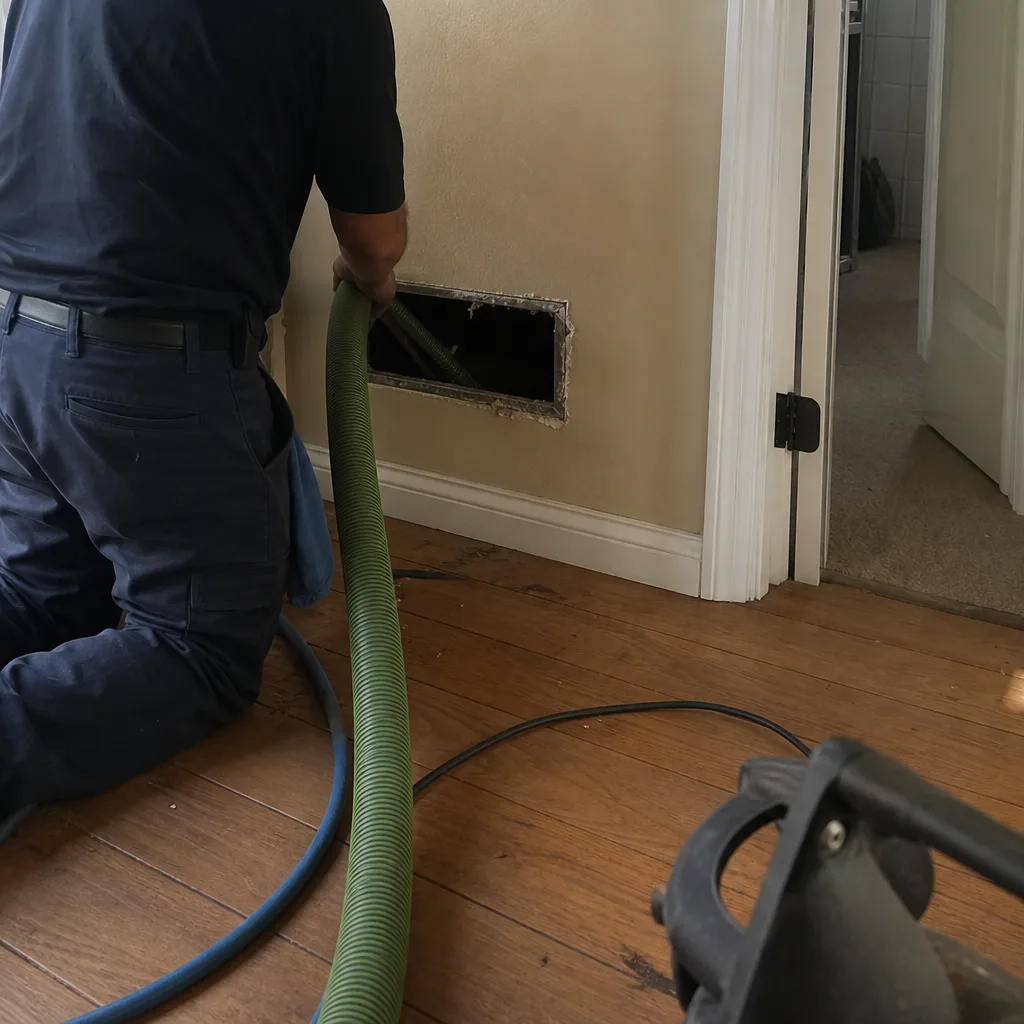 Before
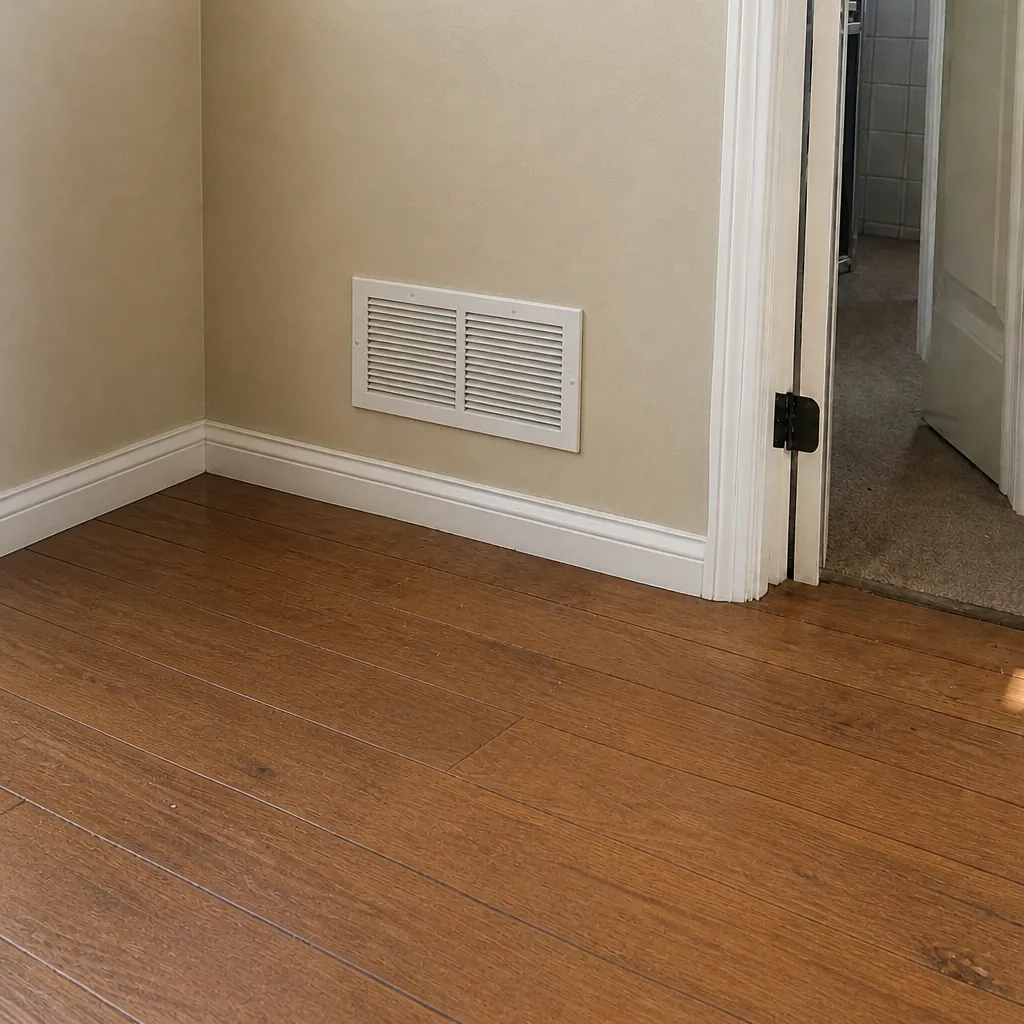 After
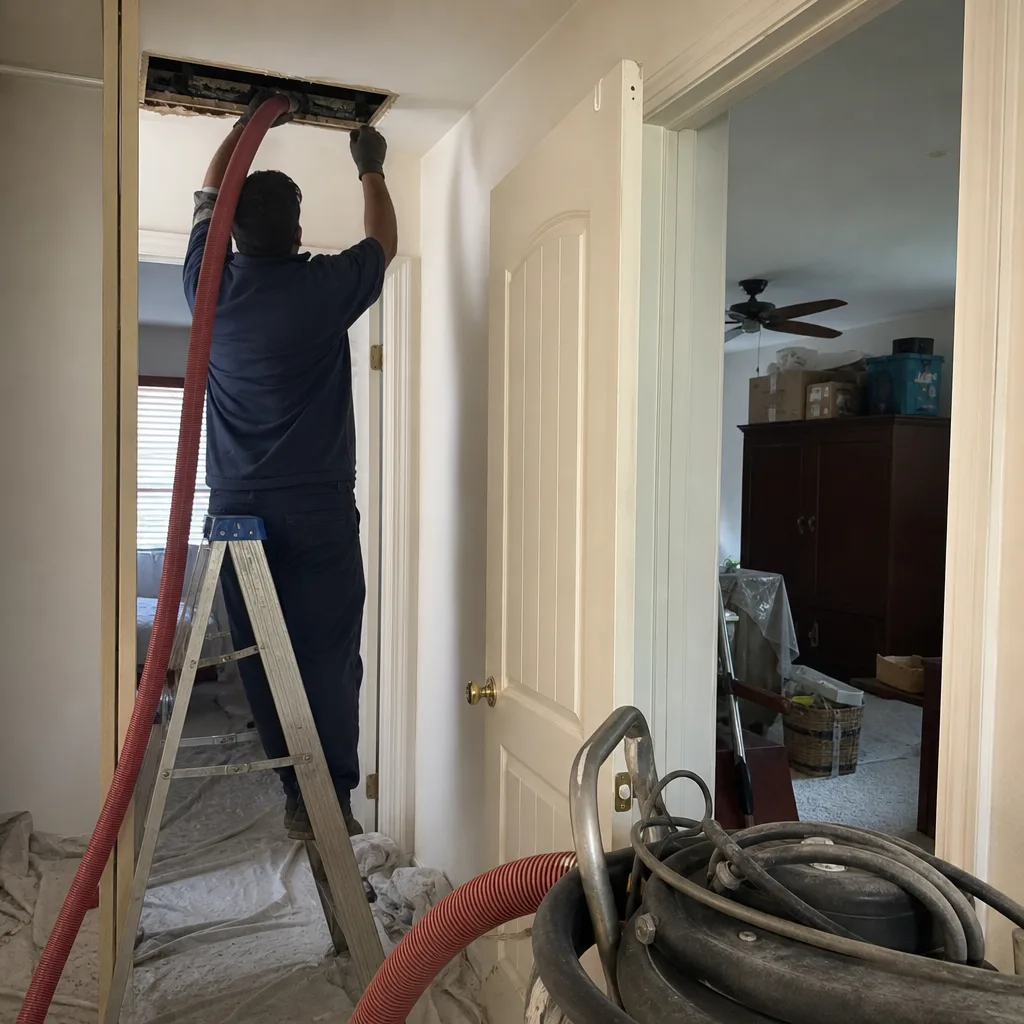 Before
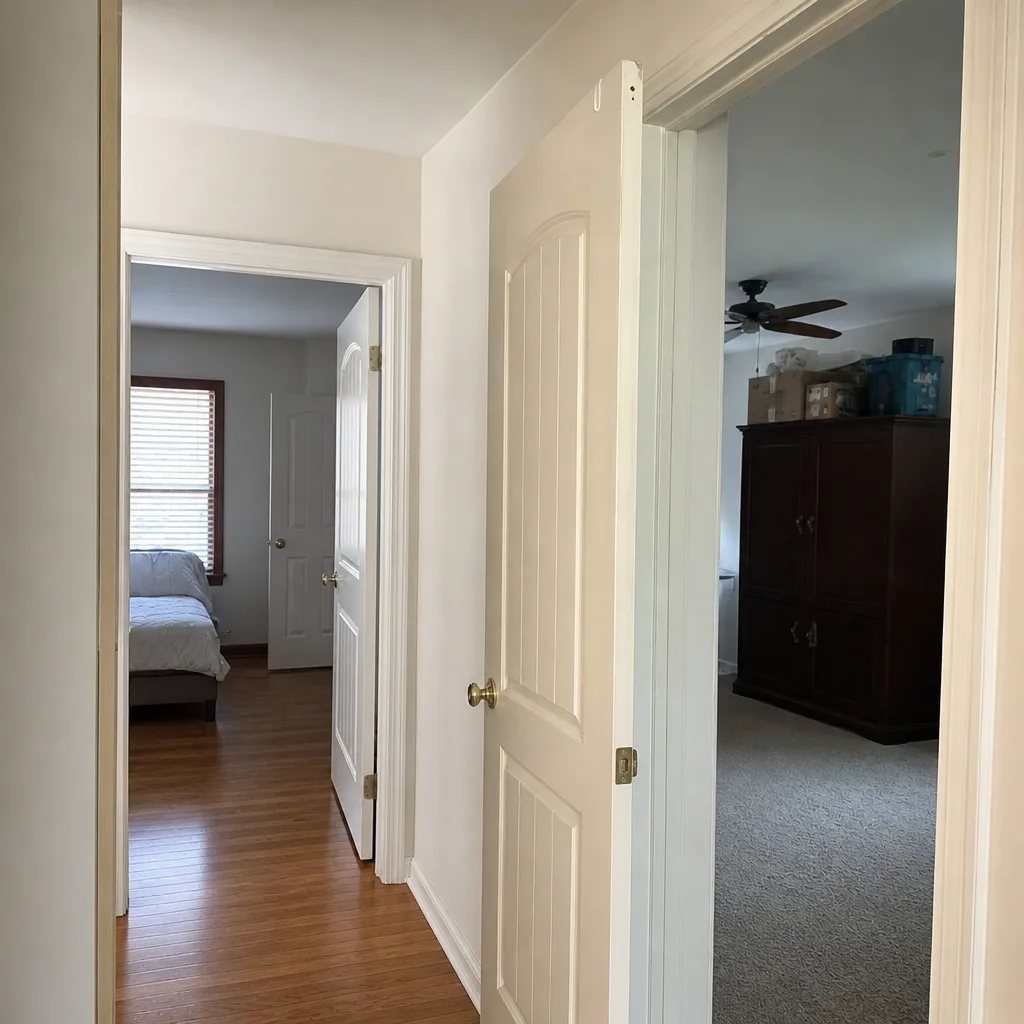 After
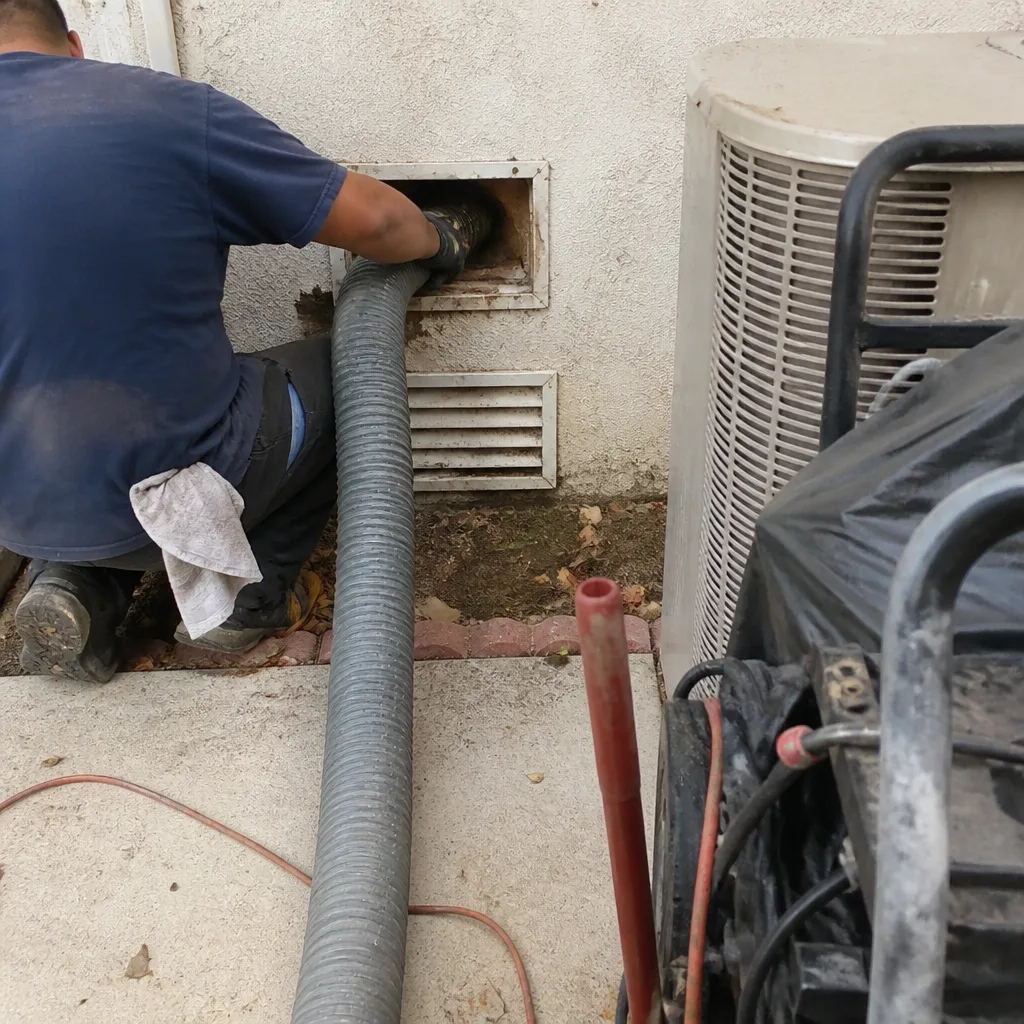 Before
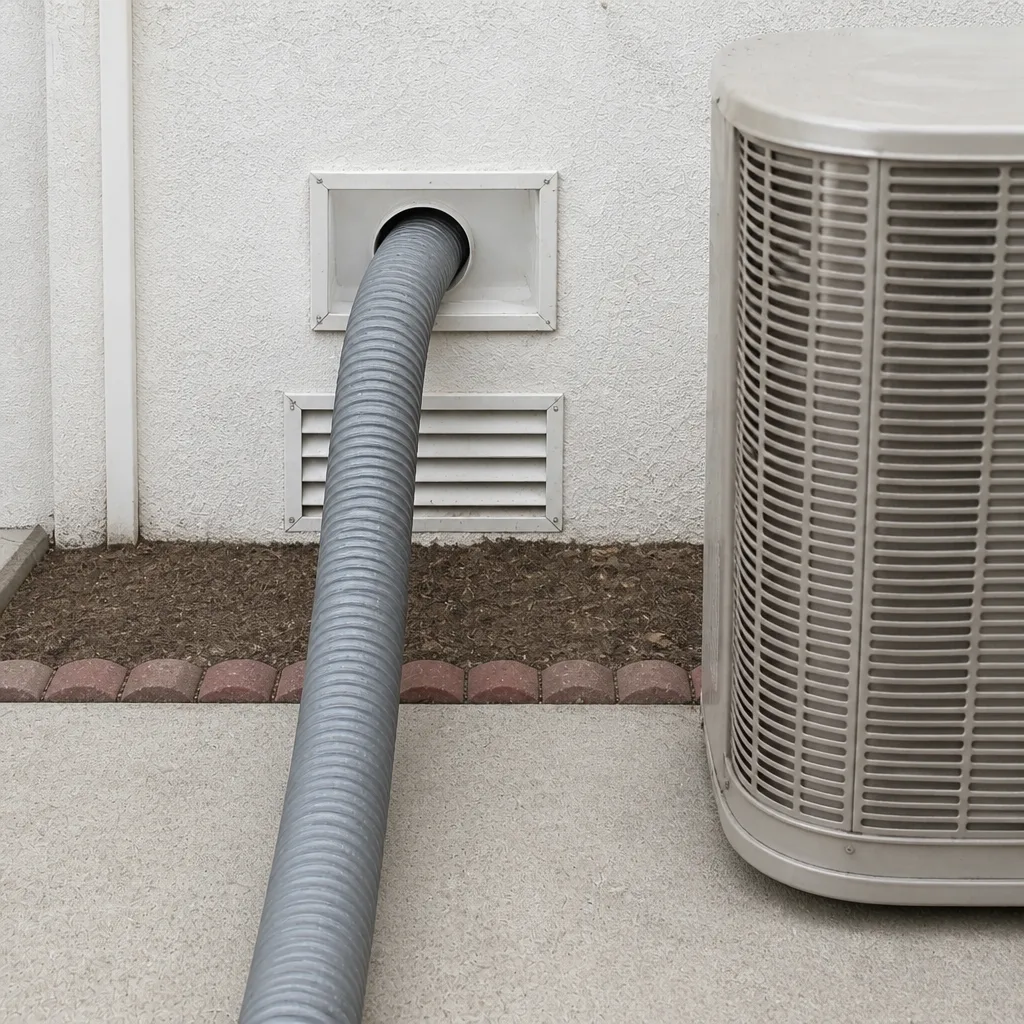 After
When to Call a Professional
Most homes in Anaheim Hills don’t need a duct cleaning on a strict schedule. They need one when something changes. Call when you’ve been through a fire season and you’ve seen ash inside the home, when a remodel has been completed and drywall dust has had a chance to travel through the system, when you’re noticing more dust on surfaces than usual or a persistent odor when the HVAC kicks on, when a family member has respiratory sensitivities you’re trying to address, or when you’re buying a home and don’t know the service history of the ducts. Call when the camera scope hasn’t been done and you want an honest answer rather than a sales pitch.
Air Duct Cleaning Anaheim Hills offers free estimates in Anaheim Hills. Call (855) 526-8990. We answer 24/7, fast dispatch from 7am to 7pm, Sunday through Friday. Estimates are free, and the camera inspection comes first.
Frequently Asked Questions
The cost depends on the size and layout of your system, the condition revealed by the camera inspection, and whether repair, sealing, HVAC cleaning, or sanitizing is part of the job. We quote a flat price for the whole scope after inspection, not a per-vent price. Call (855) 526-8990 for a free estimate and a written quote for your home.
The national “every three to five years” guidance doesn’t fit Anaheim Hills particularly well. What matters more is what the ducts have been through: a heavy Santa Ana wind season, a fire season with ash fallout, a remodel, or a change in air quality inside the home. The camera inspection tells you what the schedule should be for your specific system. Call (855) 526-8990 if you’d like an inspection to find out.
Cheap quotes usually leave out the steps that make the work effective: camera inspection, negative-pressure containment, and proper rotary-brush equipment. A hand brush and a shop vacuum cost less to run, and they show up in the price. They also leave debris where it was. Ask any contractor what equipment they’ll use and how they’ll verify the job afterward. Call (855) 526-8990 for a written quote you can compare.
A credible contractor camera-scopes the ducts after cleaning and walks you through the before-and-after footage. Photos of the registers, air handler, and duct interiors should be part of the handoff. If you can’t see it, you can’t confirm it. Call (855) 526-8990 to book a job that ends with verification.
Yes, if ash has bypassed the filter and settled into the duct runs, physical removal with negative-pressure vacuuming is what clears it. Cleaning alone won’t stop new ash from entering, though. Sealing leaks and checking filtration are part of the same conversation. Call (855) 526-8990 to talk through what your home actually needs.
Yes. Cleaning the ducts while leaving a contaminated air handler or coil in place just redistributes the problem, so we plan both under one scope when the inspection calls for it. Dryer vent cleaning can be scheduled as its own job alongside the duct work. Call (855) 526-8990 and we’ll put together a plan that covers the whole system.
The Bottom Line
Air duct cleaning in Anaheim Hills is a diagnostic process, not a calendar event. Camera inspection first, professional-grade equipment second (Rotobrush, Nikro, Abatement Technologies containment), sealing and repair when the inspection calls for it, air quality treatment when there’s a biological or odor condition to address, and verification with before-and-after proof every time. The national guidance was written for a different climate and a different housing stock, and it won’t tell you what your ducts actually need. One company handling the whole system, at one flat price agreed before work starts, is what keeps the answer honest. If you’re ready for an inspection, call (855) 526-8990 for a free estimate.
Written by the team at Air Duct Cleaning Anaheim Hills.