
Last updated November 24, 2026
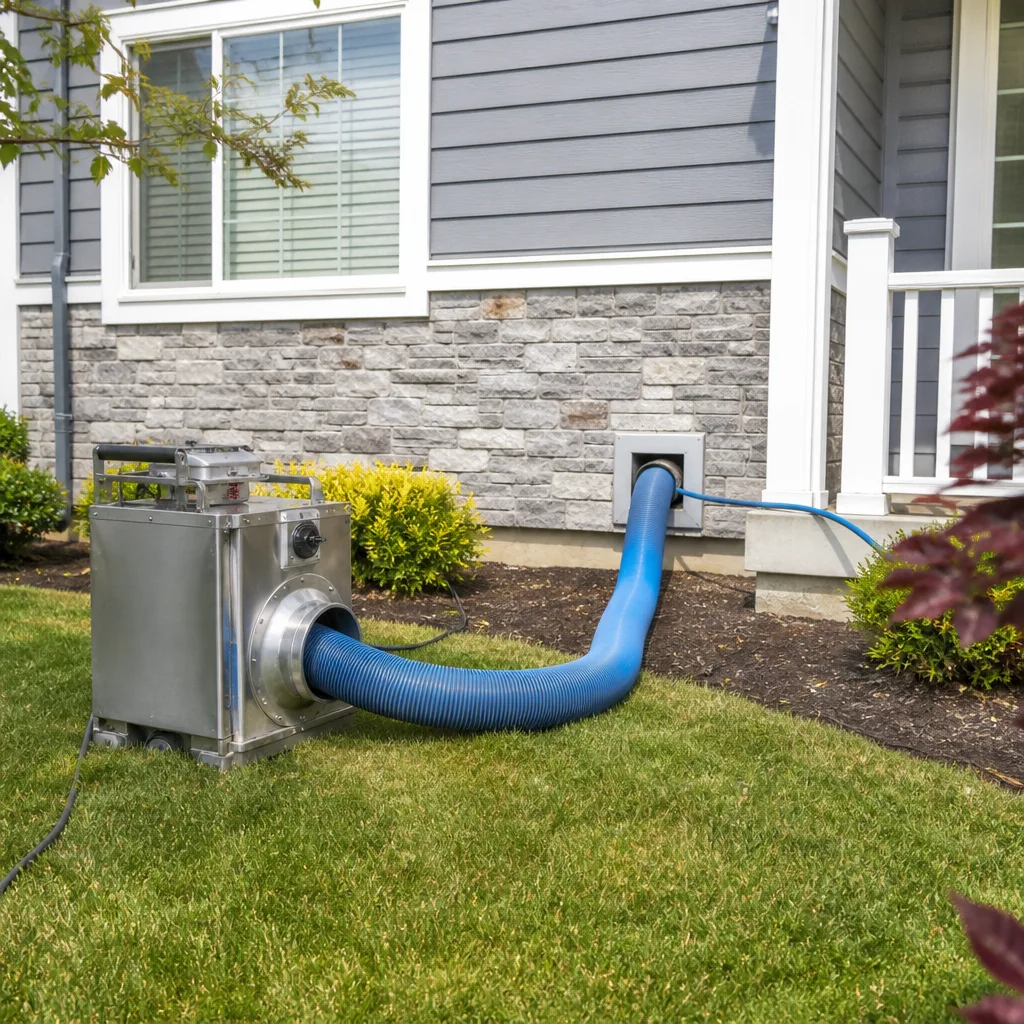 Whole-home duct cleaning
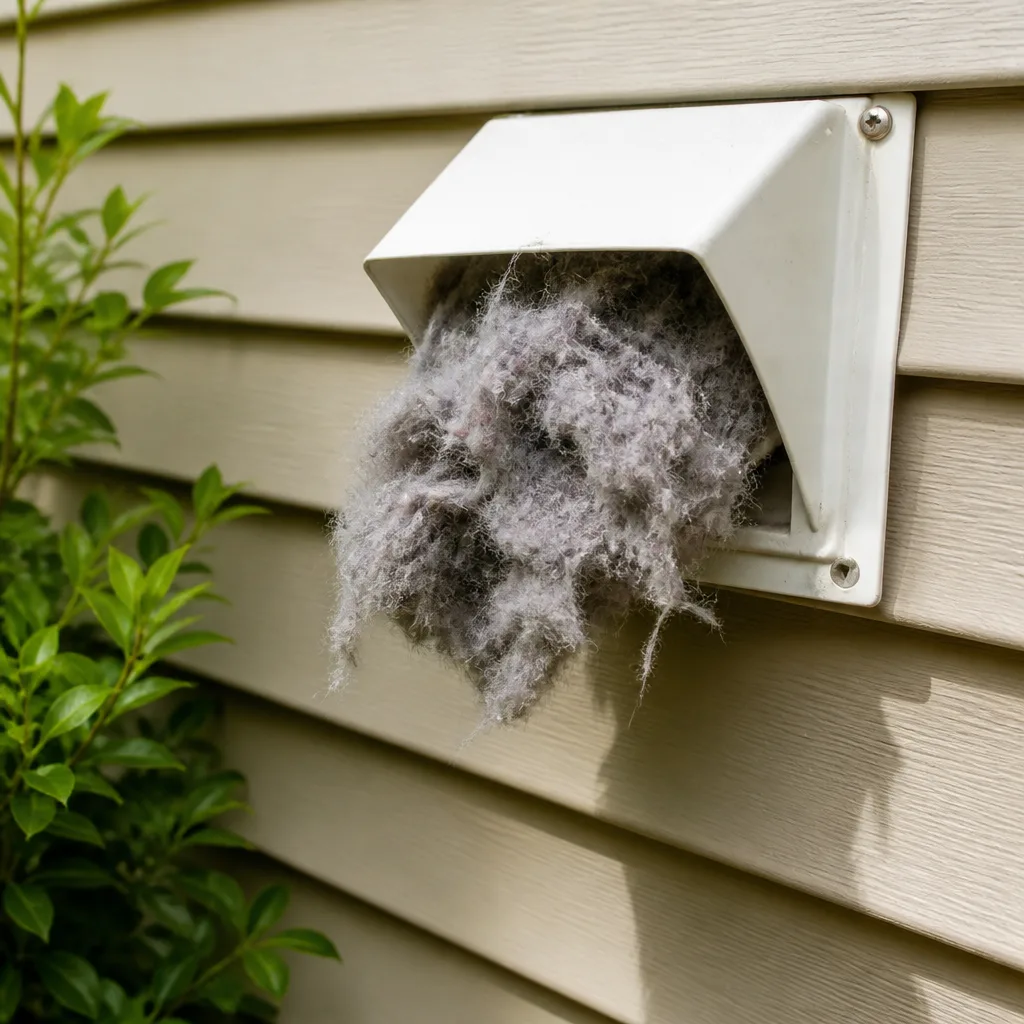 Dryer vent cleaning
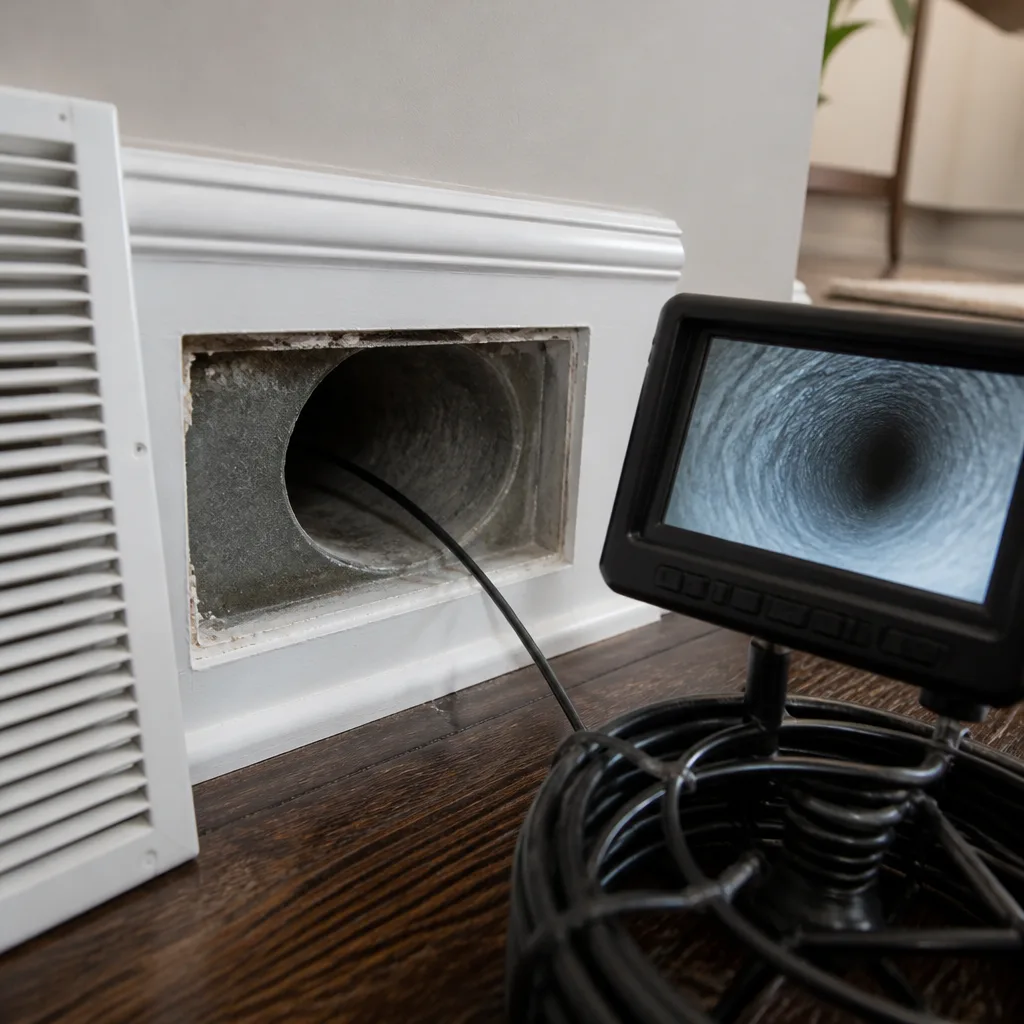 Camera inspection
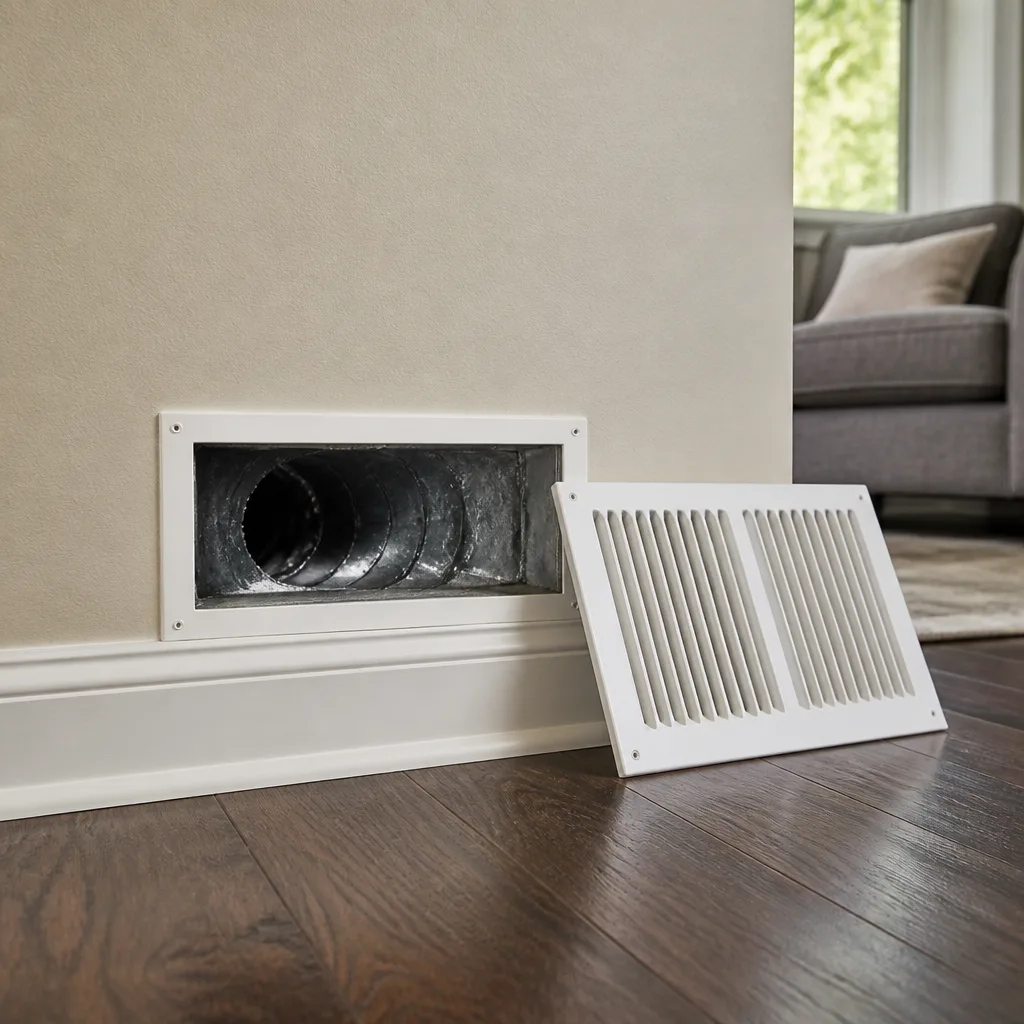 Sanitizing & deodorizing
Whole-system duct and dryer vent check with before-and-after photos - you see exactly what came out of your vents
That "$99 whole-house special" is a bait ad - the real number appears once they are in your hallway, or the "clean" is a shop-vac at the register. We photograph the inside of your ducts before and after instead.
DIY vs Professional Air Duct Cleaning: The Anaheim Hills Homeowner’s Decision Guide
Here’s the part most guides skip: a shop vac and a dryer vent brush can reach the first 18 inches of a supply register. A professional rotary-brush system paired with negative-pressure extraction can clean 50 feet of duct run. In most Anaheim Hills homes with 2,000-plus square feet and two-zone systems, that gap isn’t a small difference in thoroughness. It’s the entire job. This guide maps exactly where DIY ends and where professional equipment has to take over, which scenarios make register cleaning legitimate maintenance, and which ones make it a false sense of completion. If you’ve been standing in your garage staring at a register wondering whether you can handle this yourself, this is written for you.
Quick Answer
DIY air duct cleaning works for light surface dust on the register grille and the first foot or so of visible duct, but it cannot reach the trunk lines, return plenums, or the long runs inside your walls and ceilings where contamination actually accumulates. For a typical Anaheim Hills home with two-zone HVAC, professional cleaning using negative-pressure equipment and rotary brush systems is the only way to remove debris from the whole system rather than just the parts you can see.
Styles & brands we work with
- Whole-home duct cleaning
- Dryer vent cleaning
- Camera inspection
- Sanitizing & deodorizing
Table of Contents
- What Consumer Tools Can and Can’t Reach
- When DIY Register Cleaning Is Legitimate Maintenance
- How Negative-Pressure Systems Work (And Why Suction Direction Matters)
- Post-Fire-Smoke and Post-Renovation: Where DIY Goes Wrong
- The Cost-Honest Comparison: DIY Attempts vs. a Professional Visit
- How You Verify the Work Was Actually Done
- Anaheim Hills Home Layouts and What They Mean for Your Ducts
- A Realistic Maintenance Schedule
What Consumer Tools Can and Can’t Reach
Most homeowners approach duct cleaning with a wet/dry shop vac, a brush kit for the drill, and maybe a flexible wand from the hardware store. Those tools are real tools, and they do real work. The question is where that work stops. In a typical Anaheim Hills single-story or two-story home, the duct system runs from the air handler through a trunk line, then branches into individual runs that terminate at registers in each room. The distance from the air handler to the farthest register in a 2,000-square-foot home is often 40 to 50 feet of actual duct.
A shop vac hose reaches maybe 6 feet into a duct if you work it past the register boot. A drill-mounted brush reaches 3 to 4 feet before the flexible shaft starts binding on bends. That leaves the majority of the system untouched, including the trunk line, which is where debris tends to collect because it’s the largest diameter and the lowest velocity point in the network.
Here’s a practical capability map for the tools you probably have:
- Shop vac with crevice tool: Reaches 4 to 6 feet into a straight run. Cannot navigate 90-degree elbows or the transition from branch to trunk.
- Drill brush kit: Reaches 3 to 4 feet, breaks up loose dust on duct walls. Cannot generate the airflow needed to lift adhered debris.
- Register grille removal and wipe-down: Effective for the grille and boot. Has no effect on the duct behind it.
- Compressed air blower: Loosens dust but redistributes it into the room or deeper into the system unless paired with extraction.
- Consumer-grade HEPA vacuum: Good suction, wrong form factor. Cannot be inserted into a duct run or sustain airflow through 50 feet of ductwork.
What professional equipment does differently is reach and airflow in combination. An Air Duct Cleaning Anaheim Hills visit uses a rotary brush system driven through the full length of each run, backed by a vacuum source powerful enough to keep the debris moving toward the collection point instead of settling back onto the duct walls. That’s not a matter of effort. It’s a matter of tool design.
When DIY Register Cleaning Is Legitimate Maintenance
We don’t want to talk anyone out of the maintenance they can do well. There’s a genuine role for homeowner care between professional cleanings, and knowing where that line sits prevents both wasted effort and the false confidence that comes from thinking the job is done because the visible parts look clean.
DIY register cleaning is legitimate when:
- The grille itself is dusty. Vacuum the slats, wipe with a damp cloth, reinstall. This is the highest-value thing you can do yourself, and it visibly improves the room’s appearance within minutes.
- You can see dust right at the boot. The first few inches inside the register opening collect dust because that’s where airflow velocity drops. A brush attachment on a vacuum handles this in under a minute per register.
- You’re preparing for a professional visit. Pulling grilles and clearing surface dust makes the technician’s job faster and lets them spend more time on the parts you can’t reach.
- You’ve recently had a professional cleaning and want to maintain it. Routine grille care extends the interval between full cleanings by keeping the visible dust load down.
DIY register cleaning becomes a false sense of completion when it’s treated as a substitute for whole-system cleaning. The visible registers in an Anaheim Hills home tell you almost nothing about the condition of the trunk line or the return plenum. Those are the parts that hold the accumulated dust, the construction debris from a past remodel, and the biological growth that builds up in high-humidity pockets. None of it shows at the grille. All of it moves through your home every time the system cycles.
If you’ve cleaned your registers and your family is still noticing dust settling quickly or a musty odor when the system kicks on, the registers weren’t the problem. Consider scheduling air duct cleaning and asking the technician to show you before-and-after photos of the trunk line specifically.
How Negative-Pressure Systems Work (And Why Suction Direction Matters)
This is the part of professional duct cleaning that’s genuinely hard to explain in a way that makes the difference obvious. Suction direction matters more than suction strength. A shop vac pulling air toward itself creates a capture zone of about 6 inches. A negative-pressure system creates a low-pressure environment across the entire duct network so that every open register becomes an intake point for the cleaning equipment’s agitation to move debris toward a single collection unit outside the house.
Here’s the sequence a professional cleaning typically follows:
- Set up negative pressure. A high-volume vacuum unit is connected to the main trunk line or the air handler plenum, and all registers are sealed except one. Abatement Technologies negative-air equipment is often part of this stage because it captures fine particulates that would otherwise escape into the living space during agitation.
- Open one register and agitate the run. A rotary brush system like Rotobrush is fed through the open register, working the full length of that branch and back. Debris is lifted from the duct walls and immediately pulled toward the collection unit under negative pressure.
- Work each branch in sequence. Every run gets the same treatment, including return runs, which are typically larger and carry more debris load.
- Clean the air handler and blower. The HVAC unit itself is part of the system. The blower wheel, evaporator coil, and drain pan collect dust and biological growth that no duct cleaning alone addresses. This is why we treat HVAC cleaning as part of the same job rather than a separate service.
- Sanitize if indicated. Honeywell and Aprilaire products are integrated at this stage when the situation calls for addressing biological contaminants or odors beyond what mechanical cleaning removes.
- Seal and repair as needed. Duct repair and sealing closes leaks that would otherwise let attic air or wall-cavity air back into the system after it’s been cleaned.
The key mechanical difference between this and anything you can do with consumer tools is that negative pressure keeps debris moving out of the system for the entire duration of the work. A shop vac pulls debris toward itself but doesn’t change the pressure environment inside the duct network. Contamination loosened by a vacuum brush settles back onto the duct walls behind the tool.
Post-Fire-Smoke and Post-Renovation: Where DIY Goes Wrong
There are two scenarios where we tell homeowners to stop and call rather than attempt it themselves, and neither is about effort. It’s about what DIY does to the contamination that’s already in the system.
After a fire nearby or smoke intrusion. Smoke residue is a fine particulate that adheres to duct surfaces and carries odor compounds that mechanical cleaning alone often doesn’t remove. Running a shop vac on a register after a smoke event can lift those particulates and redistribute them into the room rather than capture them. The correct approach involves negative pressure with HEPA-grade filtration, applied across the whole system before any agitation begins, and then a sanitizing step using products designed to neutralize odor compounds on duct surfaces.
After a renovation or construction project. Drywall dust, sawdust, and fiberglass particles from construction work settle into ductwork in volumes that consumer equipment cannot handle. Even more important, they tend to accumulate in the trunk line and air handler rather than at the registers. Running the HVAC system before the ducts are cleaned sends that dust through every room every time the system cycles. Attempting a partial DIY clean with a shop vac can make this worse by loosening debris that then travels through the rest of the system during normal operation.
In both scenarios, the sequence matters more than the tools. Contain and capture first, agitate second, sanitize third. Getting the order wrong is how DIY turns a manageable problem into a bigger one. If your Anaheim Hills home recently had a kitchen fire, a wildfire smoke event nearby, or a remodeling project that kicked up dust for weeks, that’s a professional call, not a hardware-store run.
The same logic applies, at a smaller scale, to dryer vent cleaning. Lint accumulation in a dryer vent is a fire risk, and a shop vac can’t reliably clear a vertical vent run or the transition elbow behind the dryer. This is one maintenance task where the professional version is the safer version.
The Cost-Honest Comparison: DIY Attempts vs. a Professional Visit
The honest comparison isn’t “shop vac costs $80, professional cleaning costs $500.” It’s about what gets accomplished per dollar and what gets repeated. Here’s a realistic accounting of what homeowners actually spend on DIY attempts:
| Approach | Typical Spend | What Gets Cleaned | Repeat Frequency |
|---|---|---|---|
| Shop vac plus brush kit, single attempt | $80 to $200 | First few feet of supply runs and registers | Within a few months, once dust returns |
| Consumer HEPA vacuum with attachments | $150 to $400 | Registers and very short duct sections | Same limit each time; no improvement to trunk or return |
| Multiple attempts over a year | $200 to $400 cumulative | Slightly more than a single attempt, but same reach limit | Ongoing; the underlying system never cleaned |
| Professional whole-system cleaning | Estimate provided in writing before work begins | Full duct network, air handler, returns, camera verification | Every 3 to 5 years for most homes; longer intervals if maintained |
The pattern is that DIY spending doesn’t accumulate into a complete result. You spend $200 over a year and end up with the same trunk line you started with. A professional cleaning is a one-time cost that addresses the whole system and includes verification so you know what was accomplished. We don’t quote prices over the phone because every Anaheim Hills home is different in size, layout, and number of runs. The estimate is free, it’s in writing, and the price is set per job before any work starts. That’s one flat price per system, not a per-register sticker that grows once the technician is on site.
How You Verify the Work Was Actually Done
The biggest fear homeowners have about professional duct cleaning, and rightly so, is that the technician charges for the visit, does something cursory, and leaves. Here’s how to make sure that doesn’t happen, whether you hire us or anyone else.
- Ask for before-and-after photos of your own ducts. Not stock images from a brochure. Your trunk line, your return plenum, your air handler. A technician with professional equipment can capture these easily once the register is removed.
- Ask for camera verification if you want it in writing. Bore-scope cameras fit through a register opening and let the technician show you the interior of a run before and after. If the system is genuinely clean, this is confirmation. If it isn’t, you’ll see that too.
- Confirm the scope in the estimate in writing. A written estimate should list every system component being cleaned: supply runs, return runs, air handler, blower assembly. If the estimate is vague about the return, ask specifically whether it’s included.
- Check the debris removed. A legitimate cleaning produces a visible collection of debris in the vacuum unit. Ask to see it before it’s disposed of.
- Listen for equipment you can identify. A rotary brush system makes a distinct sound as it works through a duct. A negative-air machine runs continuously in the background. If you don’t hear those, ask what’s happening.
We use Rotobrush and Nikro professional systems on every job. That’s not a marketing point, it’s a specific reference. Those systems are the same brand specified by HVAC contractors and restoration professionals. If a company can tell you what specific equipment they’re using and why, that’s a company worth continuing the conversation with.
Anaheim Hills Home Layouts and What They Mean for Your Ducts
Anaheim Hills homes tend to fall into a few general layouts, and each one has a different implication for what DIY can accomplish. The canyons and hillside neighborhoods here mean homes are often built on grade changes that put the air handler in a different position relative to the living space than you’d find on a flat suburban lot. That changes how ductwork routes through the house and how far the run distances actually are.
Single-story homes on grade in Anaheim Hills are often built with the air handler in the garage or a utility closet, with a horizontal trunk running through the attic. The runs to bedroom registers can be long because the attic space is shallow and duct routing has to work around the slope of the roof framing. DIY reach from a register might get you into a branch line, but the trunk line running through the attic is completely out of reach without pulling the access panels.
Two-story Anaheim Hills homes with two-zone systems are the more common case where DIY is genuinely inadequate. A two-zone system means two separate trunk networks, usually one serving the downstairs, one the upstairs, with a zone damper controlling airflow. Cleaning one zone doesn’t clean the other, and the return plenum often serves both. We’ve seen homes here where the upstairs zone hadn’t been cleaned since construction and the trunk line was carrying visible debris load. There’s no consumer tool that reaches that trunk line short of pulling duct sections apart, which is not a homeowner job.
The local climate matters too. Anaheim Hills summers are warm and dry, which means the air conditioning system runs hard for months. That sustained duty cycle circulates more air through the ducts than a milder climate would, and it pulls more of the debris that’s sitting in the system into the living space. Return registers near the ceiling in a hot upstairs zone accumulate a visible dust ring faster than you’d expect, and that ring is the sign that the whole system needs attention, not just that register.
Neighborhood-level variation
Homes in the older established neighborhoods around Anaheim Hills tend to have the original ductwork from decades ago, which means fiberglass-lined flex duct in many cases. Flex duct had ridges on the interior surface that trap debris, and the lining can degrade over time. Homes in newer construction on the hillside often have rigid metal duct with better airflow characteristics but still accumulate dust in the trunk line. Either way, the trunk line is the part that needs professional reach.
A Realistic Maintenance Schedule
The right interval between full cleanings depends on the home, not on a fixed number everyone repeats. Here’s a schedule that reflects how Anaheim Hills homes actually function:
- Every month: Replace the HVAC filter. This is the single highest-value maintenance task you can do yourself. A clogged filter strains the blower and pushes more dust into the ducts.
- Every 3 to 6 months: Clean the register grilles with a damp cloth. This is the DIY register maintenance worth doing.
- Every year: Check the dryer vent for lint buildup at the exterior termination. If airflow from the dryer has dropped noticeably, schedule dryer vent cleaning rather than waiting.
- Every 3 to 5 years: Schedule whole-system duct cleaning, more often if you have pets, allergies in the household, or have recently completed a renovation. Homes with older flex duct may need it sooner.
- After any event: Fire, smoke intrusion, renovation, or water damage in the duct path. Professional cleaning is warranted regardless of the schedule.
If you’ve just moved into an Anaheim Hills home, a first-year cleaning is sensible. You have no record of when the last one happened, and whatever the previous owner did or didn’t do is now your system.
Common Mistakes to Avoid
- Assume the register is the whole job. The grille and the first few inches of duct are the most visible part and the least important part. If your cleaning stops at the register, you’ve handled the part that’s already easy to see and left the trunk line untouched.
- Use a shop vac without any containment. Running a shop vac on a supply register without negative pressure in the system or HEPA filtration on the exhaust creates a small cloud of exactly the dust you’re trying to remove. The redeposit problem is real, and it’s worst in high-traffic homes with pets.
- Clean ducts but skip the air handler. The blower wheel, evaporator coil, and drain pan all collect debris and biological growth. Cleaning the duct network without cleaning the HVAC unit leaves the contamination source operating every time the system cycles.
- Clean ducts but skip sealing. Ducts with leaks let attic air or wall-cavity air back into the system after you’ve cleaned. Duct repair and sealing is what closes the loop. If you’re going to hire for the cleaning, include the sealing step in the same visit.
- Attempt DIY after a renovation. Construction dust in ductwork is a volume problem, not a dusting problem. Consumer equipment can’t handle the volume, and partial cleaning can redistribute the worst of it into the rooms.
- Trust a quote that doesn’t include the return. A cleaning that covers supply registers but not return runs is not a whole-system cleaning. Ask specifically.
- Treat a low teaser coupon as the real price. If a quote is dramatically lower than the others, ask what’s included and whether the price is fixed before work begins. If it can go up on site, it probably will.
If you’d rather skip the learning curve, air duct cleaning in Anaheim Hills is what we do with professional equipment every day, and we’ll walk through what your specific home needs before quoting anything.
See the difference
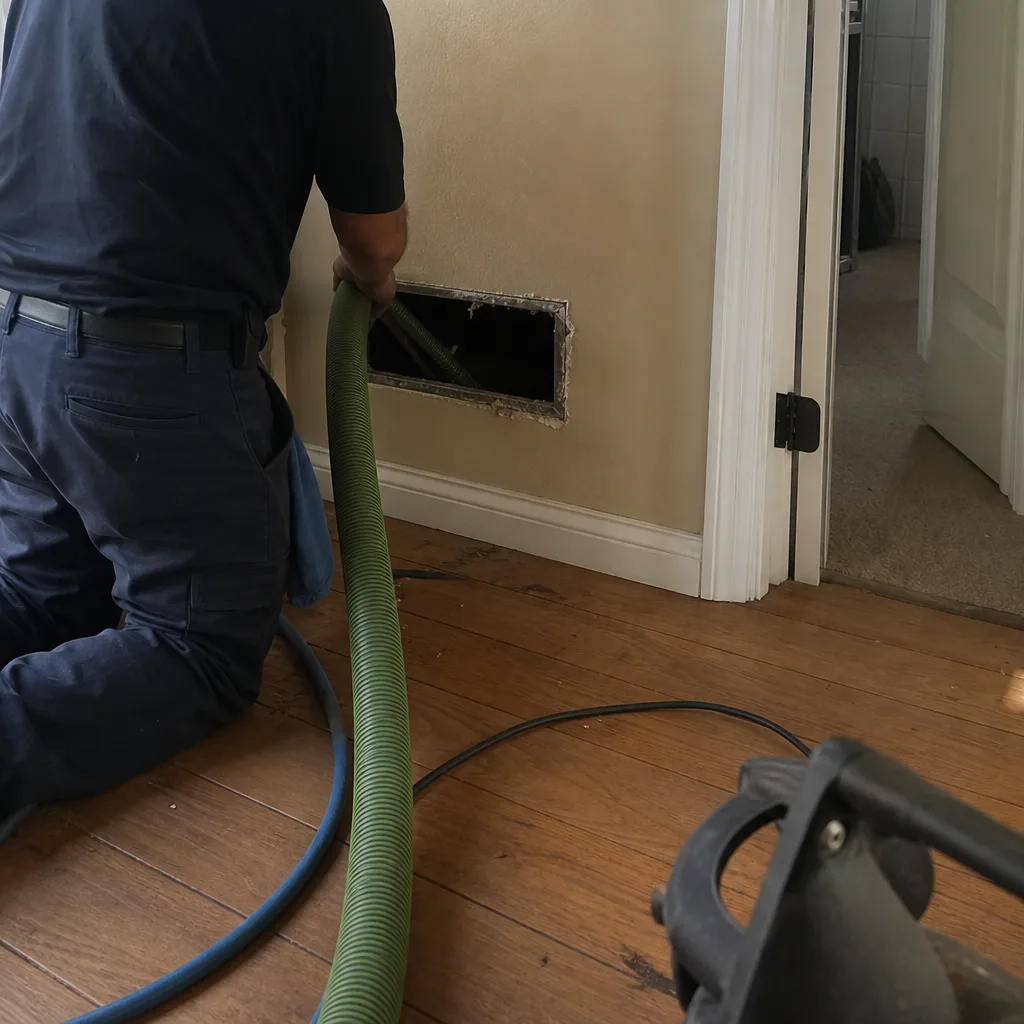 Before
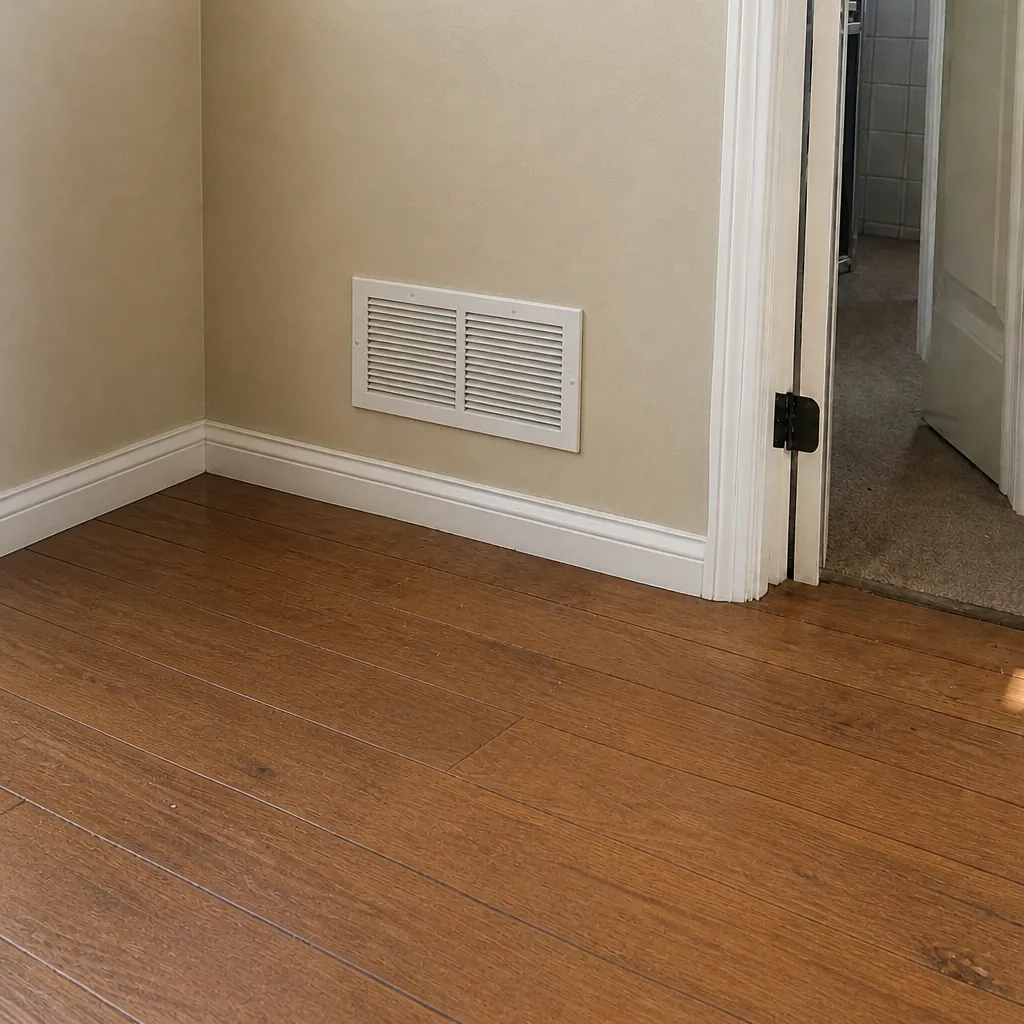 After
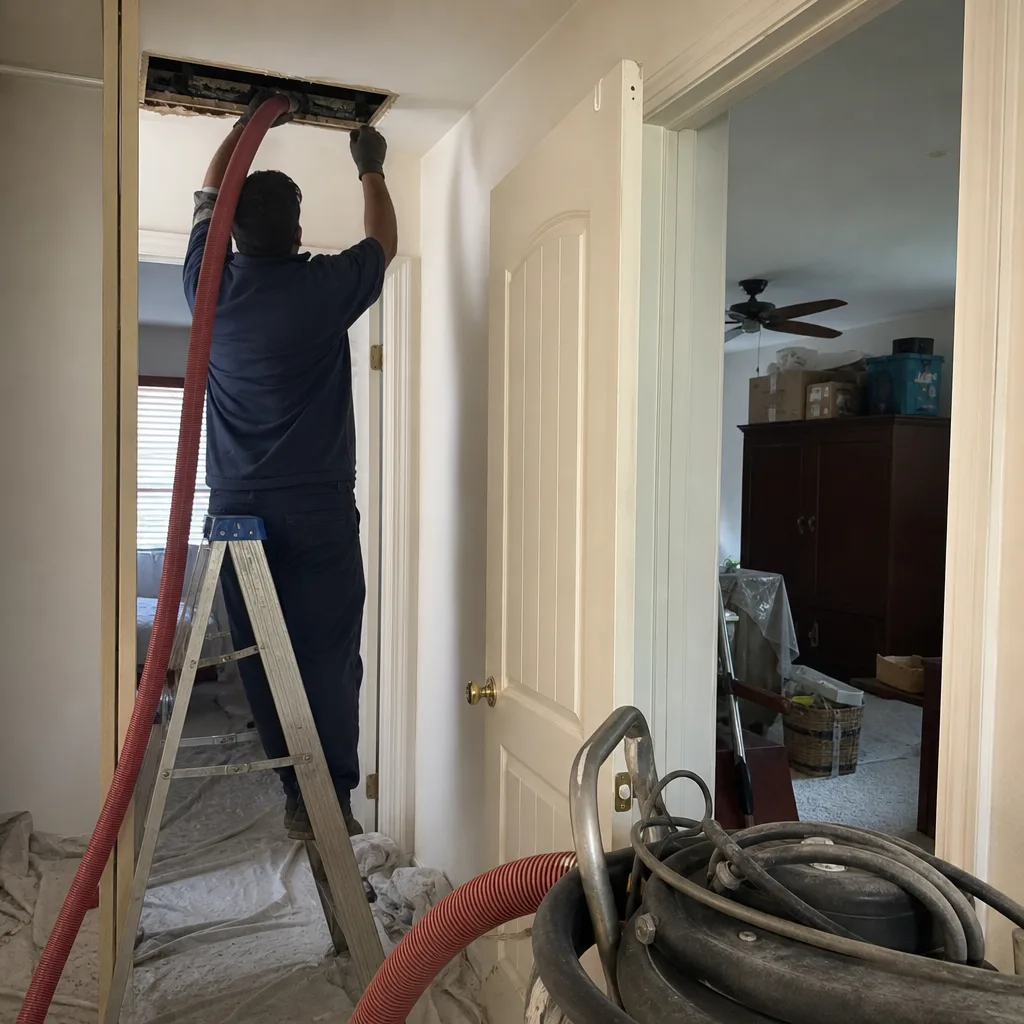 Before
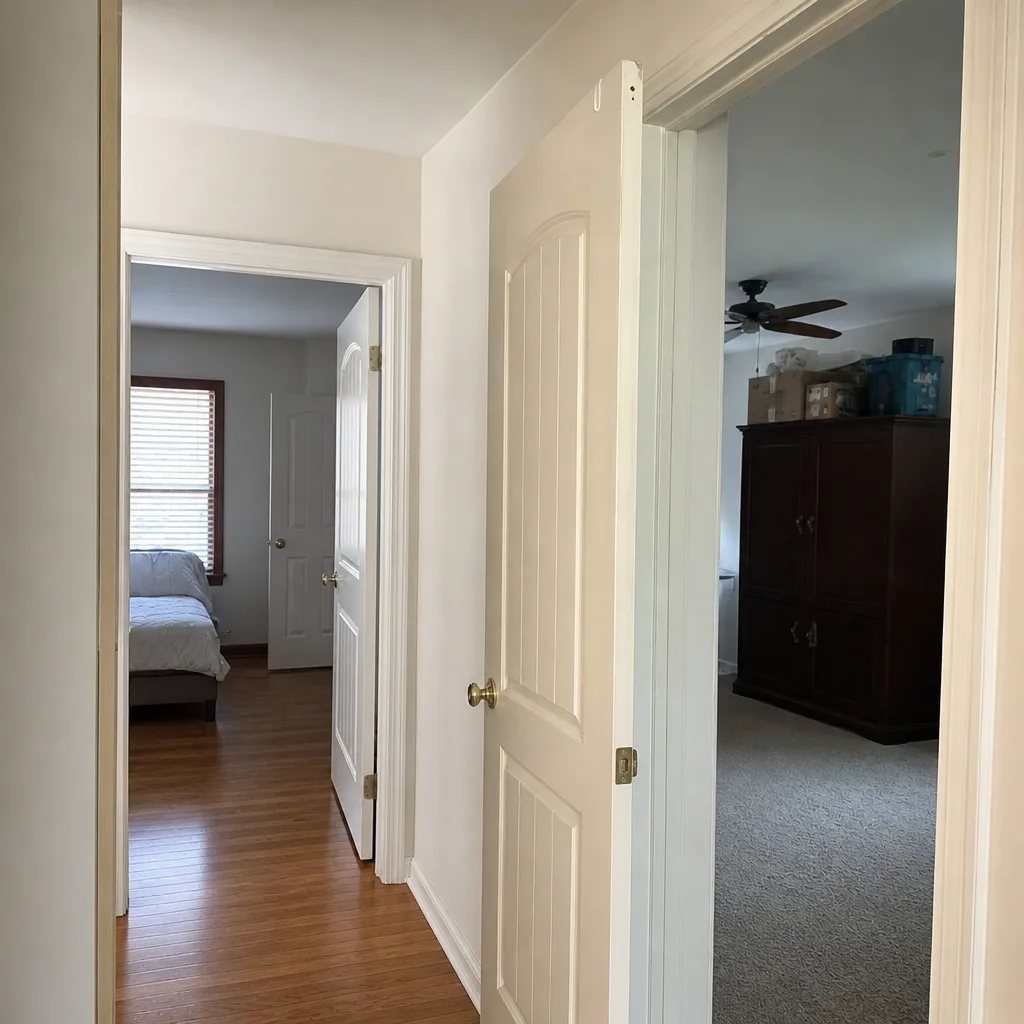 After
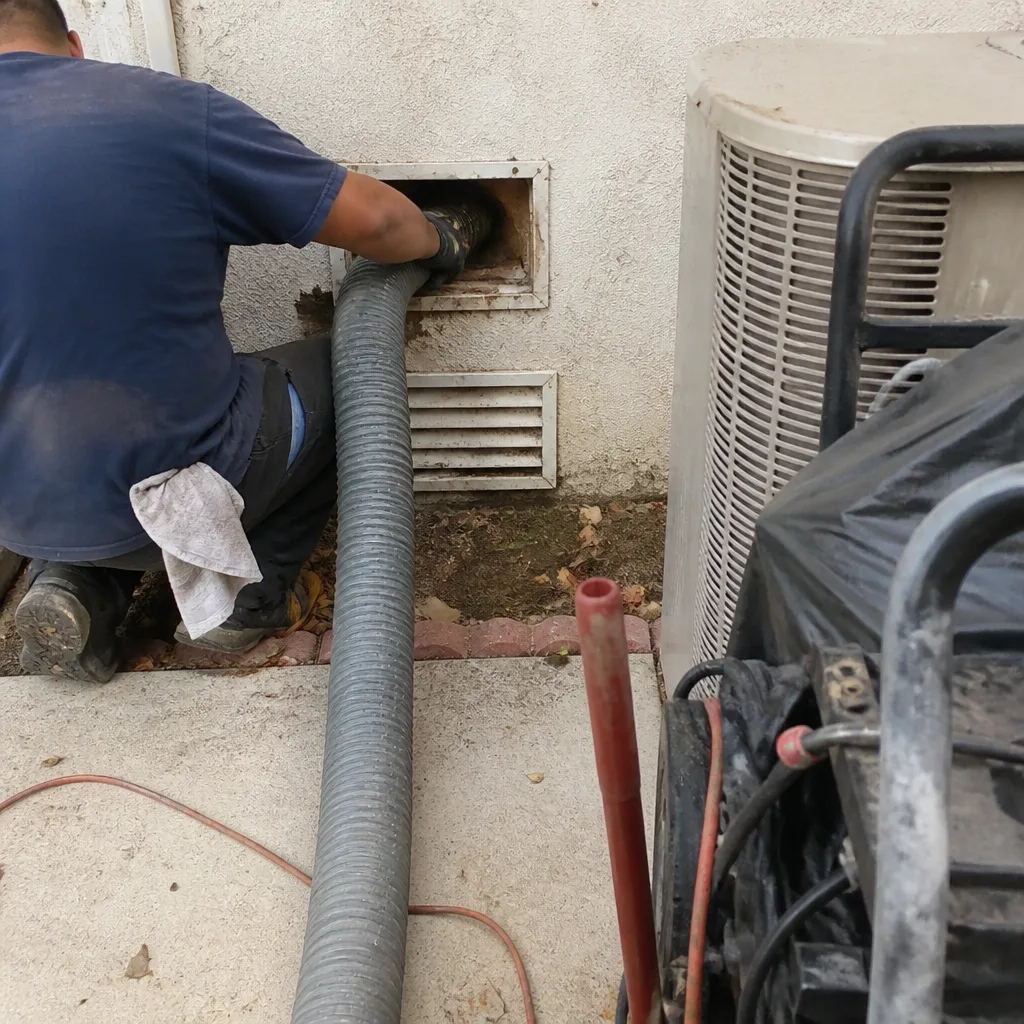 Before
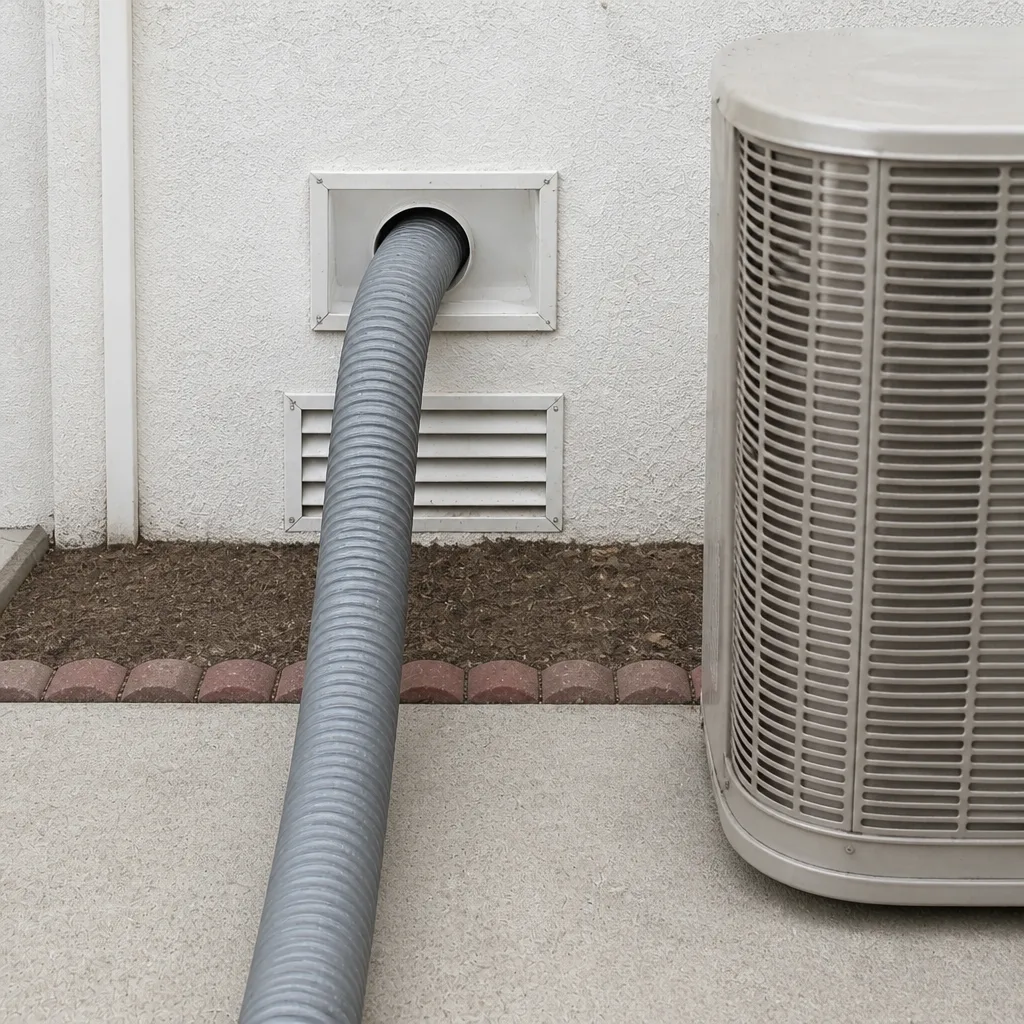 After
When to Call a Professional
DIY is a reasonable choice for register maintenance, and we’ll tell any Anaheim Hills homeowner to start there. It stops being the right call in specific situations. If anyone in the home has allergies or respiratory sensitivity and dust levels remain high despite filter changes and register cleaning, the system behind the registers needs professional attention. After a renovation, fire, or smoke event, the contamination volume and type require professional capture equipment. If you’re seeing visible dust streams from a register when the system starts or a persistent musty odor at startup, those are signs of trunk-line or air-handler contamination that DIY cannot reach. Dryer vents, especially vertical runs, are a fire safety matter and should be professionally cleaned. And if you’re buying an Anaheim Hills home, a pre-move-in cleaning gives you a known starting point. Air Duct Cleaning Anaheim Hills offers free estimates in Anaheim Hills. Call (855) 526-8990. We answer 24/7. Fast dispatch from 7am to 7pm, Sunday through Friday.
Frequently Asked Questions
You can clean the register grilles and the first few feet of duct with a shop vac, but you cannot reach the trunk lines or return plenums where most contamination accumulates. A shop vac is a valid tool for register maintenance and a valid tool for cleaning up after a small spill. It isn’t a duct-cleaning system, and treating it like one produces a false sense of completion in a typical Anaheim Hills home. Call (855) 526-8990 for an exact quote on whole-system cleaning. Estimates are free.
Pricing depends on the size of the home, the number of runs, and whether the return and air handler are included, so we don’t quote a number over the phone. What we can tell you is that the estimate is free, it’s in writing, and it’s one flat price per system agreed before any work starts. That protects you from the bait-and-switch pricing model this industry is known for. Call (855) 526-8990 for an exact quote. Estimates are free.
Low quotes are usually one of three things: a teaser price that grows once the technician is on site, a scope that covers supply registers only and skips the return and air handler, or a visit that opens a register and vacuums it without any whole-system reach. Any of those can look inexpensive on a flyer. The trick is to read what’s in writing and to ask specifically whether the return plenum and air handler are included. Call (855) 526-8990 for an exact quote. Estimates are free.
Ask for before-and-after photos of your own ducts, not stock images, and ask whether camera verification is included. A professional cleaning should produce visible debris in the collection unit, and the technician should be willing to show you. We use Rotobrush and Nikro systems for this reason: the equipment produces visual confirmation of what was removed. Call (855) 526-8990 for an exact quote. Estimates are free.
Every 3 to 5 years for most Anaheim Hills homes, sooner if you have pets, allergies in the household, recent renovations, or you’ve just moved in and don’t know the system’s history. Homes with older flex duct may need it more often. The climate here means long cooling seasons that push more air through the ducts, so the interval tends to be on the shorter end. Call (855) 526-8990 for an exact quote. Estimates are free.
Yes. Post-renovation cleaning involves a much higher volume of construction dust, and the sequence matters: containment and negative pressure come first so the dust is captured before agitation, not redistributed into the living space. Attempting this with a shop vac can make the problem worse. Abatement Technologies air-scrubbing equipment is part of how we handle these visits. Call (855) 526-8990 for an exact quote. Estimates are free.
The Bottom Line
The question of DIY versus professional air duct cleaning isn’t about whether you’re capable. It’s about reach. Register maintenance is real maintenance and worth doing yourself. Trunk lines, return plenums, and air handler components are outside the reach of consumer tools, and nothing you can buy at a hardware store changes that. The honest dividing line in an Anaheim Hills home is the register boot, and on the other side of it, professional equipment does work that DIY cannot approximate. If the system behind the registers is what’s actually bothering you, the right call is a free written estimate from a company that will tell you what’s included before you commit. Call (855) 526-8990. We answer 24/7. Fast dispatch from 7am to 7pm, Sunday through Friday.
Written by the team at Air Duct Cleaning Anaheim Hills.