
Last updated November 24, 2026
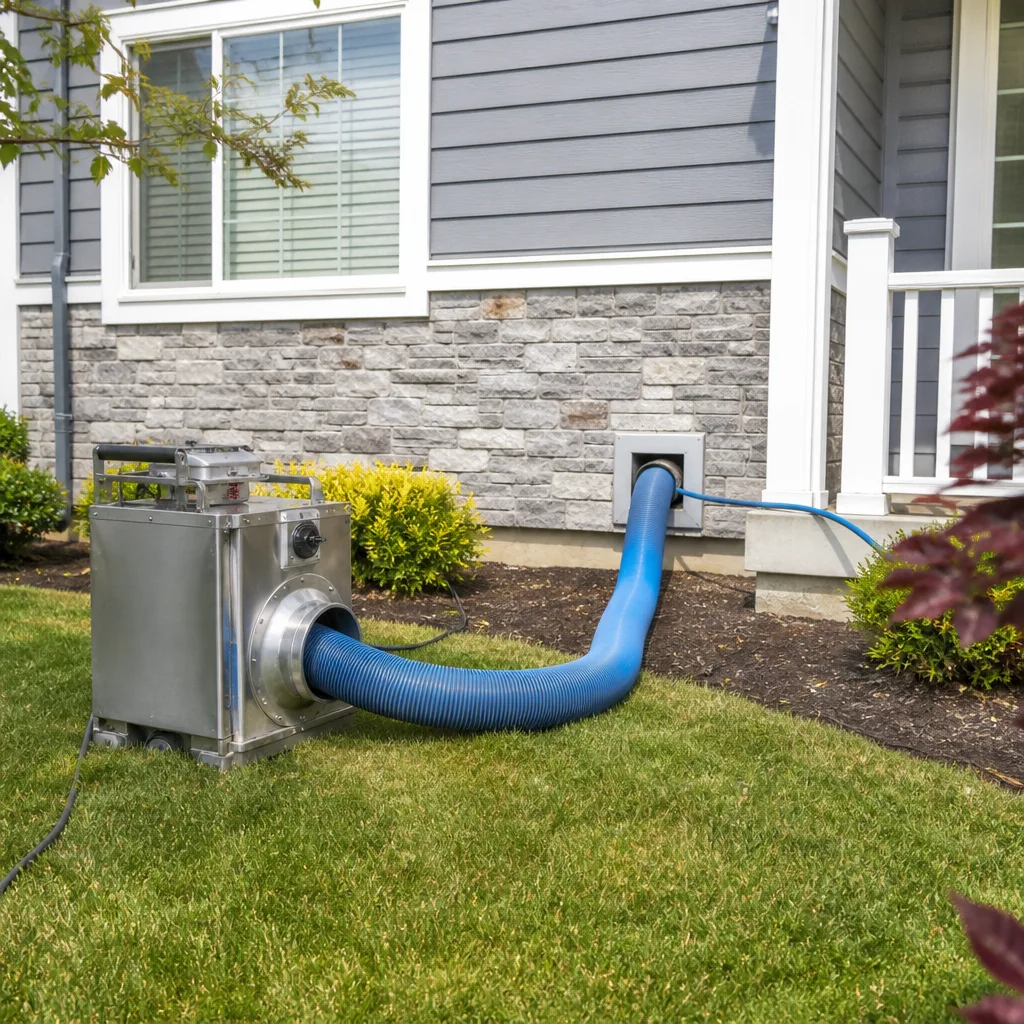 Whole-home duct cleaning
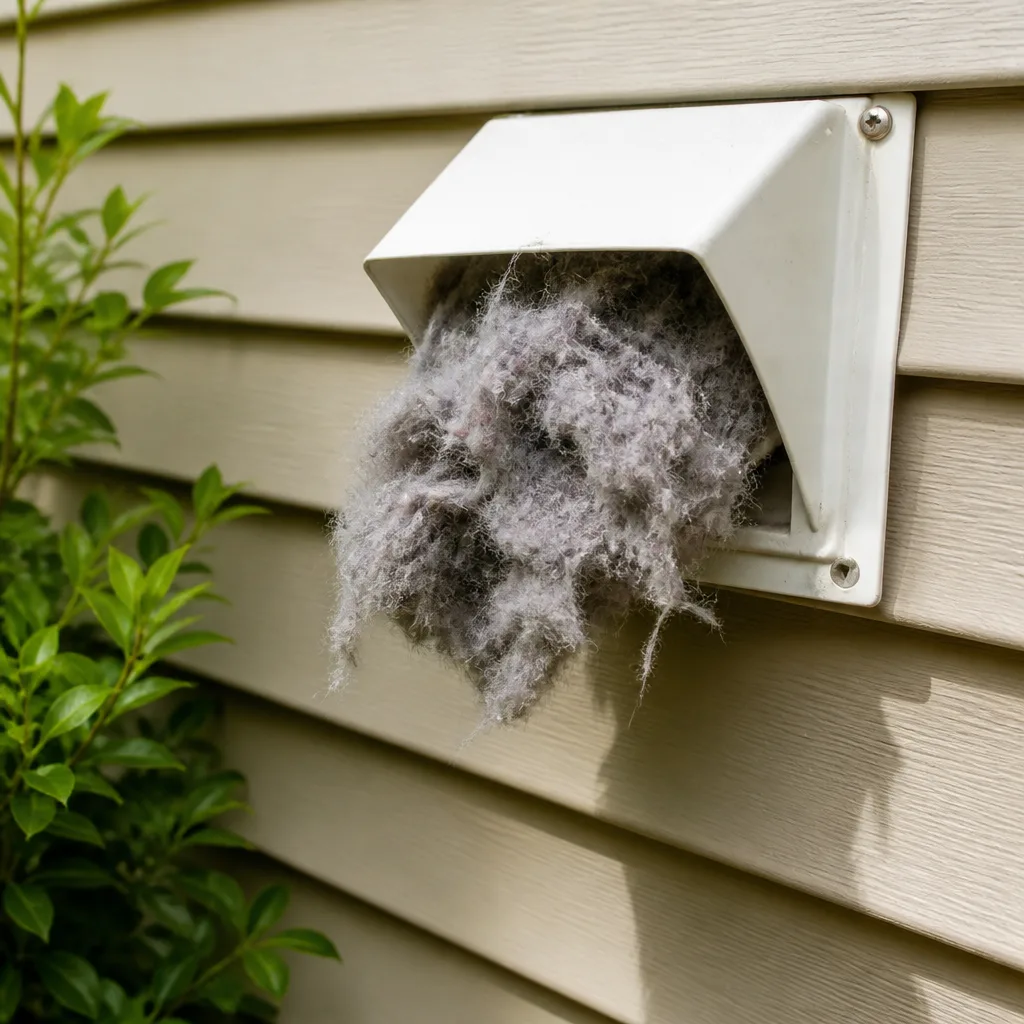 Dryer vent cleaning
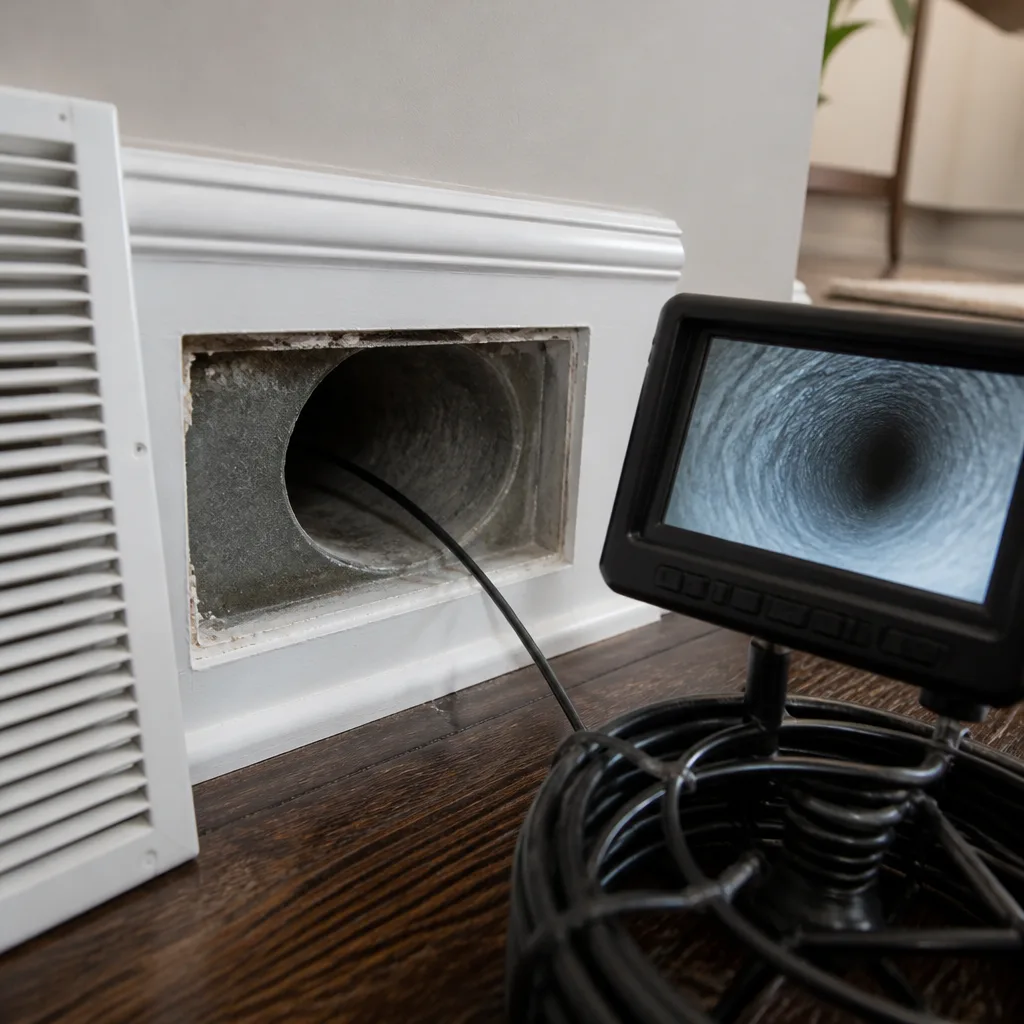 Camera inspection
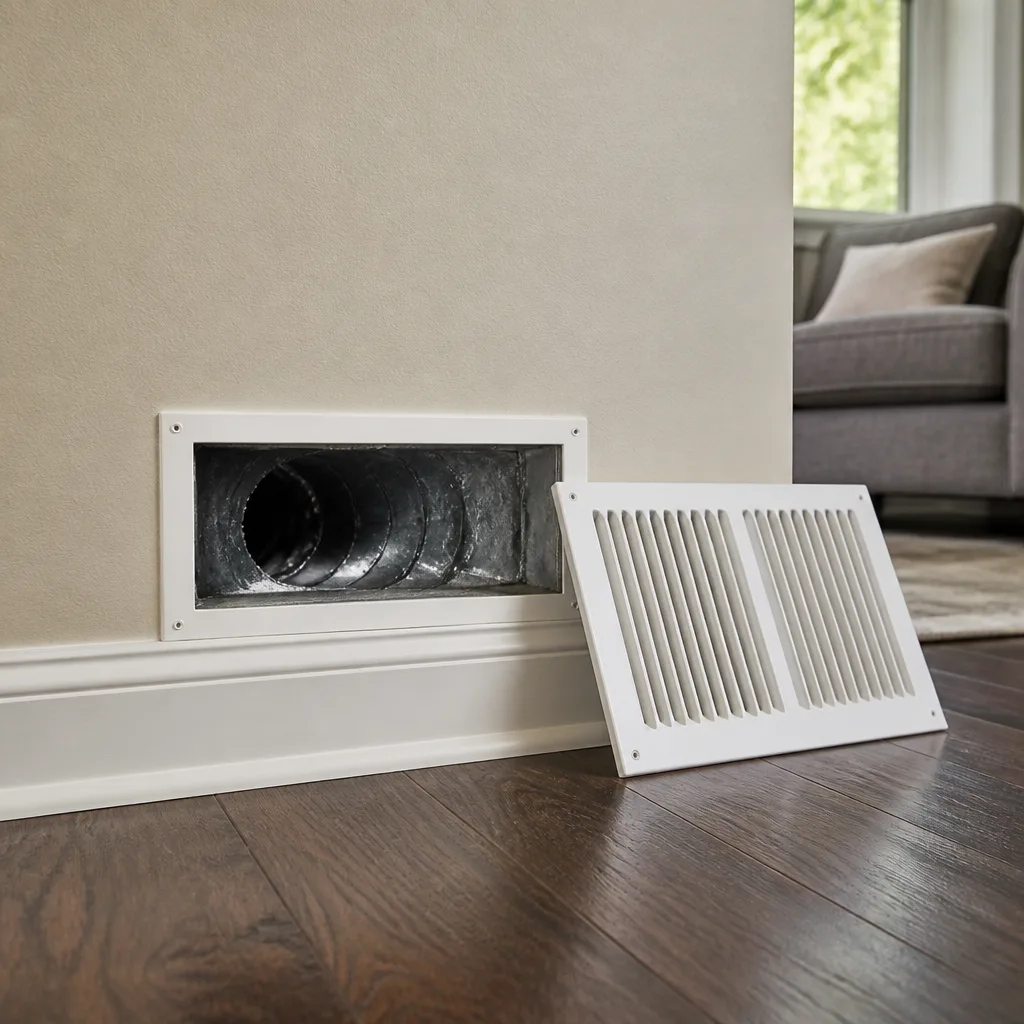 Sanitizing & deodorizing
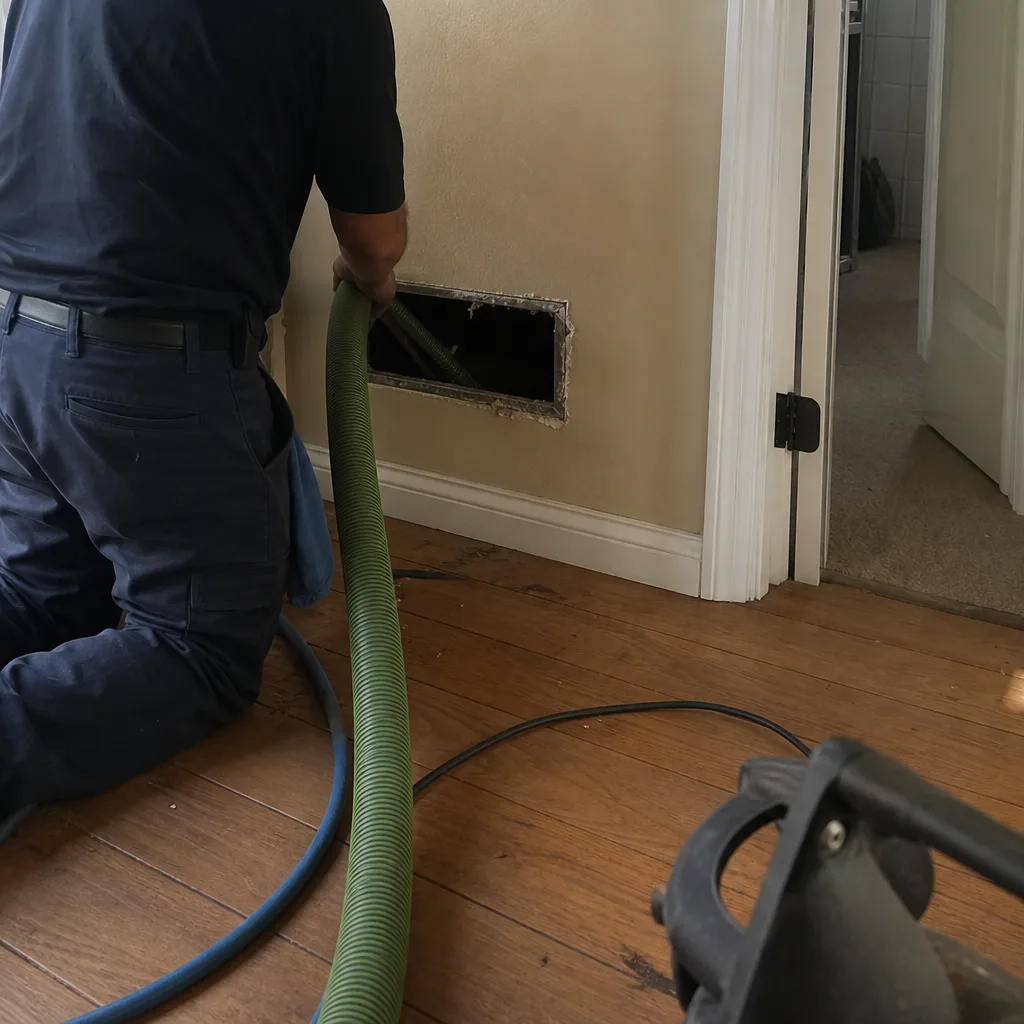
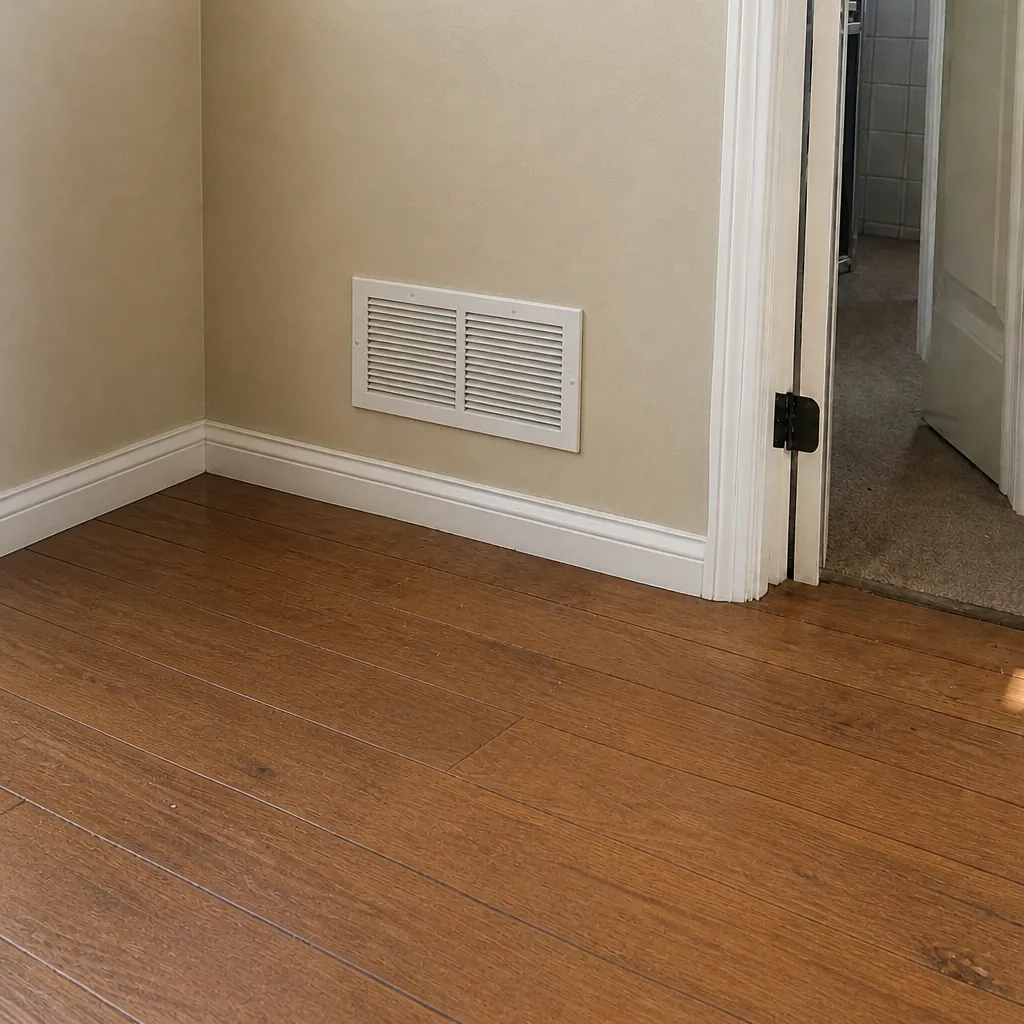
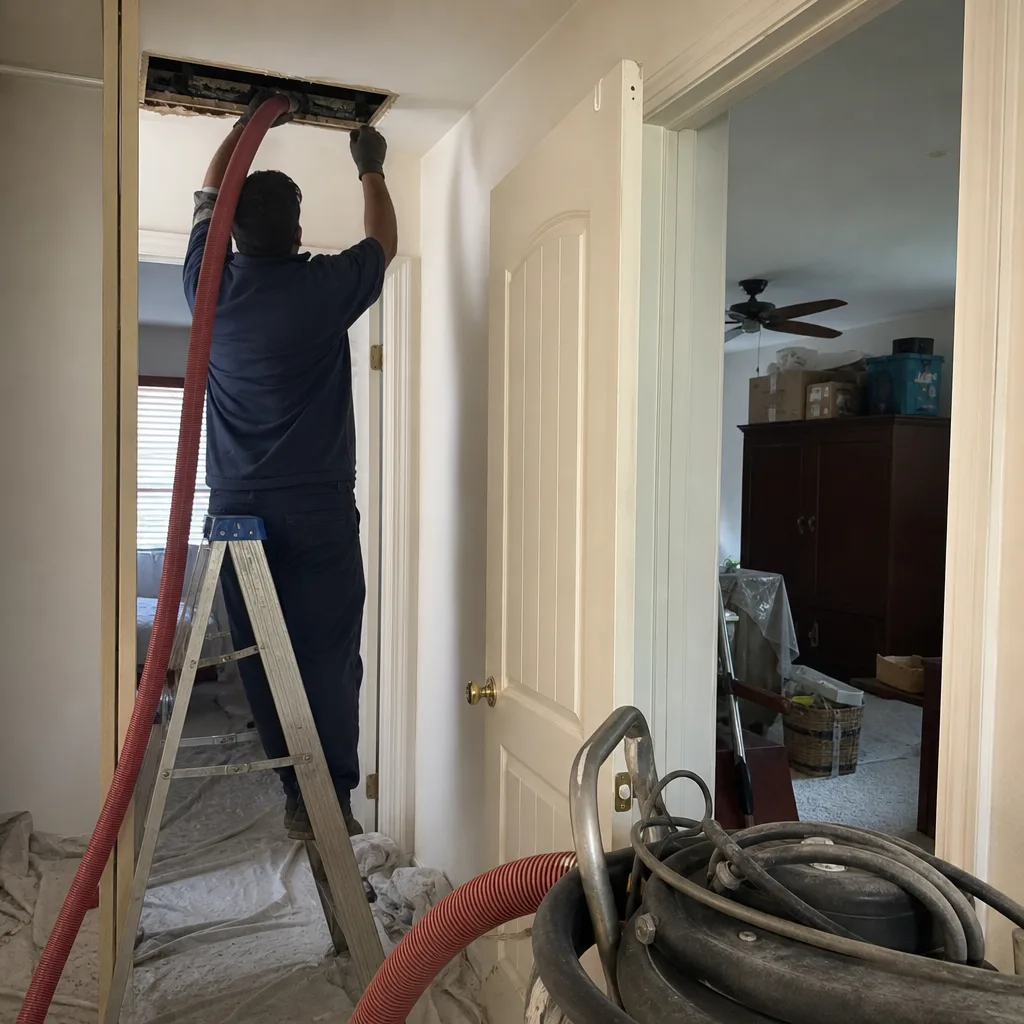
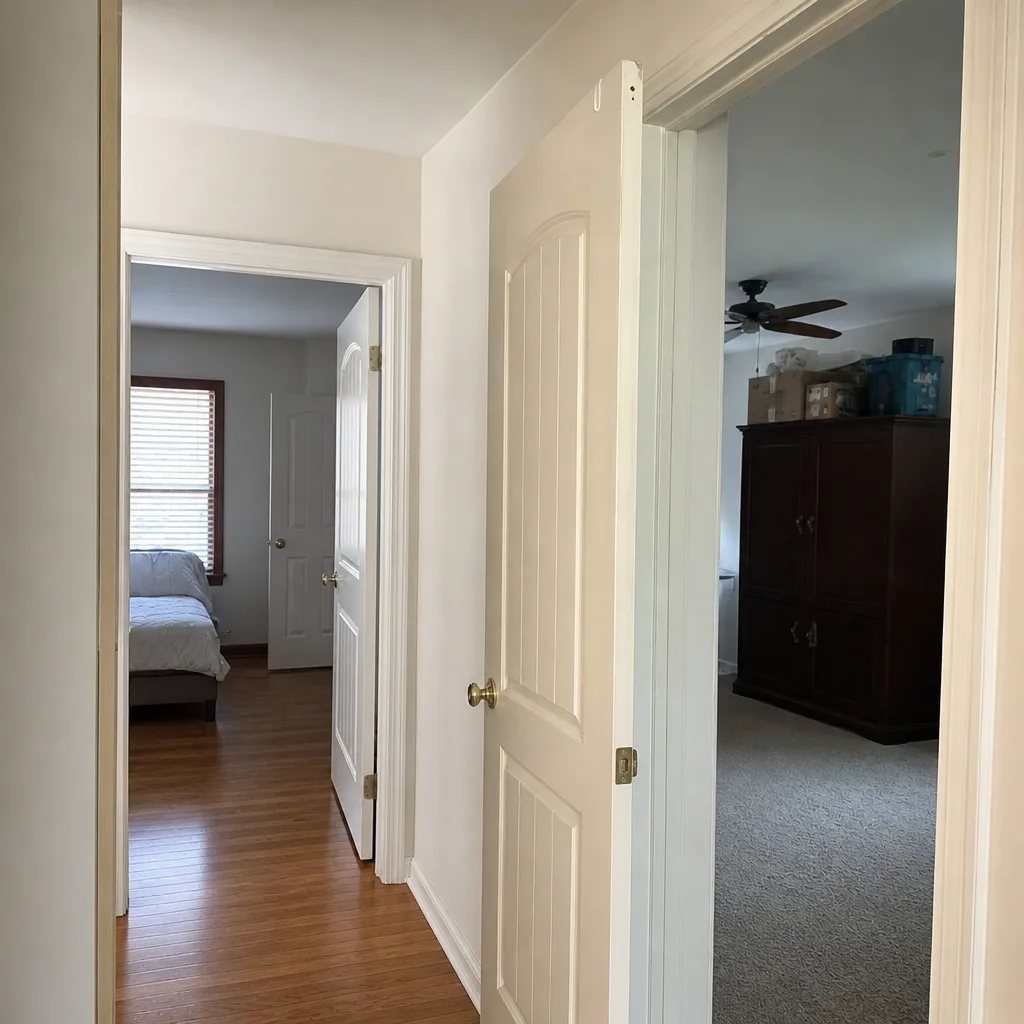
Whole-system duct and dryer vent check with before-and-after photos - you see exactly what came out of your vents
That "$99 whole-house special" is a bait ad - the real number appears once they are in your hallway, or the "clean" is a shop-vac at the register. We photograph the inside of your ducts before and after instead.
How to Hire an Air Duct Cleaning Contractor in Anaheim Hills: A Step-by-Step Guide
California does not require a specific license to clean residential air ducts, and that single fact explains almost everything confusing about hiring in this trade. The same house on the same street can get quotes of $89 and $900, and the difference is rarely labor time. It’s whether a van-mounted negative-air machine shows up or a shop vacuum with a brush attachment. This guide is about auditing capability, not collecting certification logos. We walk through the exact questions to ask, the license lookup that actually matters under California law, what a legitimate quote itemizes, and the red flags we see repeatedly in the Anaheim Hills market. You’ll finish knowing how to tell a real duct cleaner from a marketing operation that happens to own a vacuum.
Quick Answer
To hire an air duct cleaning contractor in Anaheim Hills, verify three things: the crew uses professional rotary-brush and negative-air equipment rather than portable vacuums, you have a written quote that itemizes trunk lines, branch lines, returns, and registers separately, and the company can show you before-and-after photos of your own system when the job is done. California doesn’t require a specific duct-cleaning license, so the contractor’s equipment list and verifiable process carry the weight that a license normally would. Confirm mechanical or HVAC-related work is performed under a valid CSLB license, and treat any quote that bundles “whole house cleaning” into one undifferentiated number with suspicion.
Styles & brands we work with
- Whole-home duct cleaning
- Dryer vent cleaning
- Camera inspection
- Sanitizing & deodorizing
Table of Contents
- Why California Doesn’t License Duct Cleaners
- The Five Questions That Reveal a Contractor’s Real Equipment
- How to Verify a Contractor’s CSLB License
- What a Legitimate Quote Itemizes
- Red Flags in Low-Bid Duct Cleaning Offers
- Full Scope vs. Multi-Vendor: Why It Matters
- Anaheim Hills Home and Climate Considerations
- What Post-Job Documentation Should Show
Why California Doesn’t License Duct Cleaners (And What That Means for You)
The Contractors State License Board regulates construction work, and duct cleaning itself doesn’t fall under a specific class. There is no “Duct Cleaner” license in California. There’s no test, no bond requirement unique to the trade, no state standard for equipment. That’s the first thing homeowners need to absorb before they start shopping. It changes the entire hiring equation, because everything you’d normally rely on a license for now has to come from your own verification.
The trade is loosely connected to HVAC work, which does require a CSLB license when it involves altering mechanical systems. A company cleaning and sealing duct lines without touching the furnace or air handler may be operating legally without a contractor license. The moment they remove or modify components of the HVAC unit itself, or perform repairs to linework, they cross into licensed territory. So a legitimate duct cleaner working in Anaheim Hills may or may not hold a CSLB license, depending on the exact scope of what they do. That’s not a red flag. What is a red flag is a company claiming to be “licensed HVAC contractors” without a number you can look up.
What this means for you: the equipment, the process, and the documentation have to do the work a license normally does. In a state that doesn’t regulate the trade, those three things are the only real signal. We name our equipment because it matters – a Rotobrush rotary-brush system is a different order of tool from a portable shop vacuum, and “state-of-the-art” means nothing unless the contractor will tell you exactly what shows up on your driveway.
The Five Questions That Reveal a Contractor’s Real Equipment
Equipment is the single most predictive factor in duct cleaning results, and it’s also the easiest thing for a contractor to describe vaguely. These five questions cut through that. Ask them on the phone before booking, and pay attention to how specific the answers are.
- Is the primary vacuum truck-mounted or portable? A truck-mount pulls 12,000 to 18,000 CFM and creates enough negative pressure to remove dust throughout the system. A portable negative-air machine runs 2,000 to 4,000 CFM depending on the unit. Both can work; a shop vacuum can’t. If the answer is “we use a powerful vacuum,” ask for the model. A contractor who uses Rotobrush or Nikro equipment will name it without hesitation.
- Do you use rotary-brush agitation or air-only cleaning? Compressed air alone loosens dust but doesn’t always detach stuck-on buildup from the duct walls. A rotary brush physically scrubs. Most professional cleaning uses both – agitation to break the bond, negative pressure to pull it out.
- Can you show me the source of the negative pressure? This is about where the vacuum connects to the system. A proper setup creates a single collection point while the rest of the system is sealed, so dust has one way to travel. If the crew doesn’t know what you’re asking, they don’t use negative pressure.
- Do you do a camera inspection before and after? The camera is not a gimmick. It’s how the contractor confirms what’s actually inside your ducts, and how they prove the work was done. Ask whether you’ll see the footage.
- How do you contain contaminants? Cleaning a duct system without containment redistributes debris into the living space. The equipment that handles this – negative-air machines and HEPA filtration – is a real cost and a real differentiator. Our technicians have up to 13 years of experience, and they’ll tell you the containment setup matters as much as the vacuum.
Anyone answering all five with specifics is worth booking. Anyone who deflects to a coupon price or an “our process is proprietary” answer is telling you what you need to know. For a deeper look at what the job actually involves, air duct cleaning covers the standard scope.
How to Verify a Contractor’s CSLB License
If any part of the job touches the HVAC unit, the furnace, or duct line repair and sealing, that portion needs a CSLB license. Verifying it takes about three minutes and settles a lot of uncertainty.
- Ask for the contractor’s license number in writing, not from memory. If they can’t produce it, that’s the answer.
- Look up the number at the CSLB website (cslb.ca.gov). Confirm the license is “Active” and the classification matches the work described. HVAC-related work falls under the C-20 (Warm-Air Heating, Ventilating and Air-Conditioning) or C-38 (Refrigeration) classifications depending on the scope.
- Check the “expiration date” field and the “bond” status. A license that’s active but uninsured is only half a license.
- Review the complaint history if any is listed. One complaint isn’t disqualifying. A pattern is.
- Confirm that the contractor’s business name matches the name on the license. A common scam involves using another company’s license number in advertising.
For work that only involves cleaning ductwork (not modifying it), a CSLB license isn’t required. In that case, ask for the contractor’s business license from the city of Anaheim, proof of general liability insurance, and evidence of workers’ compensation coverage. Any professional operation will produce all three without friction. If someone hesitates on insurance, take that as your final answer.
What a Legitimate Quote Itemizes
A real quote breaks the system apart. A bait quote rolls it all into “whole-house duct cleaning.” The difference matters because it tells you what’s actually being cleaned and forces transparency on scope. Here’s the structure to look for.
- Trunk lines (the main runs). The large-diameter ducts coming off the air handler. These carry the bulk of airflow and often collect the most debris.
- Branch lines (the smaller runs to individual rooms). Every run to a register gets listed. Ask how many you have and count them against the quote.
- Return ducts and the return plenum. Often the dirtiest part of the system, and sometimes quoted separately or omitted entirely. Return side cleaning is not optional.
- Supply and return registers and grilles. These get removed, cleaned, and reinstalled. Confirm they’re included rather than an upsell.
- Air handler or HVAC unit cleaning. Coils, blower, and cabinet. Often quoted as a separate line item because it’s a separate service – see our page on HVAC cleaning for the scope.
- Duct repair and sealing. If the inspection turns up loose joints, disconnected runs, or degraded flex duct, sealing is quoted separately. Cleaning without sealing means the dust comes right back through the leaks.
- Sanitizing or air quality treatment. If you opt in, this appears as its own line, with the specific product named. Honeywell, Aprilaire, and Guardsman products are typical. It shouldn’t be hidden inside the base price.
- Dryer vent cleaning. Separate service with its own line. Some contractors bundle it; the quote should still show it separately.
The final number should be a single flat price per system, agreed before work starts. No per-vent pricing, no per-register upcharges that emerge on site. If the quote has a per-vent line, walk.
Red Flags in Low-Bid Duct Cleaning Offers
Every market has them, and Anaheim Hills is no exception. The coupon-du-jour approach to duct cleaning is a known industry pattern, and the mechanism is always the same: a low headline price that gets replaced with a much larger invoice once the technician is on site. Here’s what to watch for.
- Per-vent pricing. “Only $49 per vent” sounds cheap until you learn your system has 18 vents, plus returns, plus a plenum. A legitimate quote prices the whole system.
- No camera inspection. If the contractor won’t show you what’s inside the ducts before and after, you can’t verify anything. A camera inspection is a five-minute step that separates legitimate operators from people who plan to leave quickly.
- One-line quotes. “Whole-house duct cleaning: $199.” What’s included? Which runs? Are returns covered? A quote that won’t itemize is designed to leave room for surprises.
- Pressure to “clean the whole system today.” Real duct cleaning is a scheduled job with a scope that’s discussed in advance. Urgency on the initial call is a sales tactic, not a service indicator.
- No mention of equipment. A contractor who can’t name a truck-mount, a portable negative-air machine, or the agitation tool they use is describing a shop vacuum. Ask.
- Sanitizing sold as mandatory. Sanitizing is a real service and it belongs in the quote when you ask for it. It shouldn’t be a scare-tactic add-on in the driveway.
- No written estimate. If you don’t have the price in writing before work starts, you don’t have a price.
For a closer look at the honest range of the market, the Air Duct Cleaning Anaheim Hills page walks through what equipment-backed work actually costs and what’s included.
Full Scope vs. Multi-Vendor: Why It Matters
Duct cleaning is one part of a system, and systems fail in connected ways. When the ducts get cleaned but the seals leak, the dust comes back through the gaps. When the return side is skipped, half the system stays dirty. When the dryer vent is ignored, air quality inside the home stays compromised regardless of what the ducts look like. When sanitizing is needed and the cleaner doesn’t do it, you’re calling a second company.
Here’s the practical question: can the company you hire handle cleaning, repair and sealing, sanitizing, dryer vent and HVAC unit cleaning in one booking? Or will you end up coordinating two or three vendors, each insisting their own scope is complete?
A full-scope contractor handles five categories together: residential and commercial duct cleaning, dryer vent cleaning, full HVAC system cleaning, duct repair and sealing, and air quality sanitizing. When those live under one relationship, the contractor can sequence the work correctly – clean first, then seal the leaks, then sanitize the treated surfaces. Out of order, the sequence breaks down. Sealing before cleaning traps debris. Sanitizing before sealing lets the treated air escape through gaps. Cleaning without either leaves the system functionally unchanged.
Ask the question directly: “Can you seal the leaks you find during cleaning, sanitize afterward, and clean the dryer vent in the same visit?” If the answer involves a subcontractor or a “we’ll refer you,” the relationship stops being one-stop in the ways that matter. For dryer vent scope specifically, see dryer vent cleaning.
Anaheim Hills Home and Climate Considerations
Anaheim Hills sits above the Santa Ana Canyon with a climate that shapes duct conditions in ways a contractor from a different region won’t anticipate. Summers run hot and dry, with weeks of triple-digit temperatures that push the HVAC system into constant use. That intensity has consequences for dust and debris accumulation. Air moving through a duct system at full demand for months at a time pulls in particulates from return air and deposits them in cooler corners of the linework.
The dry air matters too. Wood framing and flex duct connections expand and contract through the summer-to-winter swing, and gaps form at joints over time. Every gap is a point where conditioned air escapes and unfiltered attic or crawlspace air enters. In older Anaheim Hills homes built into the canyon slopes, HVAC systems often sit in hot attics with long, complex duct runs. Canyons and hilltop lots are notoriously dusty during the dry season, and construction dust from ongoing hillside development ends up inside the return side of the system more often than homeowners expect.
None of this argues for cleaning on a fixed schedule. It argues for a proper inspection, which is what a real contractor will offer before quoting. If you’re in the hills above Weir Canyon or near the Anaheim Hills Golf Course, and the HVAC system has been running hard through several summers without any duct work, an inspection is a reasonable first step. What the camera shows determines whether cleaning is needed. Our team covers the area as part of air duct cleaning throughout Anaheim Hills.
What Post-Job Documentation Should Show
Verification is the biggest gap between what a contractor promises and what the homeowner can actually confirm. You weren’t in the attic during the cleaning. You didn’t see what came out of the return plenum. So the contractor’s post-job documentation carries the whole weight of trust. Here’s what a real one looks like.
- Before-and-after photos of your own ducts. Not stock images, not a marketing page, your actual system. Taken during the job, with identifiable duct features in the shot.
- Camera footage from before and after. If a camera inspection was done up front, the after footage should exist. Ask for both.
- A written report of what was found and what was done. Which runs were cleaned, which returns, whether any leaks were discovered, whether sealing was performed, whether sanitizing was applied and with what product (Aprilaire, Honeywell, Guardsman).
- Photos of any repairs made. If flex duct was reconnected or mastic was applied at a joint, you should see it.
- A note on anything the contractor recommends for the future. Not a sales pitch, a written observation. “The return plenum needs work in the next year” is useful. “Call us again in six months” isn’t.
If a contractor can’t produce any of this, the work isn’t verified. It happened, or it didn’t, and you have no way to tell. For a broader picture of how professional-grade equipment ties into documentation, our main page walks through the process end to end.
Common Mistakes to Avoid
- Booking on price alone. The $89 quote and the $900 quote are not the same job. The low number is a placeholder for whatever the technician decides to charge once the truck is parked. Compare scope, not headline price.
- Skipping the equipment questions. If you don’t ask what vacuum and agitation tool will show up, you don’t know what’s coming. A shop vacuum and a truck-mount are not interchangeable, and the phone call is your only window into which one you’re getting.
- Not asking about containment. Cleaning a system without negative-air containment redistributes dust into your Anaheim Hills home instead of removing it. The machine doing the containment is a real cost, and asking about it filters out the operators who skip it.
- Assuming cleaning alone solves air quality. Leaking ducts re-contaminate the system within weeks. Cleaning without sealing is half a job, and asking whether sealing is available is a fair question on the first call.
- Overlooking the dryer vent. It’s part of the airflow ecosystem in the home and often gets skipped in the duct-cleaning quote. It should appear as its own line, even if you don’t book it.
- Accepting “we cleaned everything” without photos. You weren’t up there. Photos and camera footage of your own system are the only real proof the work happened. Any contractor who resists showing you is signaling something.
- Believing a national brand guarantees quality. Franchise operations and local independents both vary wildly. The brand name doesn’t clean your ducts. The equipment and the crew do.
See the difference
 Before
 After
 Before
 After
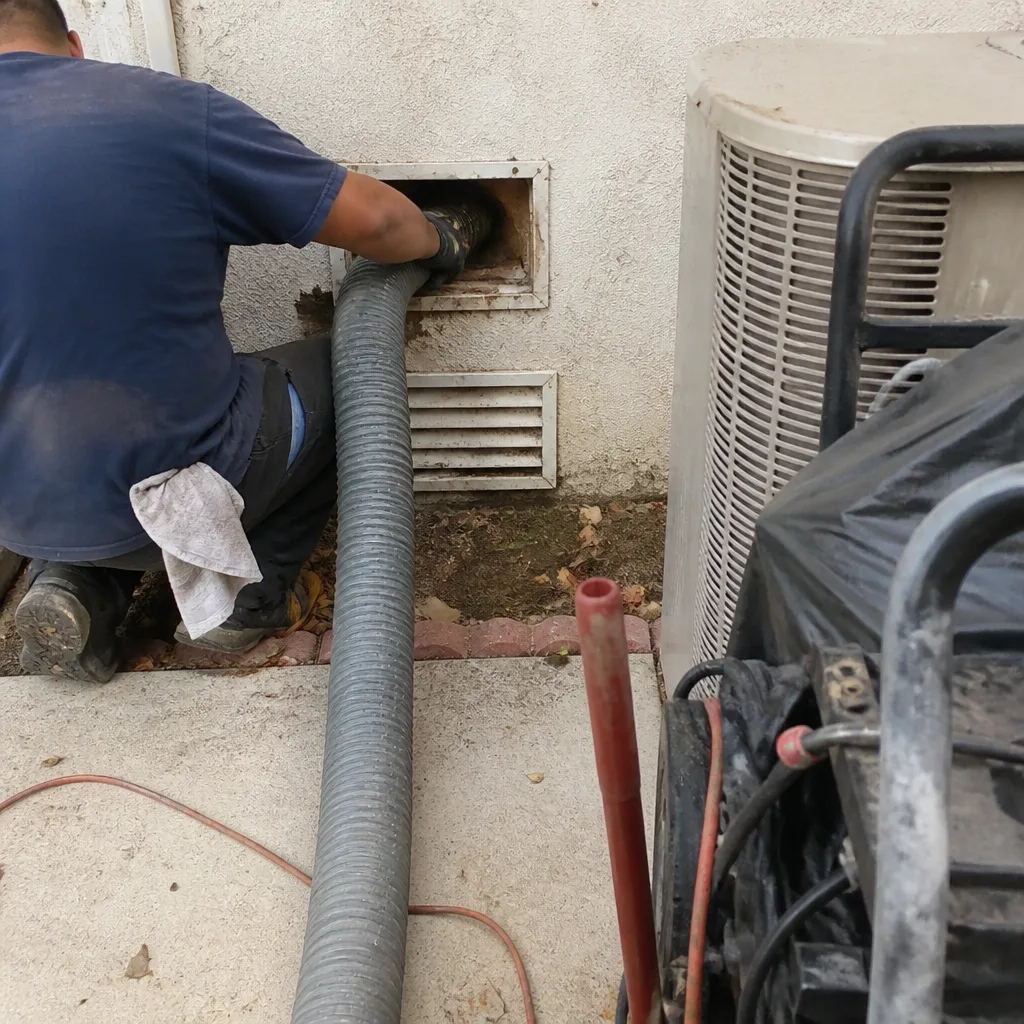 Before
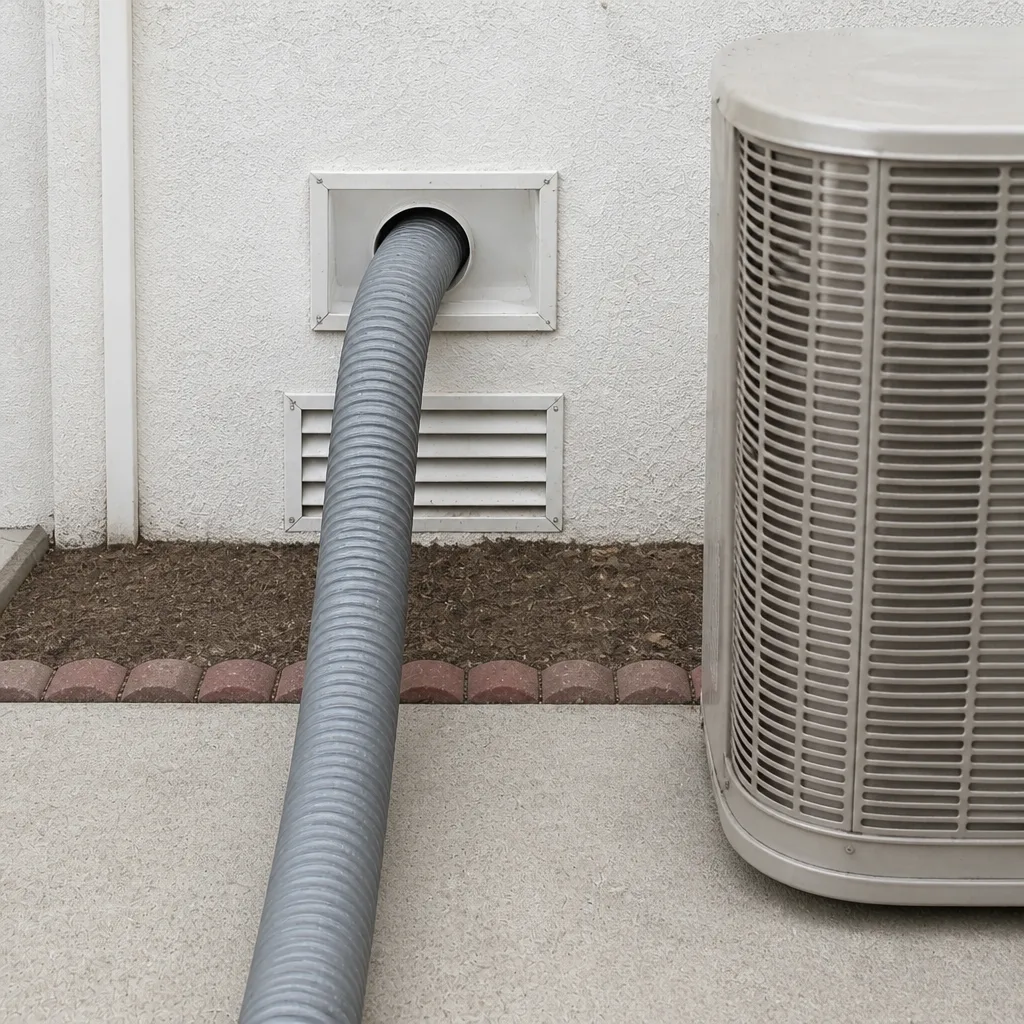 After
When to Call a Professional
Some situations call for a professional inspection without much debate. If you see visible dust blowing out of supply registers when the system starts, that’s active debris in the linework. If anyone in the household has chronic respiratory irritation that clears when they leave the house, the duct system is worth examining. If you’ve recently finished a remodeling project in Anaheim Hills and the HVAC was running during the work, drywall dust has almost certainly entered the return side. If you’re buying a home and the previous owner’s maintenance history is unclear, an inspection is a reasonable request before close. If your HVAC blower is running harder than it used to or rooms aren’t heating and cooling evenly, duct leaks may be the cause, and cleaning plus sealing addresses both. Air Duct Cleaning Anaheim Hills offers free estimates in Anaheim Hills at (855) 526-8990.
Frequently Asked Questions
Most duct cleaning jobs in Anaheim Hills come in as a flat per-system price set by a written estimate, and the honest range in the market spans from a few hundred dollars for a straightforward single-system home to a higher figure when the scope includes sealing or HVAC unit cleaning. There is no per-vent rate worth trusting. Ask for the estimate in writing before work starts. Call (855) 526-8990 for an exact quote – estimates are free.
Cheap quotes are usually cheap because the equipment is smaller, the scope is narrower, or the price is designed to grow on site. A shop vacuum and a truck-mounted negative-air machine look similar from the driveway but produce completely different results. A low number is often a teaser that becomes a much larger invoice once the technician is inside. Ask what equipment shows up, ask what the quote covers line by line, and compare those answers across contractors. Call (855) 526-8990 for an apples-to-apples estimate.
Before-and-after photos of your own ducts, plus camera footage from before and after the cleaning. Not stock images. Not a brochure. If the contractor won’t provide them, the work isn’t verifiable. A written report of what was found and what was cleaned, including whether any leaks were discovered, is the other half of that proof. Call (855) 526-8990 for an exact quote – estimates are free.
There’s no universal schedule. In Anaheim Hills, homes that run the HVAC hard through long hot summers and sit near construction or canyon dust tend to build up faster than other homes, but the honest answer is that the inspection determines the schedule, not a calendar. If the camera shows clean ducts, you don’t need the service. If it shows buildup, you do. Call (855) 526-8990 for a free estimate and an honest read on what your system actually needs.
No. California does not require a specific license to clean residential air ducts, which is why equipment and process matter more than a certification logo. A separate mechanical or HVAC contractor license (C-20 or C-38 classifications) is required when the work involves modifying the HVAC system or repairing duct linework, and any contractor performing that scope should be able to produce a license number you can look up at cslb.ca.gov. Call (855) 526-8990 for an exact quote – estimates are free.
Yes, and it usually should. Cleaning, duct repair and sealing, sanitizing, dryer vent cleaning, and full HVAC unit cleaning are related stages of a single job, and sequencing them correctly matters – clean first, seal the leaks, then sanitize. A contractor who handles all five under one booking avoids the coordination problem of hiring several vendors. Call (855) 526-8990 to discuss the full scope.
The Bottom Line
Hiring an air duct cleaning contractor in Anaheim Hills comes down to verifiable capability, not marketing. Since California doesn’t license the trade, ask the five equipment questions and insist on specific answers. Verify the CSLB license for any HVAC-scope work. Demand an itemized quote that breaks the system into trunk lines, branch lines, returns, and registers, and treat per-vent pricing as a non-starter. Ask whether sealing, sanitizing, and dryer vent work are handled in the same relationship. And when the job is done, expect before-and-after photos of your own ducts. The contractor who answers all of that without friction is the one worth booking.
Contact Us
If you’re ready for a quote built around professional-grade equipment and a process you can verify, call Air Duct Cleaning Anaheim Hills at (855) 526-8990 for a free estimate. We answer 24/7. Fast dispatch from 7am to 7pm, Sunday through Friday. Every job is one flat price per system agreed before work starts, with before-and-after photos of your own ducts at the end. The local pro is licensed and insured as their state requires.
Written by the team at Air Duct Cleaning Anaheim Hills.