
Last updated November 24, 2026
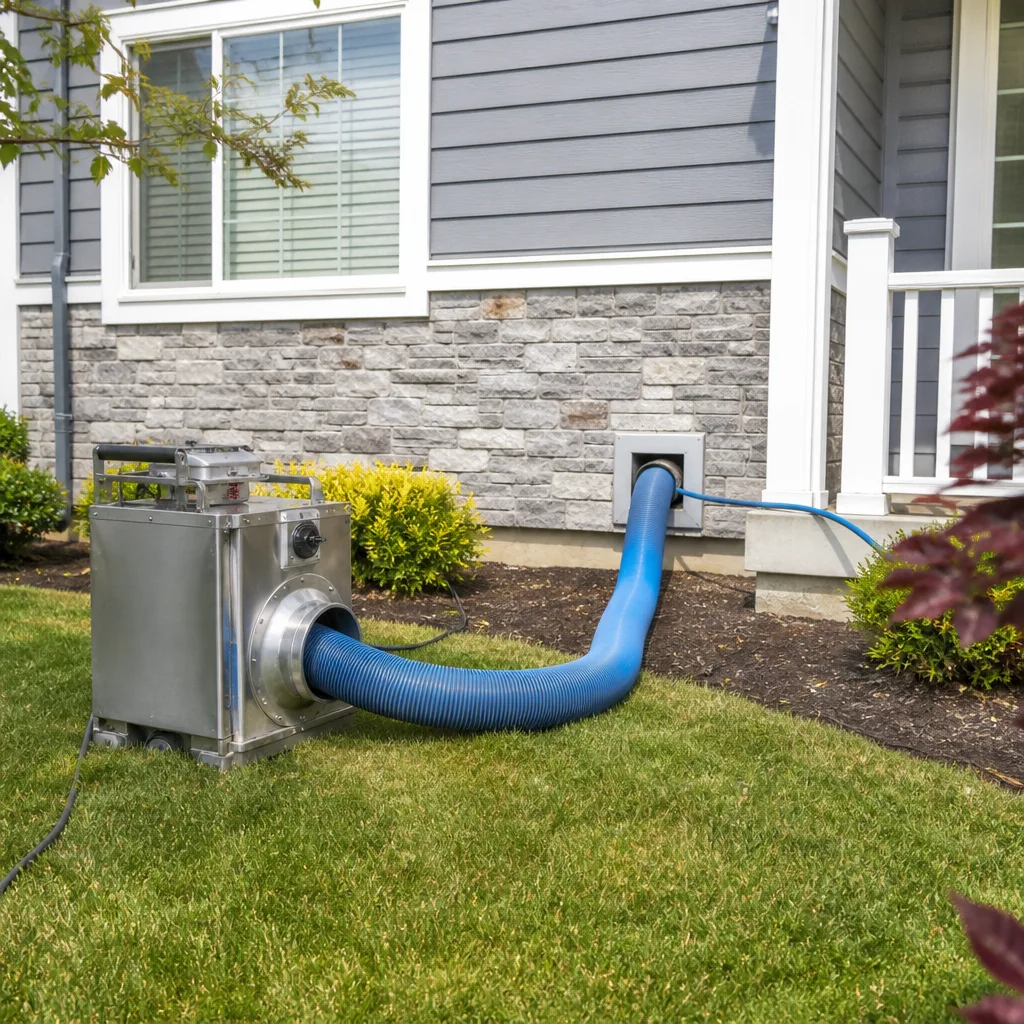 Whole-home duct cleaning
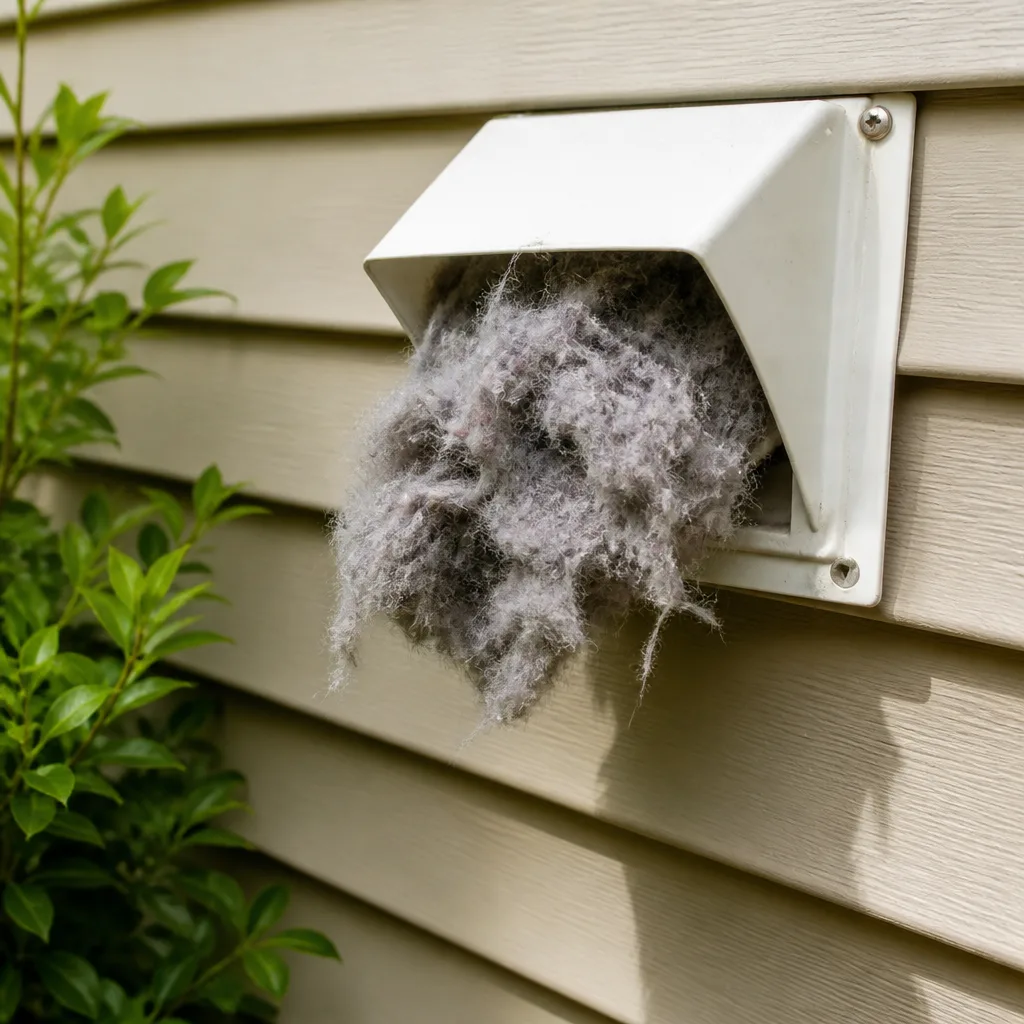 Dryer vent cleaning
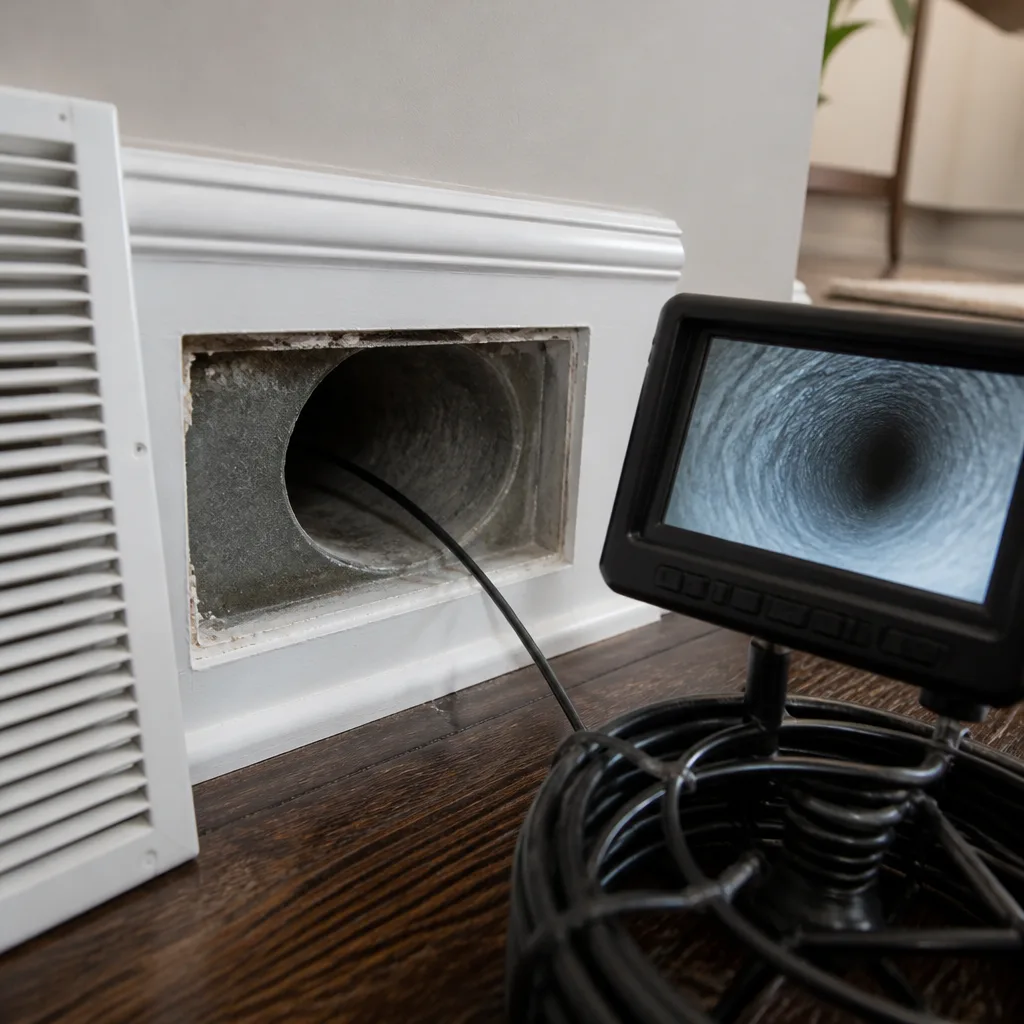 Camera inspection
 Sanitizing & deodorizing
Whole-system duct and dryer vent check with before-and-after photos - you see exactly what came out of your vents
That "$99 whole-house special" is a bait ad - the real number appears once they are in your hallway, or the "clean" is a shop-vac at the register. We photograph the inside of your ducts before and after instead.
Air Duct Cleaning Maintenance Schedule: What to Do and When
The “every 3 to 5 years” rule gets repeated everywhere, and it was written for a house in a mild, average climate with average outdoor air. An Anaheim Hills home is neither of those things. Hillside properties here sit in the path of Santa Ana wind events, take in smoke when brush fires burn in the canyons, and run ductwork through attics that get hot enough to work on seals year after year. A calendar schedule alone won’t tell you when your system actually needs attention. This guide lays out a task-based, condition-driven plan: what to do every year, what to do every couple of years, and what events should override the calendar entirely. You’ll also learn how to keep a service record that holds up when you sell.
Quick Answer
Most Anaheim Hills homes need a professional duct cleaning every 2 to 3 years, not every 3 to 5, and sooner after a wildfire smoke event, a remodel, or water intrusion. Between cleanings, the routine that matters most is filter changes every 1 to 3 months, a yearly visual check of the vents and boots, and a coil and pressure check every two years.
Styles & brands we work with
- Whole-home duct cleaning
- Dryer vent cleaning
- Camera inspection
- Sanitizing & deodorizing
Table of Contents
- Why the Default 3-to-5-Year Rule Falls Short in Anaheim Hills
- The Tiered Maintenance Framework: Annual, Biennial, Event-Driven
- Local Conditions That Compress the Timeline
- Your Annual Duct Maintenance Checklist
- The Biennial Deep Check: Coils and Duct Pressure
- Event-Driven Triggers That Reset the Clock
- What “Maintenance” Covers vs. What Needs a Technician
- How to Keep a Duct Service Log That Adds Value at Sale
- Using Whole-Home Air Quality Products to Stretch Intervals
Why the Default 3-to-5-Year Rule Falls Short in Anaheim Hills
The 3-to-5-year figure comes from broad national guidance aimed at typical homes in typical conditions. It assumes a moderate dust load, a duct system that stays dry, and outdoor air that is roughly the same week to week. In Anaheim Hills, none of those assumptions hold cleanly. A property on a hillside above the canyon floor sees two distinct dust seasons (dry and windy, then still and smoky), and its ductwork runs through attic space that bakes in summer.
That doesn’t mean the national number is wrong. It means it’s a starting point, not a schedule. Think of it the way you’d think about changing oil: the manual gives an interval, but dusty driving shortens it. Anaheim Hills homes do a lot of dusty driving.
Here’s what actually determines how fast a duct system loads up:
- Outdoor particulate load. Santa Ana wind events push fine dust and grit through the hills, and much of it gets pulled into return air.
- Smoke exposure. When brush fires burn in the surrounding canyons, smoke finds every gap in the building envelope, including return-air pathways.
- Attic heat. Duct tape and mastic seals degrade faster in a hot attic, which opens leaks that pull attic air into the system.
- Construction era. Older Anaheim Hills homes often have duct board or lined flex with seams that collect debris and are less forgiving of moisture.
- Filtration. A thin fiberglass filter catches very little. A pleated media filter changes the whole picture.
Put those together and you get a system that can go from “acceptable” to “visibly loaded” in two years, not five. The rest of this guide builds a schedule around that reality.
The Tiered Maintenance Framework: Annual, Biennial, Event-Driven
A useful duct schedule has three tiers, and they run on different clocks. Instead of asking “when was the last cleaning,” you’re tracking tasks by frequency and letting events override both. This is the structure we recommend to homeowners and property managers across Anaheim Hills.
Tier 1: Annual tasks (do these every year)
- Replace or clean the air filter. Every 1 to 3 months is the working range; lean toward the short end during windy or smoky stretches.
- Walk the house and look at every supply and return grille. Note dust streaks, dark halos, or rust.
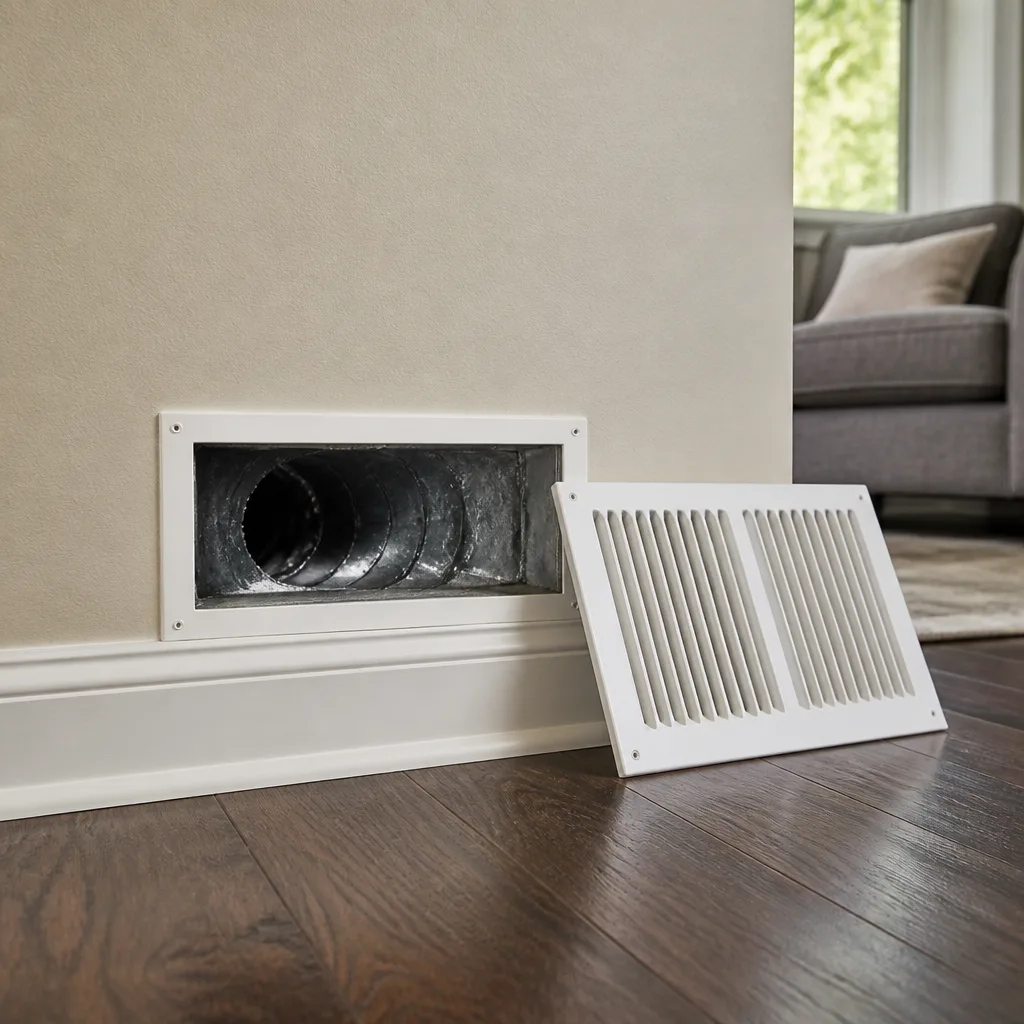
- Peel back a grille and look at the boot (the short connector between the duct and the floor or wall vent). Check for separation, gaps, or debris piled at the base.
- Look at the accessible portions of duct in the attic or garage if you can safely do so from a distance; do not crawl through attic space.
- Listen at startup. New rattles, whistles, or a change in airflow are early signals.
Tier 2: Biennial tasks (every two years)
- Have the evaporator coil and blower inspected and cleaned as needed. A dirty coil cuts efficiency and can harbor biological growth.
- Have a duct pressure or leakage assessment done to catch seal failures before they pull attic air into the system.
- Schedule a full professional cleaning if two years have passed since the last one, or sooner if any Tier 3 trigger has fired.
Tier 3: Event-driven triggers (as they happen)
- Wildfire smoke event affecting the area
- Renovation or remodeling (drywall dust is the worst offender)
- Water intrusion, roof leak, or a musty smell after rain
- Moving into a resale home with no service history
- Any pest activity in the ductwork
If you’re following that framework, the calendar takes care of itself. The two-year deep check is when we typically recommend a professional air duct cleaning in Anaheim Hills unless an event moved the timeline up.
Local Conditions That Compress the Timeline
Every region has conditions that shorten or lengthen a maintenance schedule. For Anaheim Hills, three stand out. Understanding them explains why a two-to-three-year interval is more realistic here than the national default.
Dry particulate from Santa Ana winds. These wind events are dry, fast, and loaded with fine dust from the hills and canyons. That dust lands on roofs, gets pulled in through attic vents, and reaches the return-air stream. Homes with attic-mounted air handlers and short return runs tend to see the most loading.
Canyon brush fire smoke. When fires burn in the surrounding hills and canyons, smoke enters through gaps you’d never notice: around windows, at penetrations, through the garage. Smoke particles are small enough to travel deep into duct runs and settle on surfaces that a filter can’t reach. After a significant smoke event, a professional cleaning moves up on the schedule, often regardless of how recent the last one was.
Attic heat and seal degradation. Anaheim Hills attics get hot in summer, and heat is hard on duct seals. Mastic dries and cracks, foil tape loses adhesion, and flex duct joints separate slightly. Once a joint opens, the system starts pulling hot, dusty attic air into the living space. That’s both an air quality problem and an efficiency problem, and it’s why pairing cleaning with repair and sealing is often the better move than cleaning alone.
Neighborhood layout matters too. Properties on higher streets with more exposure to wind and canyon views tend to see more particulate than lots tucked into more sheltered parts of Anaheim Hills. It’s not a hard rule, but it’s a useful starting orientation when you’re deciding whether to move up your next cleaning.
Your Annual Duct Maintenance Checklist
The annual tier is mostly things you can do yourself. It doesn’t require specialty equipment and takes maybe an hour once a year. What it does require is consistency and a place to write it down.
- Change the filter. Note the date on the filter frame with a marker. Check the MERV rating against your system’s spec; higher isn’t always better if the blower wasn’t sized for it. If you can’t remember the last change, change it now.
- Inspect all supply and return grilles. Look for dust halos on the ceiling around the grille, dark streaking, or rust. Any of these suggests the duct behind the grille needs attention.
- Look at the boot. With the grille off, look at where the duct meets the register. Gaps, torn liner, or piled debris are signs the run needs cleaning and possibly sealing.
- Check the return-air path. The return grille pulls at higher velocity than the supplies, which is why those runs load up first. If a single return looks unusually dark, that’s a strong hint the whole system needs a look.
- Note any changes in comfort or sound. Rooms that used to heat or cool well but don’t now, or a system that sounds strained at startup, point to airflow problems that often begin with dirty or leaking ducts.
- Write it all down. Every entry in your service log is proof of upkeep later.
None of this replaces a professional cleaning, but it does two things: it catches problems early, and it makes the eventual professional visit more targeted. There’s real value in being able to tell a technician exactly what you observed and when.
The one thing we’d caution against is trying to reach deep into a duct with a shop vacuum or a brush on a stick. You can’t reach the surfaces that matter, and you can dislodge debris into the system. Leave the interior cleaning to professional-grade equipment like the Air Duct Cleaning Anaheim Hills rotary-brush systems that actually contact the duct walls.
The Biennial Deep Check: Coils and Duct Pressure
Every two years, the schedule calls for a deeper inspection than a homeowner can perform. Two tasks dominate this tier: coil cleaning and a duct pressure or leakage check. Both are diagnostic, and both tell you more about your system’s health than any visual inspection can.
Coil inspection and cleaning. The evaporator coil sits in the air handler and is where condensation forms. As air moves across it, dust and biological material collect on the fins. A fouled coil cuts cooling capacity and can become a source of musty odors. Biennial inspection catches the buildup before it becomes a comfort problem. When it’s time for this, professional HVAC HVAC cleaning Anaheim Hills residents schedule usually includes the air handler, coil, and blower.
Duct leakage assessment. Pressure testing or a leak assessment identifies where the system is losing air and where it might be pulling attic air in. Given how hot Anaheim Hills attics get, any leak is a both-ways problem: you lose conditioned air out, and you pull hot, dusty air in. Finding leaks early is cheaper than discovering them after a rough cooling season.
Grille and register hardware. Worth checking at the two-year mark: dampers that no longer close, registers that rattle, and hardware that has loosened. Small fixes.
Ventilation path check. Bath fans and kitchen exhaust should be verified as venting to the exterior, not into the attic. This is also when most homeowners first look closely at their dryer vent. A dryer vent is a high-risk pathway that clogs with lint and should be cleaned on its own schedule as part of dryer vent cleaning Anaheim Hills service covers. It’s not the same task as duct cleaning, and it shouldn’t be skipped.
If the two-year check turns up leaks, the logical next step is repair and sealing. Cleaning a duct system and then leaving leaks unaddressed is only a partial fix; the system will re-contaminate itself through those same leaks.
Event-Driven Triggers That Reset the Clock
The calendar is a baseline. Events override it, and in Anaheim Hills events are part of the normal year. When any of the following happens, treat it as a fresh start on the schedule.
- Wildfire smoke event. If smoke was visibly present in your neighborhood for days, assume particulate made it into the return-air stream. A cleaning is warranted even if the last one was recent. Increase filter changes for the following few months.
- Major renovation. Drywall dust, sawdust, and construction debris travel through the whole house via the HVAC system. Seal the grilles during the work, run the system as little as possible, and schedule a professional cleaning after the project wraps.
- Water intrusion or a musty smell. Any water event near a duct or air handler raises the risk of mold growth in the system. This shouldn’t wait; a professional inspection is warranted, followed by cleaning and, if growth is confirmed, sanitizing with products like those from Guardsman applied as part of an air quality treatment.
- New-to-you home. If you’re buying an Anaheim Hills resale and there’s no documented duct cleaning, plan on one before moving in. You don’t know what the previous owner did or didn’t do.
- Pest activity. Rodents or insects in the ductwork require cleaning and often sealing to close entry points. This is a both-hands problem.
- Persistent odors or allergy symptoms in the house. Odors that don’t resolve after cleaning filters and grilles suggest the source is inside the system.
What’s useful about a trigger list is that it takes the decision out of the moment. You don’t have to guess whether it’s “worth” a cleaning after a smoke event. If the event happened, the cleaning is on the schedule.
What “Maintenance” Covers vs. What Needs a Technician
One of the more common confusions we run into is what counts as routine homeowner maintenance and what genuinely needs a trained technician with professional equipment. Getting this line right saves money and prevents damage.
Homeowner maintenance:
- Filter changes
- Grille removal and cleaning
- Visual boot and register inspection
- Recording observations in a service log
- Keeping the return grille clear of furniture and obstructions
What needs a professional:
- Interior duct cleaning. This requires negative-air pressure and rotary-brush equipment that contacts the duct walls. Consumer vacuums can’t do it and can make things worse by stirring debris into the living space.
- Containment. Professional-grade negative-air and air-scrubbing equipment, like the Abatement Technologies systems restoration contractors rely on, keeps contaminants captured rather than spread.
- Coil and blower cleaning. It’s delicate, and it needs the right technique.
- Duct repair and sealing. Sealing with mastic or approved tape at the correct points takes a trained eye.
- Sanitizing. Applying air-quality treatments requires understanding what’s actually being treated.
- Dryer vent cleaning. Lint is a fire risk and the vent requires the right tooling to clear completely.
The pattern is clear. Anything that touches the inside of the duct system, the air handler, or the exhaust vent is a professional task. Everything else is yours. Our technicians have up to 13 years of experience and carry the equipment for the professional side, from the Rotobrush and Nikro cleaning systems to the air-quality products used on the treatment side.
How to Keep a Duct Service Log That Adds Value at Sale
This is the piece almost everyone skips, and it’s the one that pays off years later. A simple service log makes your duct maintenance verifiable. In a market like Orange County, where buyers ask detailed questions and agents want documentation, a log is a genuine asset.
What to record for every entry:
- Date. Always.
- Task. Filter change, cleaning, coil inspection, sealing, dryer vent, sanitation treatment.
- Who did it. Company name and contact, or “self.”
- What was found. “Heavy dust load in returns” or “minor seal failure at primary trunk, repaired.” Short, factual, useful.
- Photos. Before-and-after photos of your own ducts are the strongest proof. Ask for them on every professional visit.
Where to keep it. A dedicated folder in your home records works. A PDF you keep with the disclosure packet when you sell is enough. Some property managers use a shared document for multi-unit buildings.
Why it matters at sale. Buyers in Anaheim Hills, like most of Orange County, ask whether the HVAC system has been maintained. A log lets you say “yes, here’s what was done, when, and by whom.” That’s a different conversation than “we’ve mostly kept up with the filters.”
If you’re planning to sell within the next few years, put together your log now. Don’t wait until you’re listing the house to try to reconstruct history.
Using Whole-Home Air Quality Products to Stretch Intervals
Nothing replaces cleaning. What whole-home air quality products do is extend the time between cleanings by reducing what gets into the ducts in the first place. For Anaheim Hills homes, that compounds over the years, particularly when paired with a smart cleaning schedule.
Filtration. A whole-home media filter cabinet, like those from Aprilaire, sits at the air handler and catches far more than a standard 1-inch fiberglass filter. It’s the single most effective upgrade for anyone trying to reduce dust loading between cleanings. The media filter is replaced on its own interval, and the cabinet stays in place.
Air scrubbing during work. During cleaning, professional-grade air-scrubbing equipment (Abatement Technologies is the name most restoration and remediation contractors use) captures particulate rather than letting it re-circulate. It’s part of what separates a real cleaning from a pass with a shop vacuum.
Sanitizing treatments. Where biological growth or odor is present, an air quality and sanitizing service addresses what mechanical cleaning alone won’t. Honeywell, Aprilaire, and Guardsman products are part of that work, and the goal is measurable change: reduced odor, reduced dust, and a system that doesn’t reintroduce what you just removed. Guardsman protective treatments are applied as part of the sanitizing service, helping keep surfaces cleaner longer.
Sealing and repair as a companion. Even the best filter can’t compensate for a leaking duct. If the seal is failing, air quality products are working against a losing battle. Fixing the system first is the more efficient path.
When these are in place, the practical effect is that the 2-to-3-year interval can stretch without cutting corners. Filters, seals, and cleaning work together, not independently.
Common Mistakes to Avoid
- Waiting for the 3-to-5-year mark. In Anaheim Hills, two to three years is more realistic given wind events, smoke, and hot attics. Treat the longer number as an upper bound, not a goal.
- Skipping the sealing step after cleaning. Cleaning a system that’s leaking just pulls the same dust back in. If repairs are needed, do them.
- Assuming a filter change is enough. Filters protect the equipment. They don’t clean ducts. Those are separate tasks with separate intervals.
- Using a shop vac on the inside of a duct. It stirs debris into the air without actually contacting the duct walls. Professional equipment is not the same physical process.
- Skipping the dryer vent. It’s not the same task as duct cleaning, it needs its own schedule, and lint buildup is a real fire risk. It belongs on the maintenance calendar alongside the ducts.
- Ignoring post-fire or post-renovation signals. Waiting on a professional visit after a significant smoke event or remodel is the most common mistake we see homeowners make. Schedule it.
- Not documenting anything. No log, no photos, no record. It’s not urgent, but it hurts at resale and it costs you the ability to reason about your own system.
See the difference
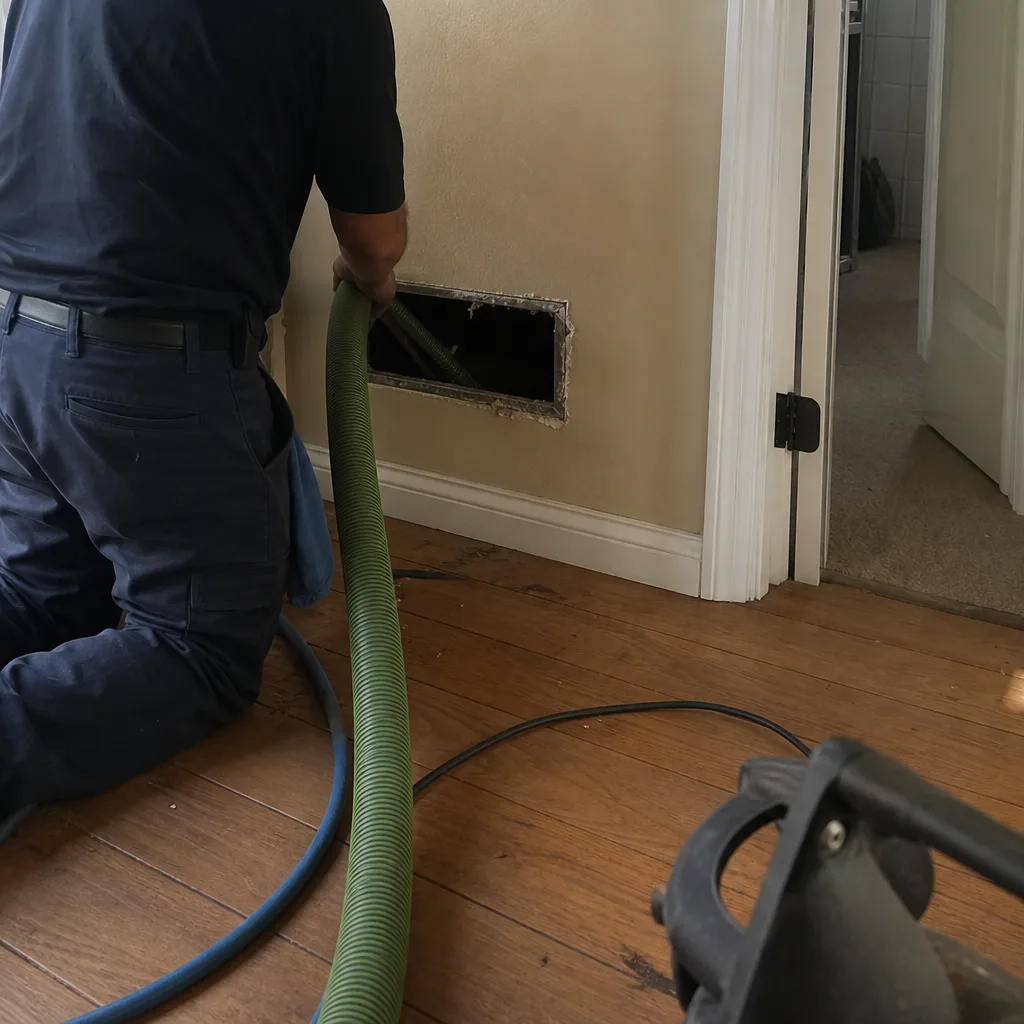 Before
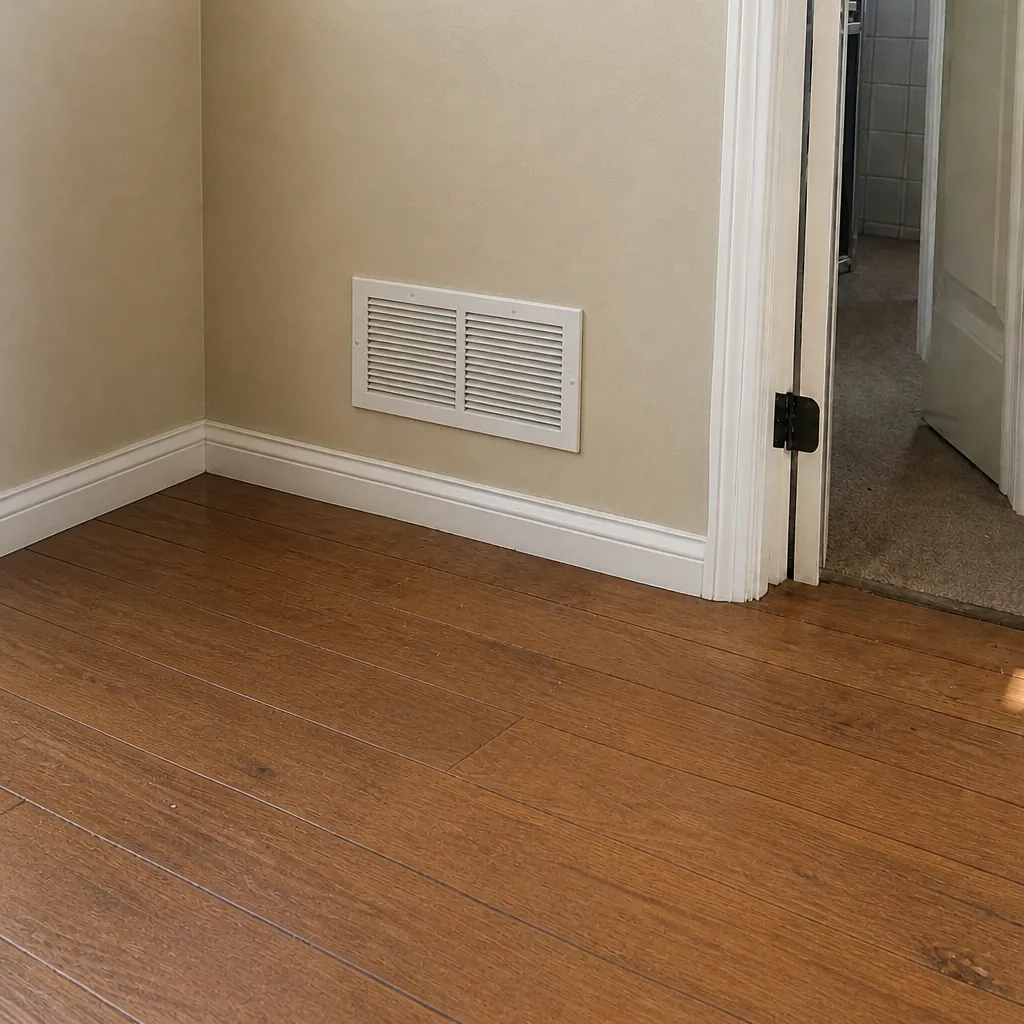 After
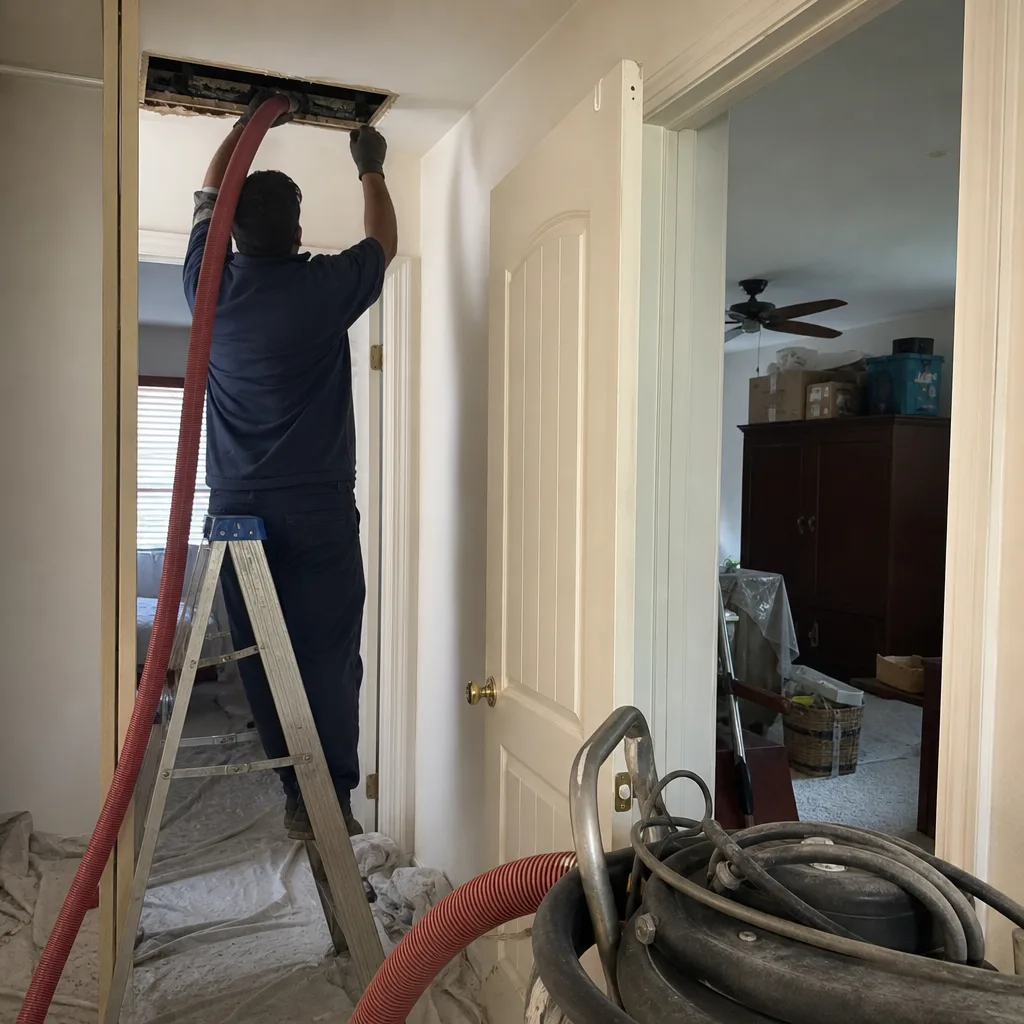 Before
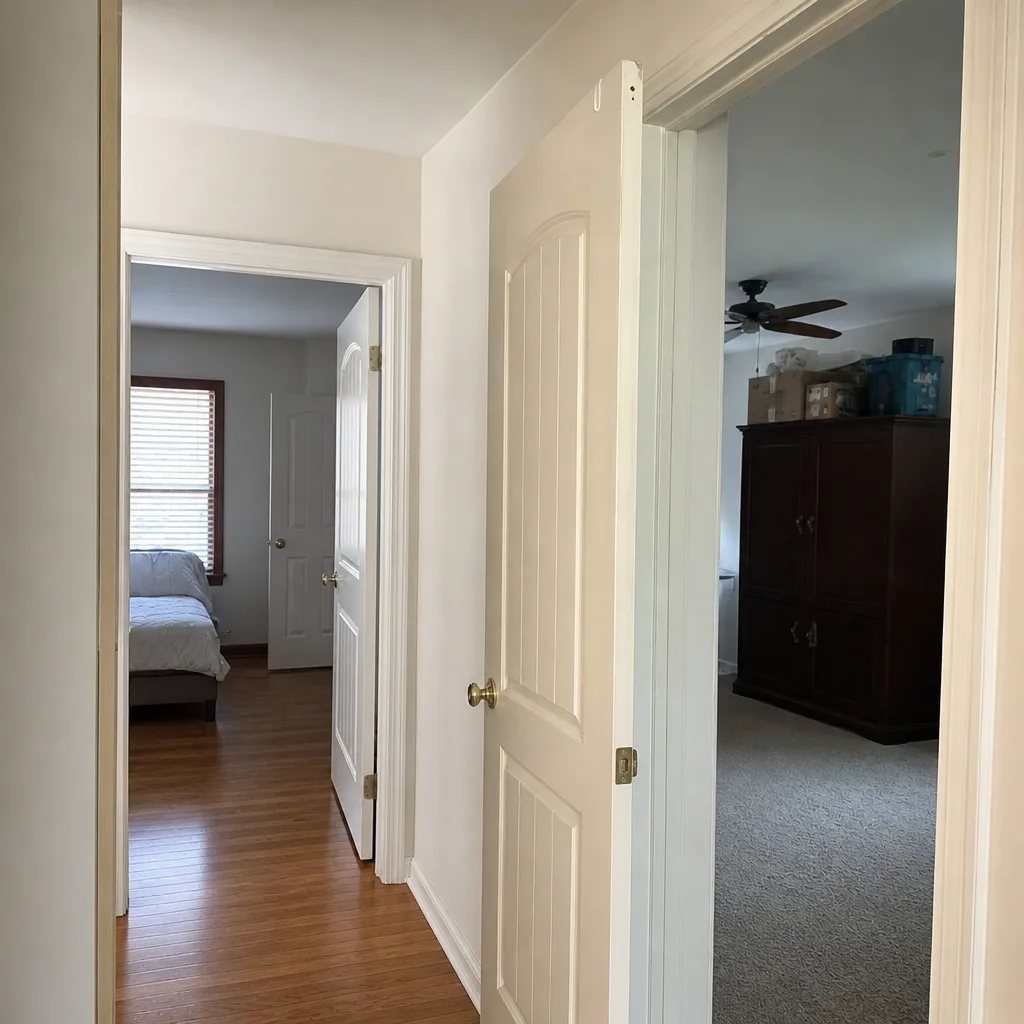 After
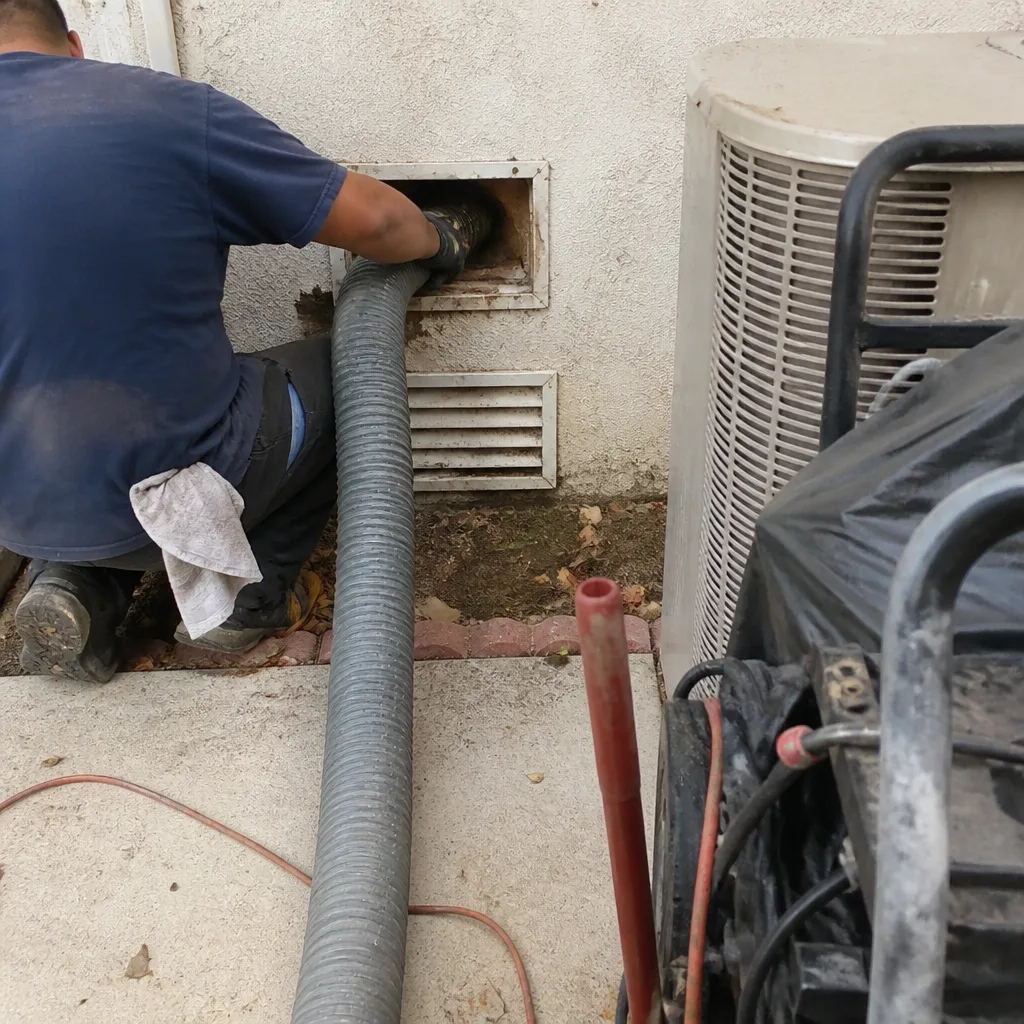 Before
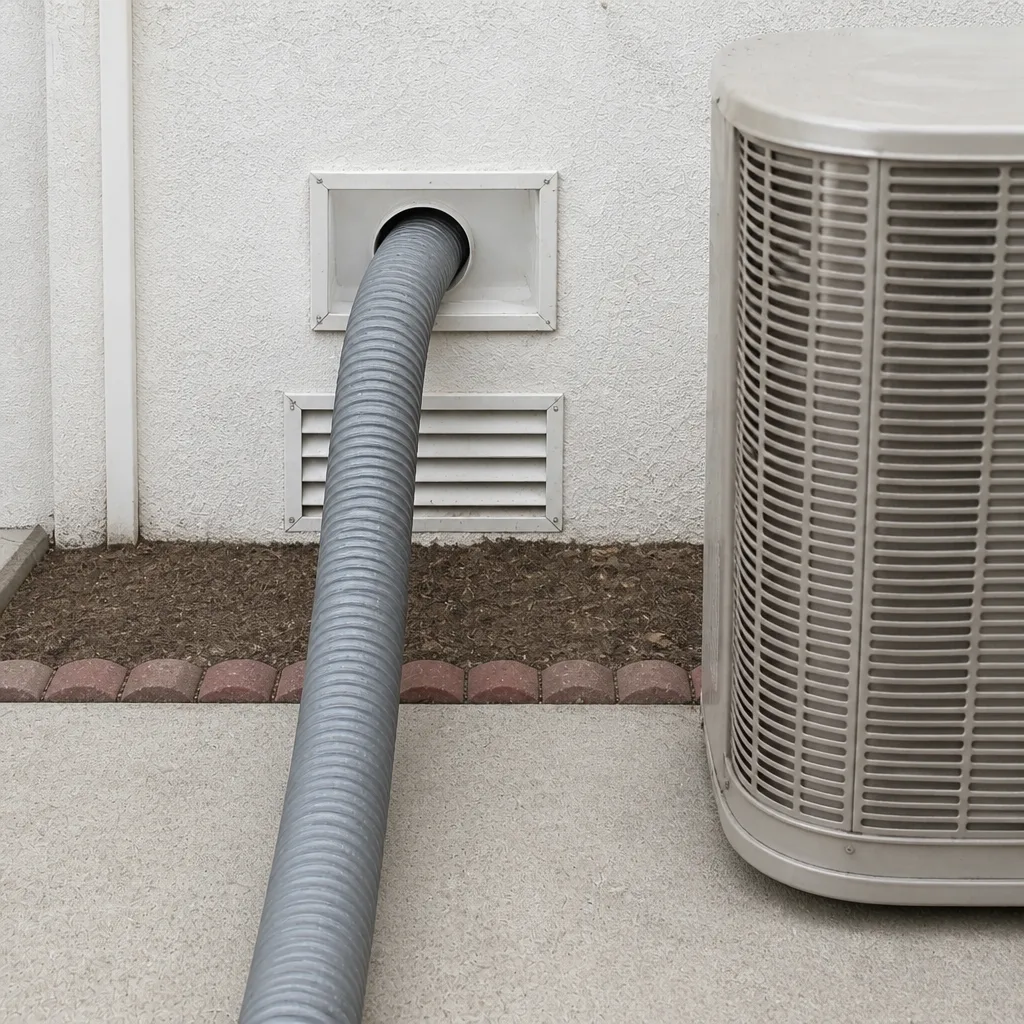 After
When to Call a Professional
Call a professional when you see any of the following: visible dust streaking around grilles that returns after cleaning, a musty smell that doesn’t clear with filter changes, airflow that has weakened in one or more rooms, a significant smoke or renovation event in the past year, or a dryer that takes longer than it used to. If you’ve moved into a resale home in Anaheim Hills and there’s no service record, schedule an inspection as a baseline. If two years have passed since the last formal cleaning, it’s due. Air Duct Cleaning Anaheim Hills offers free estimates in Anaheim Hills; call (855) 526-8990. We answer 24/7. Fast dispatch from 7am to 7pm, Sunday through Friday.
Frequently Asked Questions
Every 2 to 3 years for most homes, and sooner after a wildfire smoke event, a renovation, or water intrusion. The national 3-to-5-year default doesn’t account for Santa Ana wind particulate, canyon fire smoke, or hot attic seal degradation. The right interval is the shorter of your calendar schedule or your event history. Call (855) 526-8990 for an exact quote. Estimates are free.
Not every event, but any event where visible smoke affected your area for days is worth a cleaning, even if your last one was recent. Smoke travels deep into duct runs, and filters can’t catch what settles on duct surfaces. The shorter answer: if the air outside was bad enough to keep you indoors, have the ducts assessed. Call (855) 526-8990 to schedule an inspection.
Annual maintenance is mostly homeowner work: filter changes, grille inspection, and a visual look at the boots. A professional cleaning touches the interior duct surfaces, the air handler, and the coil using professional-grade equipment. Both belong on the schedule; they’re not substitutes. If you’re not sure which you need, call (855) 526-8990 for a straight answer.
It makes maintenance verifiable at disclosure time. Buyers want to know the HVAC system has been maintained and by whom. A dated log with company names, tasks, and before-and-after photos answers that without guesswork. It’s a small effort with outsized return. Call (855) 526-8990 for a written estimate on the work itself.
Yes, meaningfully. A whole-home media filter cabinet, like those from Aprilaire, catches far more particulate than a standard 1-inch fiberglass filter and reduces what reaches the ducts between cleanings. It doesn’t replace cleaning, but it does stretch the useful interval. Call (855) 526-8990 to talk through what fits your system.
No. The dryer vent is a separate task on its own schedule and it’s a fire risk when lint builds up. Treat it as its own maintenance item, not a free add-on to duct cleaning. The right interval depends on household size and laundry volume. Call (855) 526-8990 to schedule dryer vent cleaning in Anaheim Hills.
The Bottom Line
The 3-to-5-year duct cleaning rule is a national average, not a plan for an Anaheim Hills home. A better schedule has three tiers: annual homeowner tasks (filters, grilles, boots), biennial professional checks (coil, pressure, sealing), and event-driven cleanings triggered by smoke, renovation, water, or a resale purchase. Local conditions, particularly Santa Ana winds, canyon brush fire smoke, and hot attics degrading seals, compress the practical interval to 2 to 3 years for most homes. Document everything. It’s a small effort that protects air quality and pays off at resale.
If your home is due, or if you want an honest read on whether it is, Air Duct Cleaning Anaheim Hills offers free estimates in Anaheim Hills; call (855) 526-8990. We answer 24/7. Fast dispatch from 7am to 7pm, Sunday through Friday.
Written by the team at Air Duct Cleaning Anaheim Hills.