
Last updated November 24, 2026
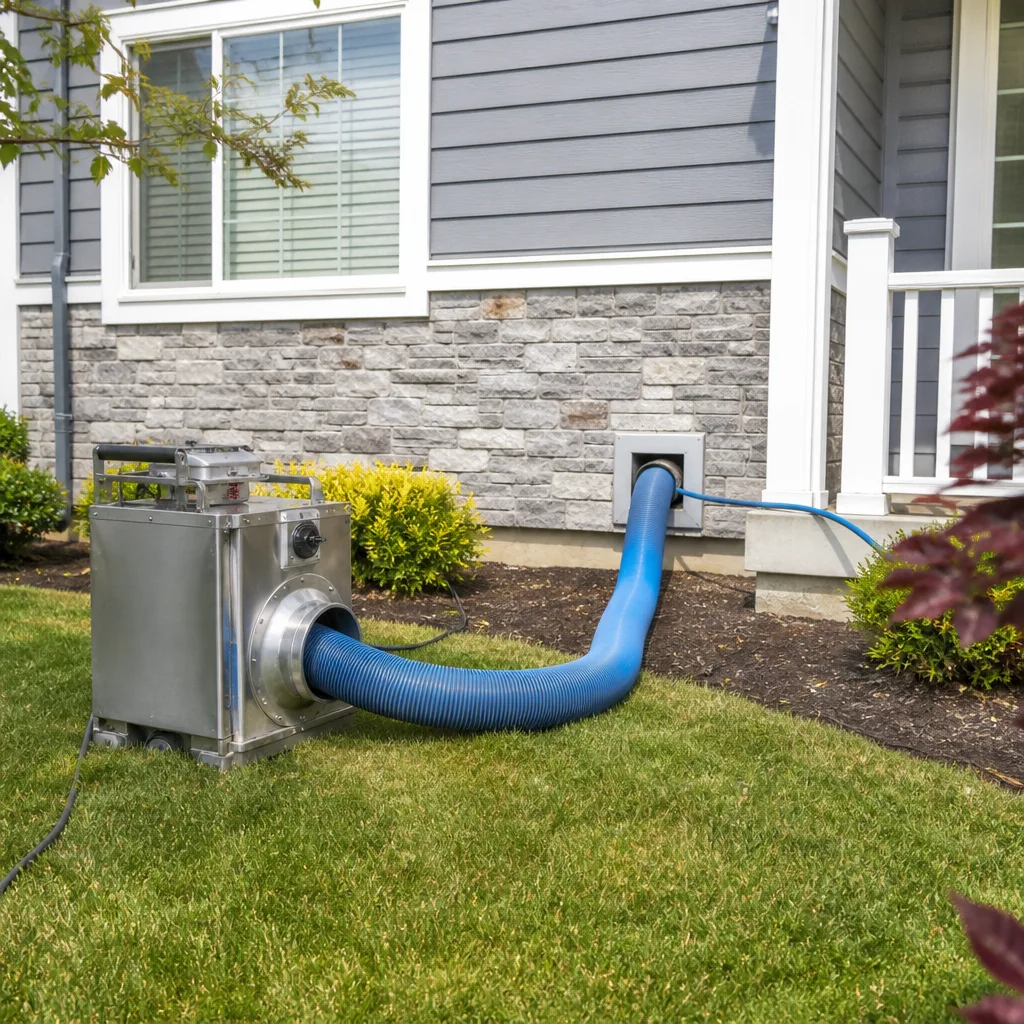 Whole-home duct cleaning
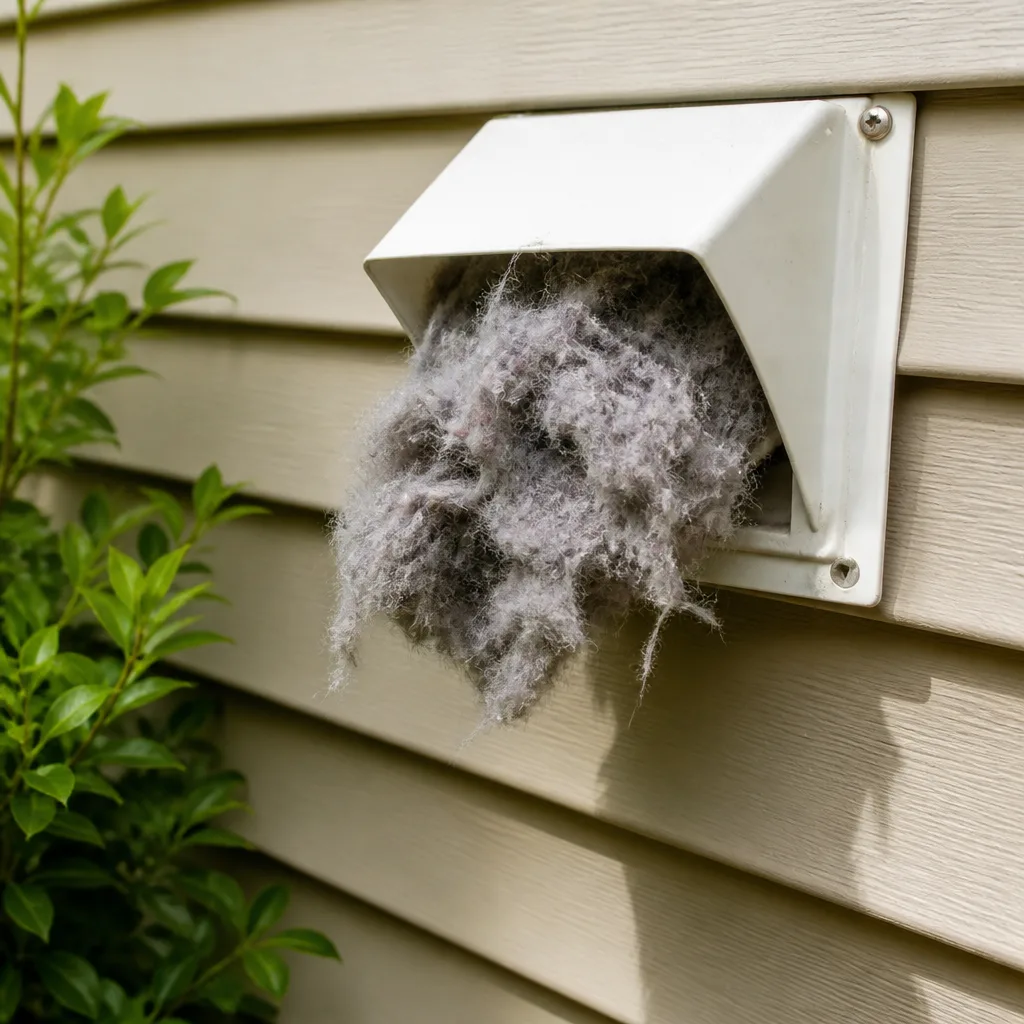 Dryer vent cleaning
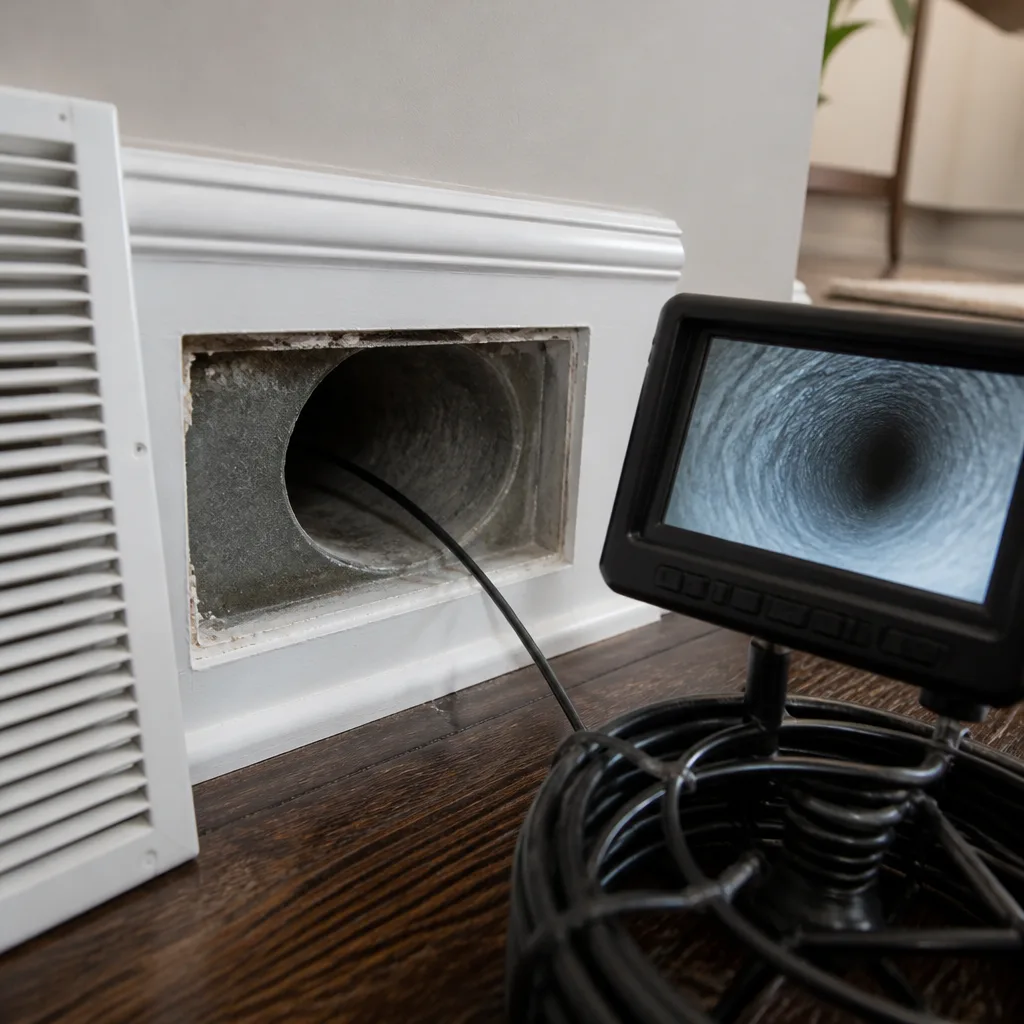 Camera inspection
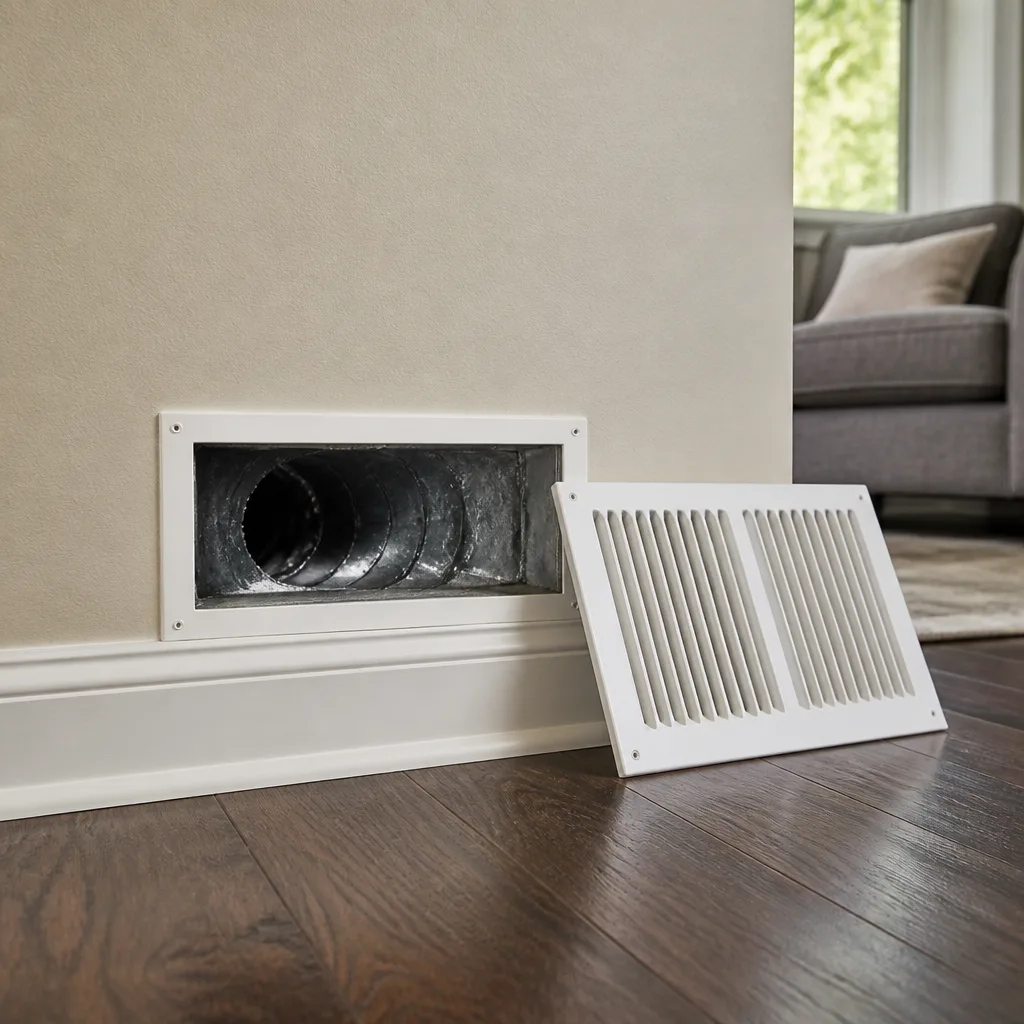 Sanitizing & deodorizing
Whole-system duct and dryer vent check with before-and-after photos - you see exactly what came out of your vents
That "$99 whole-house special" is a bait ad - the real number appears once they are in your hallway, or the "clean" is a shop-vac at the register. We photograph the inside of your ducts before and after instead.
Air Duct Cleaning Maintenance Checklist for Anaheim Hills Homeowners
A filter swap every 90 days sounds reasonable until October arrives and your return air is pulling smoke particulates from a fire burning 12 miles away in the hills. At that point, 90 days is about 87 days too long. The usual advice treats duct maintenance as a calendar habit, and that habit misses the actual events that load a duct system here: fire season, Santa Ana winds, summer cooling demand, and the remodel or pest treatment that sends debris into the supply runs. This guide replaces the calendar with triggers. You’ll get a task list organized by event, the register-level checks you can do without tools, MERV guidance for the fine-particulate problem Anaheim Hills homes actually face, and a clear line between what you handle and what a professional should inspect.
Quick Answer
Air duct maintenance in Anaheim Hills works best as a trigger-based checklist, not a quarterly reminder. Inspect your registers and filter after fire-season smoke events, after any renovation or pest treatment, and at the start of summer cooling season, and schedule professional cleaning roughly every three to five years or whenever a load event pushes visible debris into the system. Log what you see each time so your next inspection can compare against a baseline.
Styles & brands we work with
- Whole-home duct cleaning
- Dryer vent cleaning
- Camera inspection
- Sanitizing & deodorizing
Table of Contents
- Why Anaheim Hills duct maintenance runs on load events, not months
- The trigger-based checklist: what to do and when
- Register-level indicators you can check without tools
- Filter and MERV guidance for fire-season particulates
- DIY task or professional inspection? Clear decision criteria
- How to document duct condition over time
- Season-by-season focus for the Anaheim Hills climate
- The whole duct ecosystem: supply, return, dryer, and HVAC unit
Why Anaheim Hills duct maintenance runs on load events, not months
Duct systems don’t collect debris at a steady rate. They collect it in bursts tied to what’s happening around the house. A fire in the hills sends a plume of fine ash and smoke across the area, and your return air pulls it in through every gap in the system. A kitchen or bathroom remodel fills the air with drywall dust for weeks. A pest treatment leaves residue behind. Each of these events loads the ducts differently and needs a different inspection focus.
Anaheim Hills sits in a spot where three stress windows stack up on top of each other. Fire season covers late summer and fall, when smoke and ash are the dominant concern. Santa Ana winds push dry, dusty air through the region and drive particulate matter into homes that wouldn’t normally see it. Summer cooling demand means the HVAC system runs hard for months, moving more air through the ducts and depositing more of what it carries. A homeowner on a rigid quarterly schedule will always be out of step with at least one of these.
The practical fix is to attach your maintenance tasks to the events themselves. That’s what the checklist below does. When a smoke event ends, you have a specific set of things to check. When a remodel finishes, a different set. When summer arrives, another. The work you do changes based on the trigger, which is more useful than doing the same filter swap on the same date regardless of what the house has been through.
This also makes professional visits more productive. When you call for Air Duct Cleaning Anaheim Hills, you can tell us the system took on smoke in October or drywall dust in spring. That context tells the technician where to focus the inspection instead of treating every job as a generic clean.
The trigger-based checklist: what to do and when
Here is the core checklist. Each trigger maps to a specific set of tasks. Run through the tasks in order, and note anything that looks wrong so you can compare it later.
After a fire-season smoke event
- Replace the HVAC filter immediately. Don’t wait for the usual interval.
- Check the return air register for visible ash or dark residue on the grille.
- Open a supply register in a room you use most and look inside with a flashlight.
- Note any smoke odor that persists more than a few days after the air clears.
- Log the date and what you found. If odor or visible residue persists, book a professional inspection.
After a renovation or remodel
- Seal off supply and return registers in the work area before demolition starts, if the work is ongoing.
- Replace the filter once the dust settles, not the moment the work ends.
- Check each register in and near the renovated room for drywall dust.
- Run the fan and listen for any change in airflow at the registers.
- Schedule a professional cleaning if the renovation was substantial or lasted more than a few weeks.
After a pest treatment
- Ask your pest professional whether the treatment left residue that could enter the air system.
- Replace the filter after the treatment’s recommended wait period.
- Check registers for any visible residue or unusual odor.
- Log the treatment date and any observations for your next professional visit.
At the start of summer cooling season
- Replace the filter before the first heavy cooling stretch.
- Walk the house and check every supply register for airflow and visible debris.
- Listen for whistling, rattle, or uneven airflow between rooms.
- Note any room that stays warmer than the rest, which can signal a duct problem rather than an HVAC problem.
- Book HVAC cleaning if the system hasn’t been serviced in a few years or the coil area looks dirty.
Run these triggers as they happen and you’ll cover the full year without ever relying on a date on the calendar. Pair the checklist with a full professional clean every few years, and the system stays in far better shape than a filter-swap-only routine ever achieves.
Register-level indicators you can check without tools
You don’t need instruments to catch most duct problems early. A flashlight and a few minutes at each register tell you a lot. Here’s what to look for at supply and return registers across your Anaheim Hills home.
At supply registers
- Visible dust streaks radiating from the grille onto the wall or ceiling: airflow is pushing debris out of the duct.
- Dark buildup on the inside of the grille vanes: the supply run is carrying particulate matter it shouldn’t.
- Weak or uneven airflow between rooms on the same system: a sign of a leak, a disconnected run, or a blockage.
- Whistling or hissing: often a sign of a restriction or a gap where air escapes.
- A musty or smoky smell when the system starts: debris sitting in the ducts or on the coil.
At return registers
- A visibly dirty filter well before its replacement interval: the system is pulling more debris than usual.
- Ash, dust, or grit on the grille face after a smoke event or a windy stretch.
- Loose or sagging grille: a gap around the return lets unfiltered air into the system.
- Debris visible inside the return box when you remove the grille.
Record what you see. The same streak on the same grille three months later tells you the problem is ongoing. A new streak tells you something changed. Either way, you now have a reason to look closer or call for a professional assessment, rather than guessing. In our experience, the homes that get the most out of a cleaning visit are the ones where the owner can describe exactly what they saw at each register.
Filter and MERV guidance for fire-season particulates
Anaheim Hills presents two different particulate problems, and they call for slightly different filter thinking. The first is ordinary household dust: skin cells, fabric fibers, pet hair, cooking residue. The second is fine wildfire smoke and ash, which arrives in bursts and carries much smaller particles than typical household dust.
MERV ratings run on a scale where higher numbers capture smaller particles. For most homes here, a filter in the mid range balances capture against airflow restriction. Go too high and you can choke the system, especially during the summer cooling peak when the blower is already working hard. Go too low and the fine smoke particles pass straight through to the coil and the ducts.
- Baseline weeks: a mid-range filter is a reasonable everyday choice for most homes.
- During a smoke event: step up one level in capture while the event is active, then step back down once the air clears.
- After a remodel: use a higher-capture filter during the dusty phase, then return to your normal choice.
- Check the pressure drop: if airflow at the registers drops noticeably after a filter change, the filter is too restrictive for your system.
- Never run without a filter: the coil and ducts will collect what the filter would have caught.
The filter is the first line of defense, but it’s not the whole system. Fine smoke particles that get past the filter settle in the ducts and on the coil. That’s where professional equipment matters. Our technicians use the Rotobrush rotary-brush system and Nikro HVAC cleaning equipment, and we pair the mechanical clean with a professional-grade air-scrubbing setup from Abatement Technologies to capture the fine contaminants the brushing loosens rather than leaving them to resettle. That’s the difference between a real clean and a shop vacuum pass.
If the smoke odor lingers after a clean, we address it through air quality and sanitizing with Aprilaire and Honeywell products rather than masking it. Odor that persists after the ducts are clean usually points to residue on the coil or in the plenum, and that’s a separate checkpoint.
DIY task or professional inspection? Clear decision criteria
The line between what you should handle and what needs a trained professional is clearer than most homeowners expect. Use these criteria to decide.
Handle it yourself when:
- The task is a filter change.
- You’re checking registers with a flashlight and noting observations.
- You’re cleaning the grille faces with a damp cloth.
- You’re logging dates and writing down what you see.
- You’re sealing off registers before a remodel.
Call a professional when:
- Visible debris or dark buildup appears inside a duct beyond the grille.
- Smoke or musty odor persists more than a few days after the event passes.
- Airflow between rooms is uneven or a room won’t cool like the rest.
- You can see disconnected, crushed, or damaged ductwork in the attic or crawl space.
- It’s been three to five years since the last professional cleaning.
- A major renovation, fire event, or pest treatment just finished.
One line stays firm: ductwork and the HVAC unit are not DIY territory. The system carries moving air and, in many homes, connects to components you shouldn’t open without training. If you’re not sure which side of the line a task falls on, log it and ask during a professional visit. It’s cheaper to ask than to damage a run trying to reach something you can’t see.
When you’re ready for that visit, we walk the system with you and explain what we find. Cleaning, then sealing, then sanitizing is the sequence that keeps results from drifting backward, and it’s why we pair cleaning with duct repair and sealing rather than stopping at the brush.
How to document duct condition over time
A duct system’s condition only becomes meaningful when you can compare it against itself. A single photo of a dirty register tells you little. The same register photographed every six months tells you whether the problem is getting worse, holding steady, or improving. Documentation is the single most useful habit in this checklist, and almost nobody does it.
Keep a simple log. A note on your phone or a page in a folder works fine.
- Photograph each register at the same angle each time. Include a room label.
- Note the filter brand and MERV rating you installed, plus the date.
- Record any visual indicators you spotted: streaks, buildup, airflow changes, odor.
- Mark every load event with its date: smoke, remodel, pest treatment, HVAC service.
- Note the date and findings of any professional visit.
When a technician arrives, you hand them the log. They can compare your baseline to the current state and focus on what changed, rather than starting cold. That’s the difference between a targeted clean and a generic pass. In our experience, the homeowners who hand us a log get a more precise result, because the inspection has a starting point.
Documentation also protects you if a problem recurs. If a register keeps showing buildup after a clean, the log proves it, and it points to a cause the clean didn’t address, such as a leak or a return-air gap pulling in unfiltered air. That’s the kind of issue our duct repair and sealing work is designed to correct.
Season-by-season focus for the Anaheim Hills climate
Winters here are mild, which removes a whole category of duct concern that homes in colder climates deal with. What matters here is the load the system takes on in the other three seasons, and the events that interrupt them.
- Spring: ramp up to cooling season. This is the window for a pre-summer filter change, a full register walk, and any professional clean that’s coming due before the system runs hard. If you’re doing a remodel, plan the dust control now.
- Summer: peak cooling demand. The system moves the most air of the year, so the filter loads fastest. Watch airflow at the registers and note any room that can’t keep up. If the system is short-cycling or running constantly, that’s a signal to look at the duct system as much as the unit.
- Late summer and fall: fire season. This is the highest-risk window for particulate load. Replace the filter when a smoke event ends, check the registers, and log what you see. If smoke odor lingers, book a professional inspection rather than waiting for the next scheduled clean.
- Santa Ana wind events: these can hit in fall and into winter. They push dry, dusty air through the region, and the return air pulls it into the system. Treat a strong wind event like a light smoke event: filter swap, register check, log entry.
- Winter: mild conditions make this a good window for a professional clean if you haven’t had one. The system isn’t running at peak, so a cleaning now sets you up for the summer push.
The pattern to notice is that fire season, wind events, and summer demand overlap. That overlap is the reason a calendar-based schedule fails here. The system loads up during the same months it’s working hardest, and by the time a quarterly reminder fires, the ductwork has already taken on months of extra particulate.
The whole duct ecosystem: supply, return, dryer, and HVAC unit
A duct system isn’t one thing. It’s supply runs, return runs, the plenum, the HVAC unit, and the dryer vent, and each part loads differently. Treating only the supply ducts leaves the rest of the system in its previous condition, and the clean air you just delivered runs through the return and the unit before it ever reaches a room.
- Supply ducts deliver conditioned air. They carry the residue that ends up streaked across your register faces.
- Return ducts pull air back to the unit. They’re the first line of defense against particulate load, which is why a dirty return signals a problem upstream in the system.
- The HVAC unit and coil condition the air and collect what gets past the filter. A dirty coil reduces efficiency and can become an odor source.
- The dryer vent is a separate system with its own load: lint buildup. It’s a fire concern, not just an efficiency issue, and it needs its own maintenance cycle.
Handling all of these together is why we offer the full range of services rather than one. A clean that stops at the supply ducts leaves the returns dirty, and a repair-and-seal step that comes after a clean closes the leaks that would otherwise let unfiltered air back in. That’s the sequence that makes the result hold: clean the full system, seal the leaks, then sanitize the biological load that brushing can’t reach. One company for the whole system also means you’re not coordinating a dryer vent specialist, a duct cleaner, and an HVAC technician across three visits. The work runs in one sequence with one set of findings.
For homeowners who suspect the dryer vent is part of the problem, dryer vent cleaning is a useful starting point. For the HVAC side, professional cleaning of the unit and coil pairs with the duct work. When the full set of tasks is done together, the results show up as cleaner air, steadier airflow, and fewer surprises at the registers.
See the difference
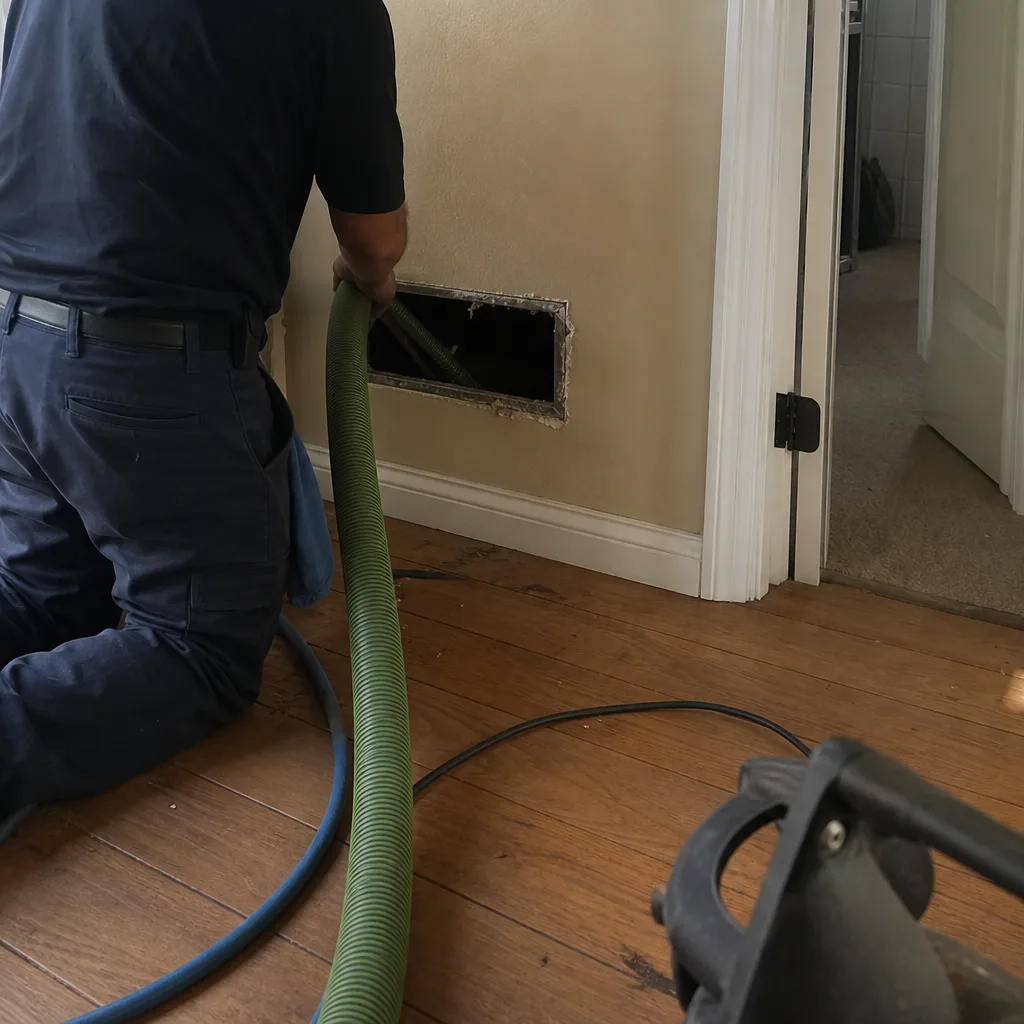 Before
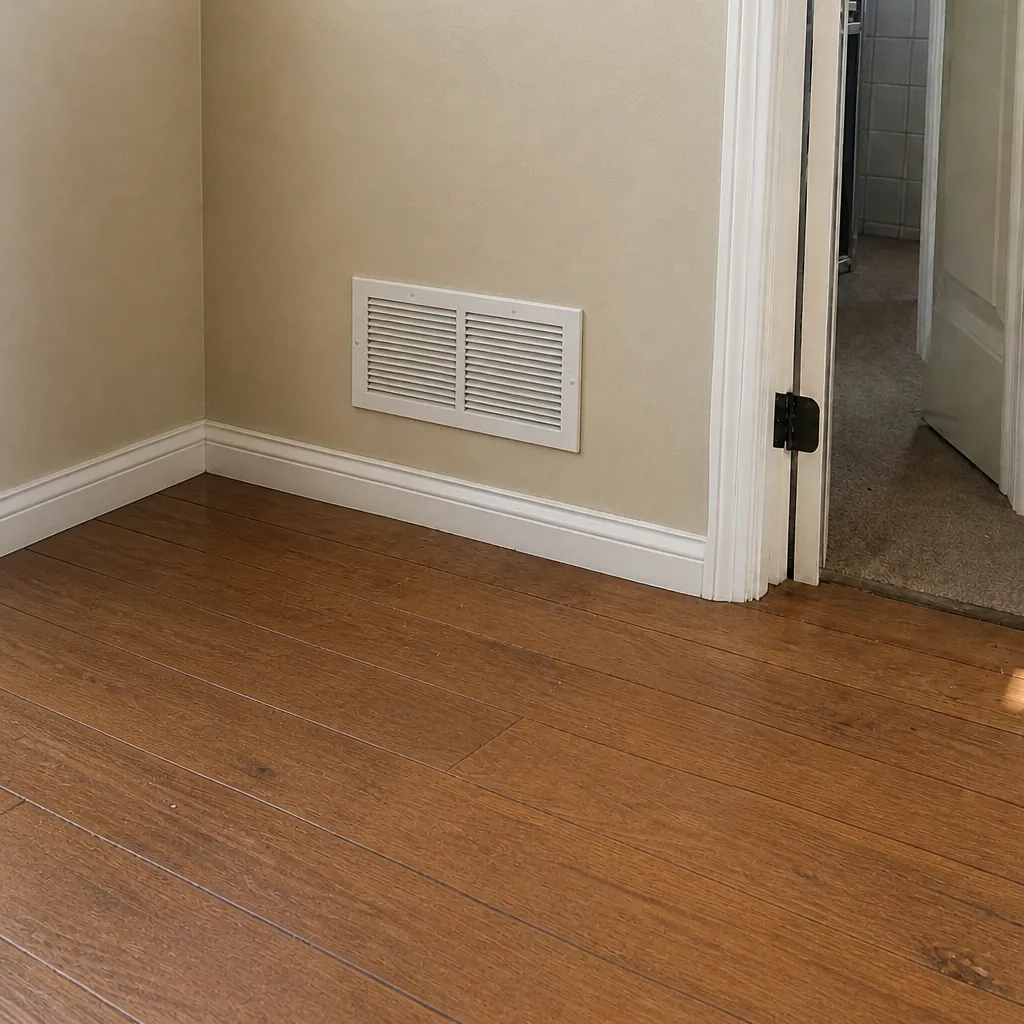 After
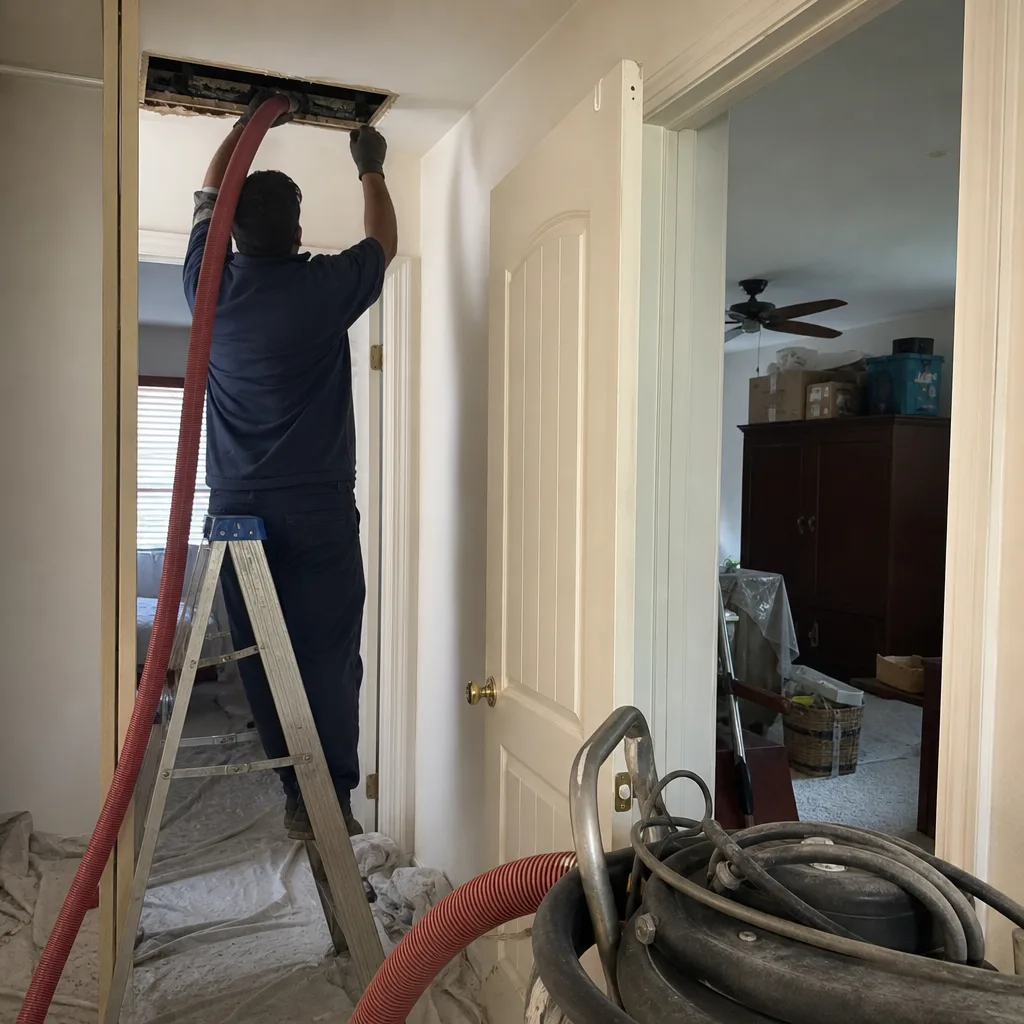 Before
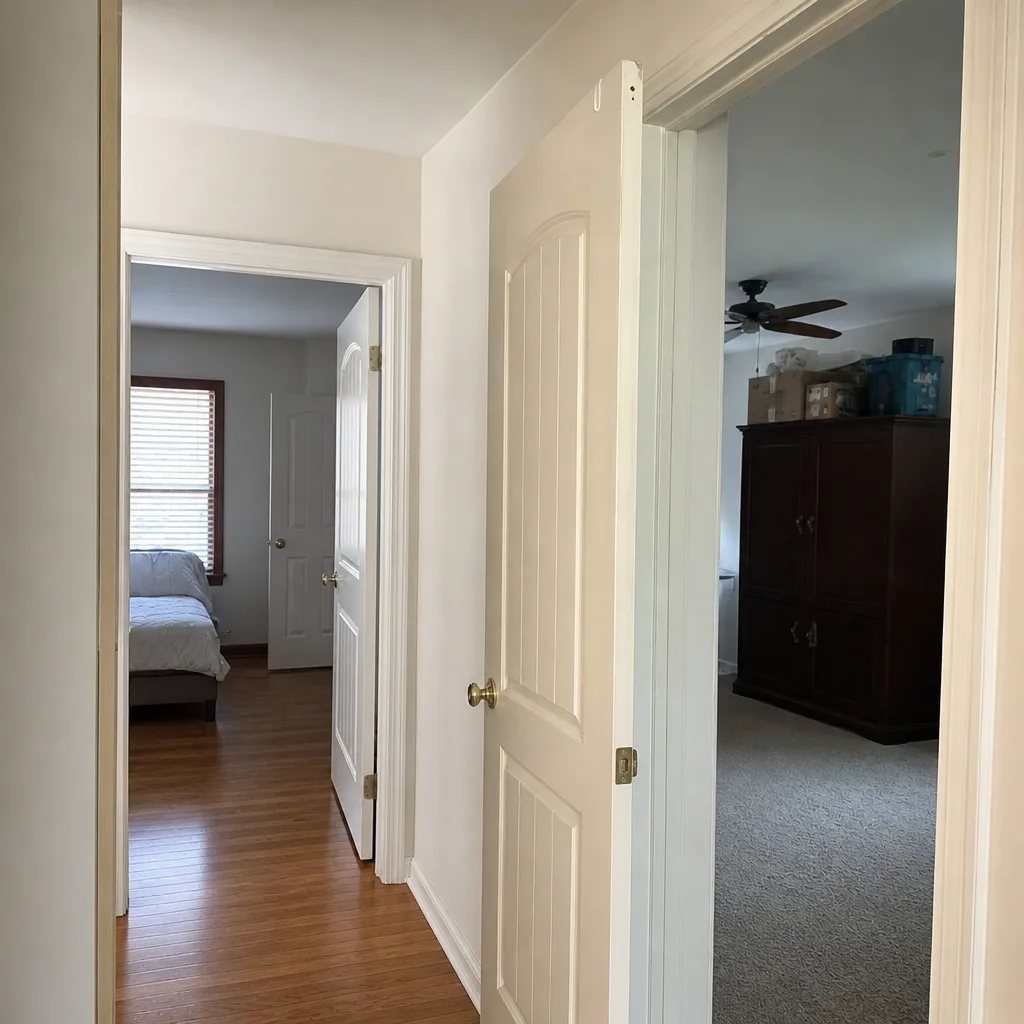 After
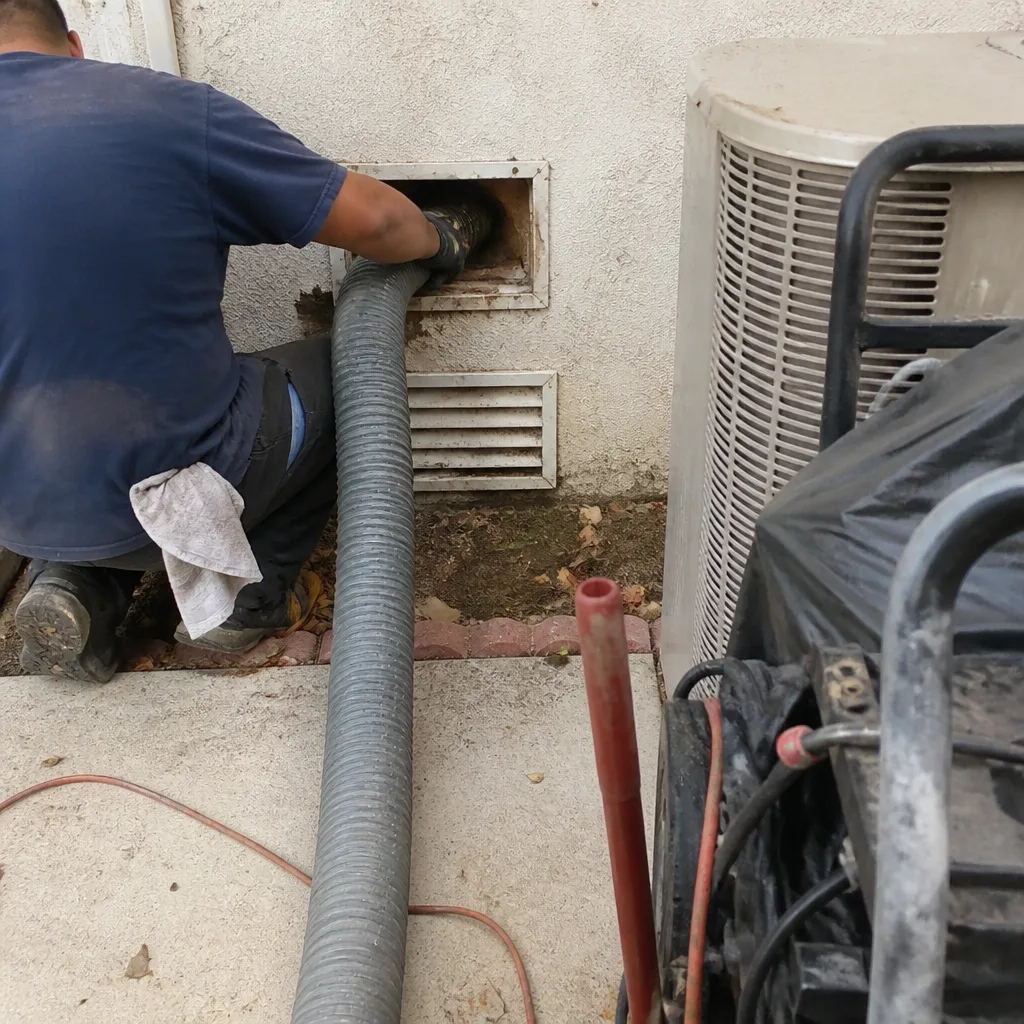 Before
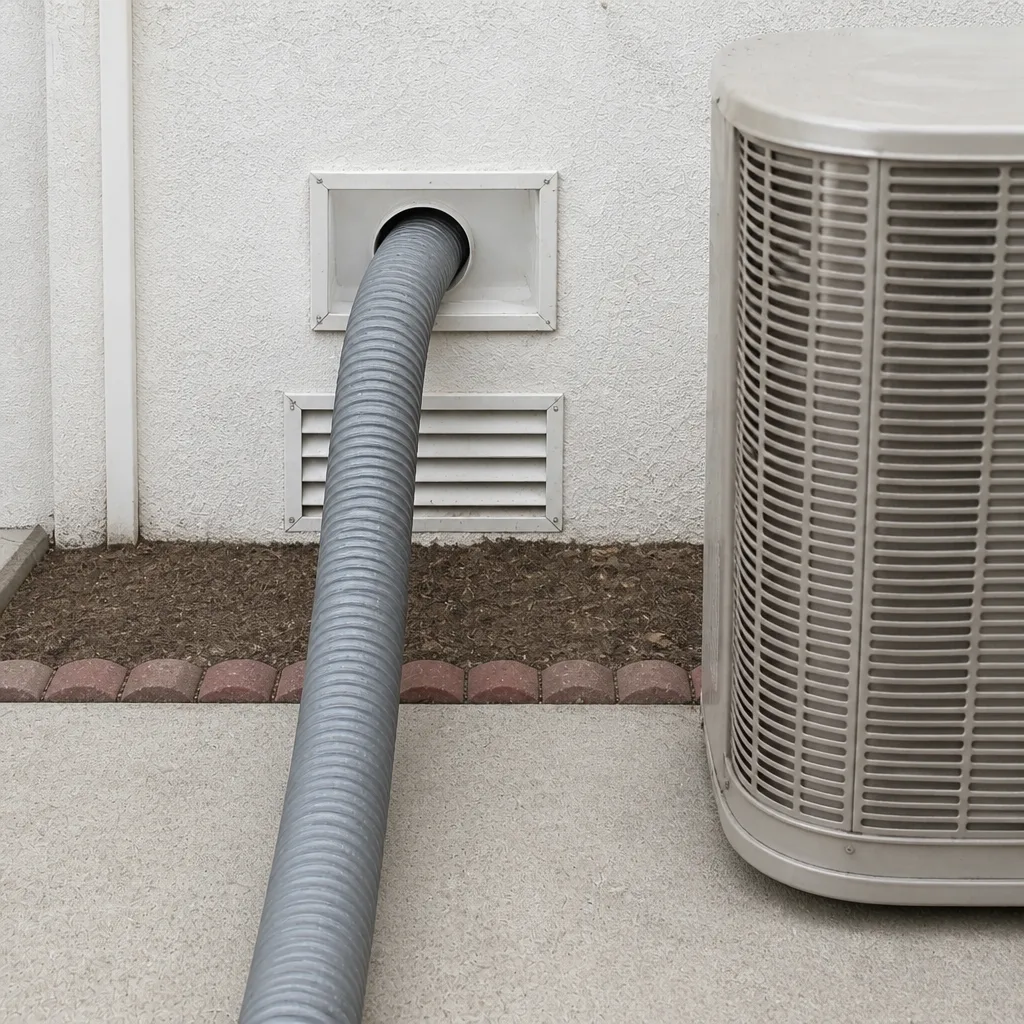 After
Common Mistakes to Avoid
- Swapping the filter on a fixed schedule regardless of events. A 90-day swap misses the smoke event in October and the remodel in spring. Trigger the swap to the event, not the calendar.
- Cleaning the supply ducts and skipping the returns. The returns carry the load, and leaving them dirty recontaminates the supply the moment the system runs.
- Assuming the filter catches everything. Fine smoke particulates get past most standard filters and settle in the ducts and on the coil. The filter helps, but it doesn’t replace a periodic professional clean.
- Ignoring the dryer vent because it’s a separate system. Lint buildup in the dryer vent is a fire concern independent of the HVAC ducts, and it needs its own maintenance.
- Calling for a clean without documenting the baseline. Without photos and notes, neither you nor the technician can tell whether the result held. A simple log solves this.
- Treating a cheap coupon clean as a full service. A pass with a shop vacuum isn’t the same as a clean with professional rotary-brush equipment. The tool matters, and so does the sequence.
- Skipping the seal step. Cleaning a leaking system and leaving the leaks in place lets unfiltered air back in. Fix the leaks while the system is open.
When to Call a Professional
Book a professional inspection when any of the following is true: visible debris or dark buildup appears inside the ducts, smoke or musty odor lingers more than a few days after an event, airflow between rooms is uneven, you can see damaged or disconnected ductwork, or it’s been three to five years since the last clean. Also call after a major renovation, a fire event, or a pest treatment that may have left residue in the system. If you’re not sure which side of the DIY line a task falls on, ask during a visit rather than reaching into the system yourself.
Air Duct Cleaning Anaheim Hills offers free estimates in Anaheim Hills. Call (855) 526-8990. We answer 24/7. Fast dispatch from 7am to 7pm, Sunday through Friday, and we’re closed Saturday.
Frequently Asked Questions
Every three to five years for most homes, and sooner after a load event like a fire-season smoke stretch, a major remodel, or a pest treatment. The calendar matters less than the events; a home here can need a clean in year two if fire season was heavy, and a home with a light load can stretch to five years. Call (855) 526-8990 for an exact quote; estimates are free.
A mid-range filter for everyday use, stepped up one level during a smoke event or a remodel, then stepped back down once the air clears. Go too high and you can restrict airflow during the summer cooling peak; go too low and fine smoke particles reach the coil. If airflow drops noticeably after a change, the filter is too restrictive for your system.
You can handle the filter changes, the register checks, and the documentation yourself. You shouldn’t attempt to clean inside the ducts or the HVAC unit without training, because the system carries moving air and connects to components that are easy to damage. Leave the in-duct cleaning to a professional with the right equipment.
Anaheim Hills stacks fire-season smoke, Santa Ana wind events, and heavy summer cooling demand into roughly the same months, so the system takes on far more particulate in a short window than a steady-climate home would see in a full year. The overlapping stress windows are why a trigger-based checklist beats a calendar one.
Check your returns and supplies: visible streaks, dark buildup on the grille vanes, musty or smoky odor at startup, uneven airflow between rooms, or a filter that clogs well before its interval all point to a clean that’s due or overdue. If any of those show up, book an inspection. Call (855) 526-8990 for an exact quote; estimates are free.
Cleaning removes physical debris from the ducts and the HVAC unit. Sanitizing addresses the biological load and odors that brushing can’t reach, using products like Aprilaire and Honeywell applied after the clean. The two work as a sequence: clean, seal, then sanitize, so contaminant sources are removed before the treatment is applied.
The Bottom Line
Duct maintenance in Anaheim Hills works when it’s tied to what the home actually goes through: fire-season smoke, Santa Ana winds, and summer cooling demand, plus the remodel or pest treatment that loads the system on its own schedule. Use the triggers in this guide, check the registers with a flashlight, choose a filter that matches the current load, and keep a simple log so a technician can compare a baseline to the current state. When the load events stack up or a few years have passed, book a professional clean with real equipment. Cleaning, sealing, and sanitizing as one sequence is what makes the result hold.
If you want a straight read on the system in your home, call Air Duct Cleaning Anaheim Hills for a free estimate. Our technicians have up to 13 years of experience, and we walk the system with you so you know what we found and why it matters. Call (855) 526-8990. We answer 24/7. Fast dispatch from 7am to 7pm, Sunday through Friday, and we’re closed Saturday.
Written by the team at Air Duct Cleaning Anaheim Hills.