
Last updated November 24, 2026
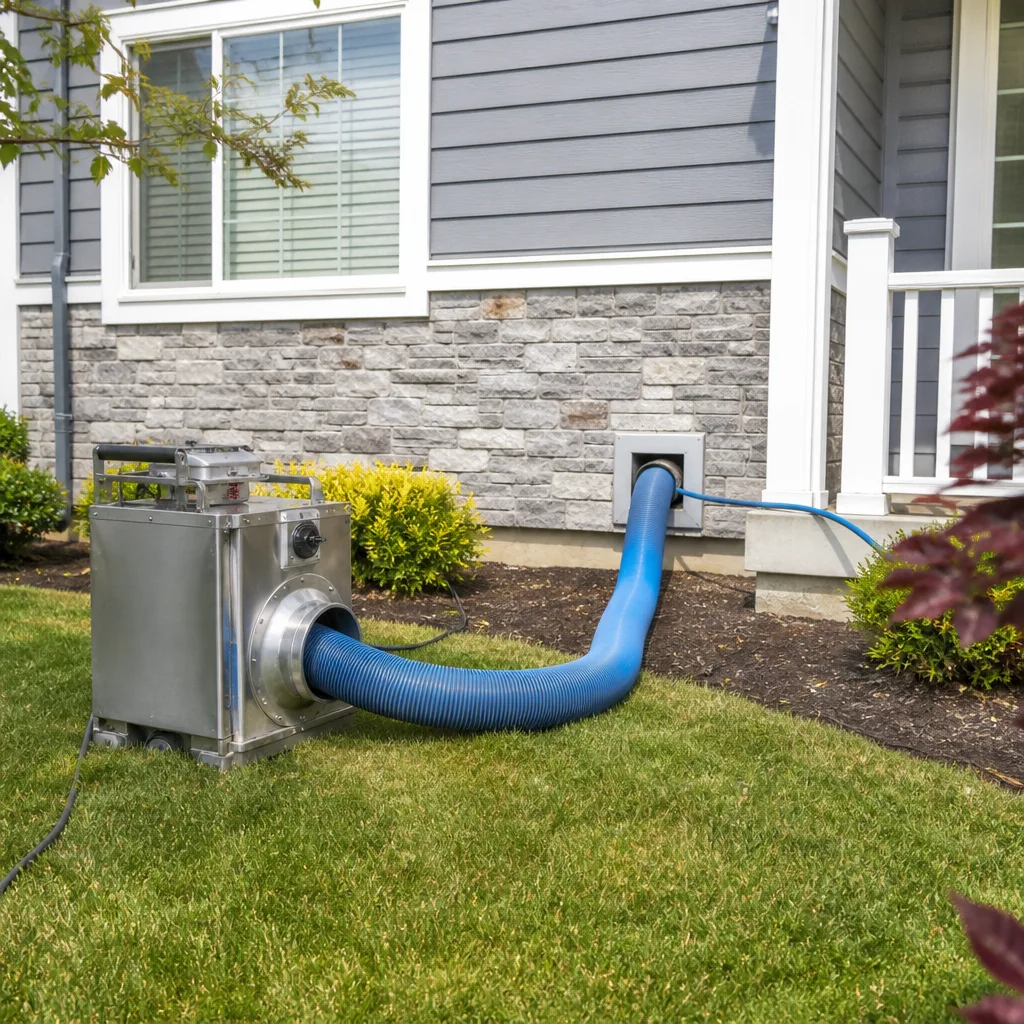 Whole-home duct cleaning
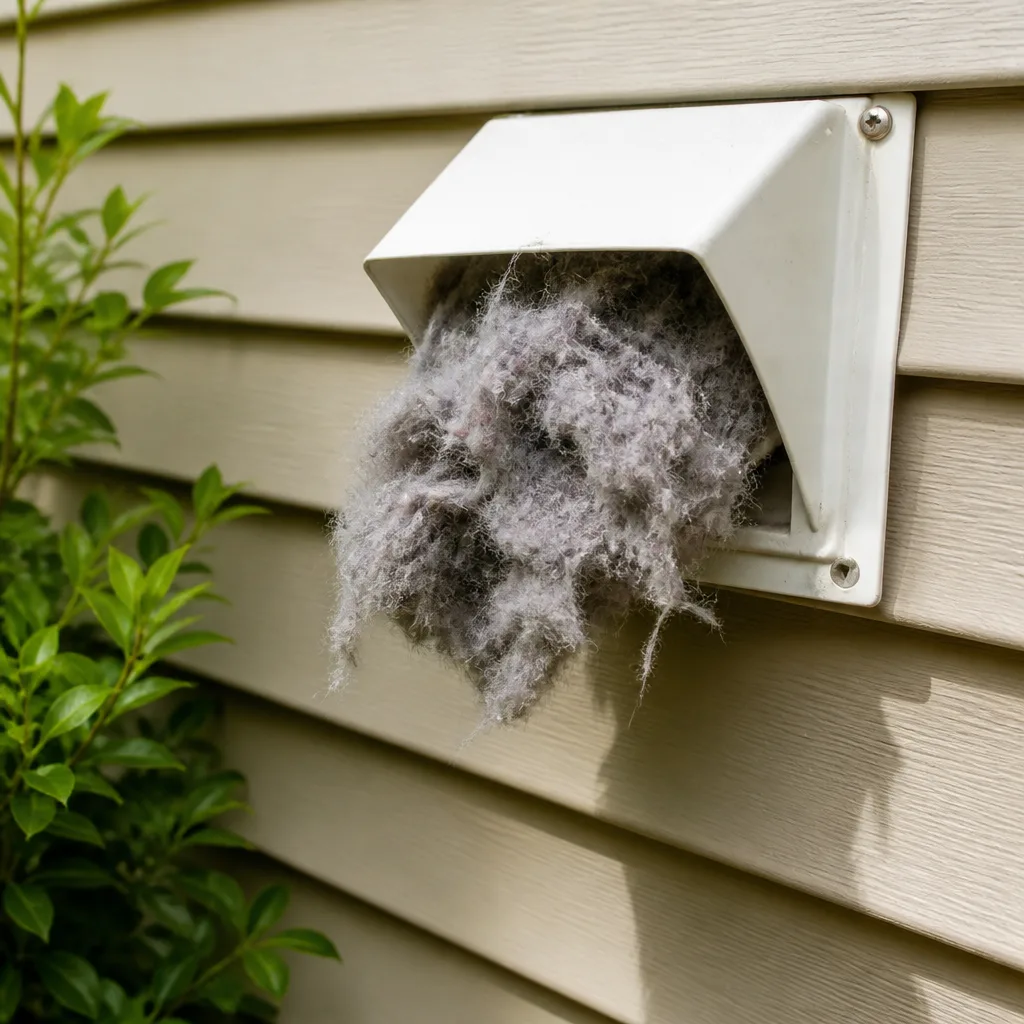 Dryer vent cleaning
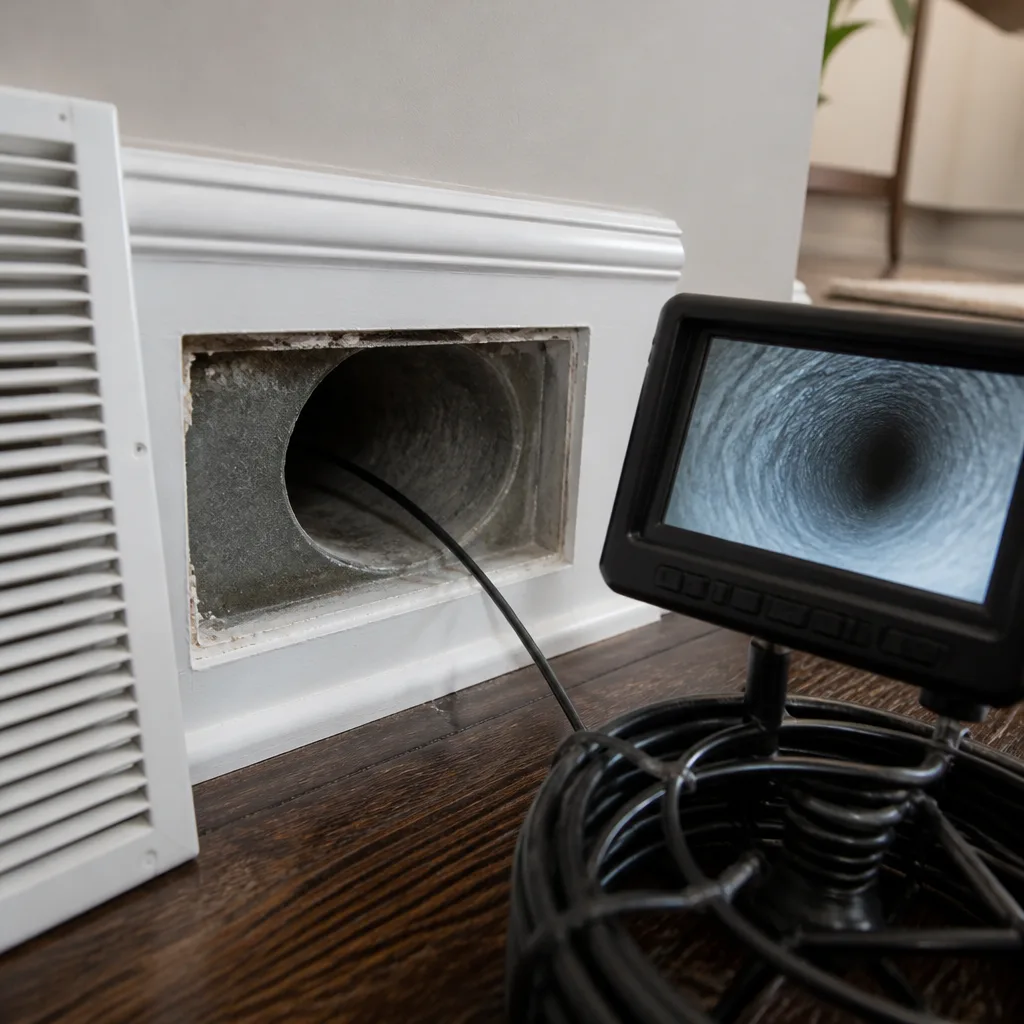 Camera inspection
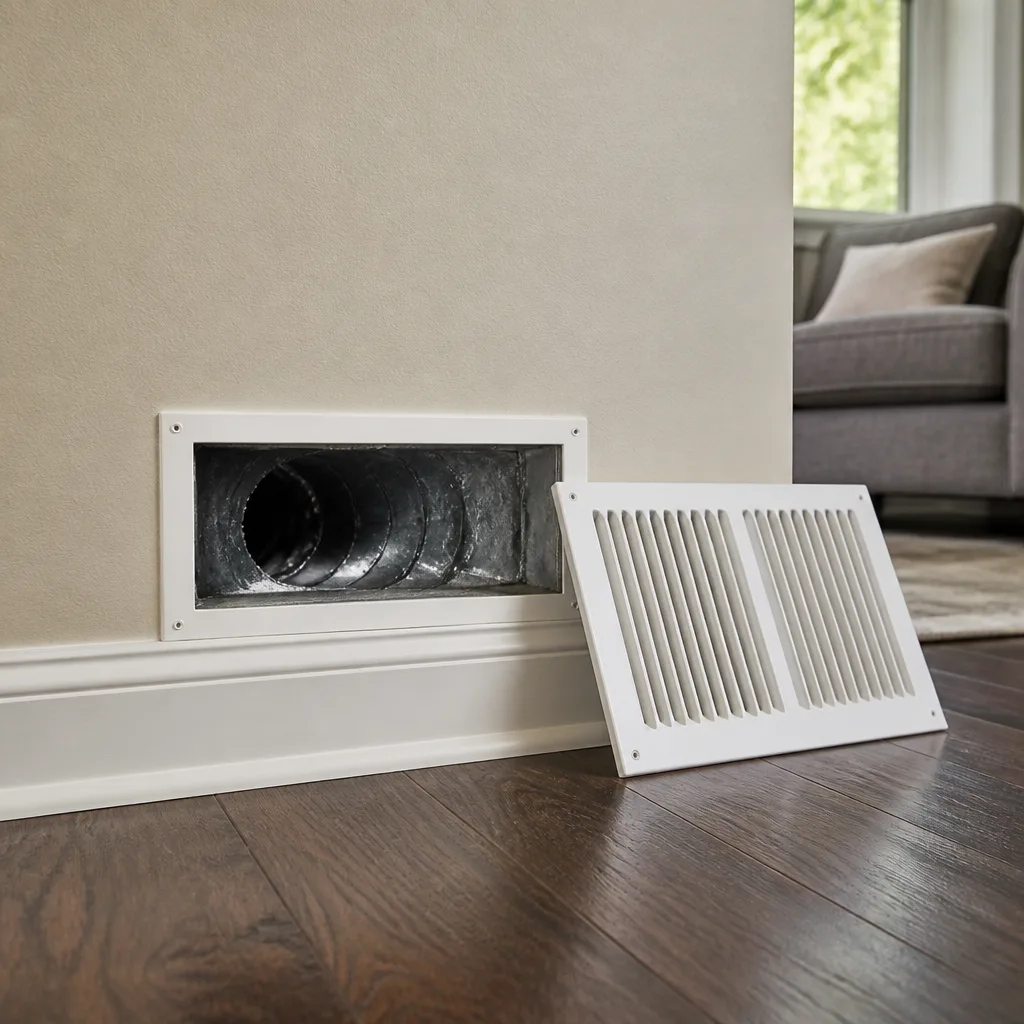 Sanitizing & deodorizing
Whole-system duct and dryer vent check with before-and-after photos - you see exactly what came out of your vents
That "$99 whole-house special" is a bait ad - the real number appears once they are in your hallway, or the "clean" is a shop-vac at the register. We photograph the inside of your ducts before and after instead.
Air Duct Cleaning Troubleshooting in Anaheim Hills: Common Problems and How to Fix Them
If you’ve had your ducts “cleaned” twice and still catch a musty smell when the AC kicks on, the problem was probably never dust. Odor that survives a cleaning usually has a source that a brush and vacuum can’t reach, or it’s coming from somewhere the system is pulling in air it shouldn’t be: mold on the evaporator coil, or a disconnected flex duct drawing in attic air. Chasing dust when the real fault is a broken duct connection wastes money and leaves the symptom in place. This guide shows you how to match what you’re noticing in your home to the mechanical cause behind it, so you can describe the problem accurately and get the right fix the first time. We cover symptoms common to Anaheim Hills homes and the checks you can run before you call anyone.
Quick Answer
Most duct problems in Anaheim Hills trace back to three things: dust and debris that a proper cleaning removes, a duct connection or flex run that has failed and is pulling in attic air, or contamination on the HVAC coil or inside the ductwork that only sanitizing and repair will resolve. Troubleshooting means matching your symptom (weak airflow, dust returning, musty odor, uneven room temperatures) to one of those categories before you spend money. A visual look at the vent cover almost never tells you which one you have. The step below that matters is a real inspection of the accessible runs, the coil, and the duct joins, and that’s where the industry’s better equipment separates itself from a quick wipe-down.
Styles & brands we work with
- Whole-home duct cleaning
- Dryer vent cleaning
- Camera inspection
- Sanitizing & deodorizing
Table of Contents
- Symptom-to-Cause Mapping: What Your Ducts Are Telling You
- Why Is Airflow Weak in One Room and Strong in Another?
- Why Does Dust Come Back Right After a Cleaning?
- Why Do Musty Odors Persist After Duct Cleaning?
- How Anaheim Hills Attic Heat Breaks Down Flex Duct
- What You Can Check Yourself Before Calling a Technician
- When You Need Negative-Pressure Diagnostics vs. a Re-Cleaning vs. a Repair
- Why Cleaning Without Sealing Often Doesn’t Hold
Symptom-to-Cause Mapping: What Your Ducts Are Telling You
Every duct complaint you can name maps to a specific failure. Before you reach for a phone, decide which category your symptom falls into. That single step saves you from paying for a re-cleaning when the real issue is a disconnected run, or paying for a repair when a thorough cleaning would have done it.
- Weak airflow at every register in the house: usually a dirty blower wheel, a clogged evaporator coil, or a filter that’s cut off too much airflow. It’s a whole-system problem, not a duct-branch problem.
- Weak airflow in one room only: a crushed or kinked flex run, a closed or disconnected damper, or a branch that’s separated at a boot or joint.
- Dust settling again within days: a leaky return pulling attic or garage air, or debris loosened but never fully evacuated.
- Musty smell when the system starts: moisture and biological growth on the coil, in the drain pan, or inside duct lining, not loose dust.
- Uneven temperature room to room: duct leakage on the supply side, or a flex run that’s lost its insulation and is dumping heat before air reaches the room.
- Whistling or rattling at a register: a restriction behind the grille, or a loose boot connection letting air escape.
Reading the symptom correctly is the whole job of troubleshooting. Getting this right in Anaheim Hills means knowing how the local builds and climate behave – covered below.
Why Is Airflow Weak in One Room and Strong in Another?
When one room gets weak airflow and the rest of the house is fine, the problem lives on that branch, not in the equipment. Air is lazy: it takes the path of least resistance. A kinked flex run, a branch that’s partially disconnected, a damper knocked shut during a renovation, or a crushed duct in a tight attic all starve a single register while the rest of the system stays balanced.
Here’s how we work it back to the cause:
- Confirm it’s one branch. Feel every register in the house. If most are strong and one is weak, you have a branch problem. If every register is weak, look at filter, blower, and coil instead.
- Check the register and boot. A blocked or oversized grille restricts flow. Look for a damper lever near the boot that’s been shut.
- Trace the accessible run. Where the flex duct is visible in the attic, look for sharp bends, crushed sections under pipes, or a section that’s come loose from the boot or the trunk.
- Check for leakage and disconnection. A run that has separated will still blow some air, but a chunk is escaping into the attic before it reaches the room.
A crushed run can’t be “cleaned” back to life. It has to be reconnected or replaced, and sometimes the branch needs to be re-routed to keep a clean bend. That’s the difference between cleaning and repair, and it’s why we handle them together.
Why Does Dust Come Back Right After a Cleaning?
Dust returning fast usually means one of two things: the system wasn’t fully cleaned, or the system is pulling contaminated air back in through a leak. The first is an equipment and process problem. The second is a sealing problem. Both produce the same frustrating result, and separating them is the key to fixing it.
- Incomplete cleaning: consumer-grade vacuums and short visits don’t agitate the duct walls or reach the branches. Our technicians use the Rotobrush rotary-brush system on every job because it scrubs the interior surface, not just the air passing through it. A shop vacuum is not a duct cleaner.
- Leaky return: a return duct with a gap or a loose joint in the attic will pull dusty attic air straight into the system. Cleaning the supply side won’t matter – you’ll be dusting the house forever until that return is sealed.
- Blower and coil left dirty: a cleaning that stops at the ducts and ignores the air handler leaves the biggest dust source behind. Full HVAC cleaning addresses the coil, blower, and cabinet together.
- No containment: if debris is loosened without negative air and containment, some of it re-settles in the system. That’s why we bring Abatement Technologies air-scrubbing and negative-air equipment into standard residential and light commercial jobs – the same contaminant-capture approach remediation crews use.
If dust comes back within a week or two in your Anaheim Hills home, ask the last cleaner exactly what they cleaned and whether they sealed anything. The honest answer tells you whether you need a re-clean or a repair. The best troubleshooting is a good question.
Why Do Musty Odors Persist After Duct Cleaning?
If a smell survives a cleaning, the source wasn’t in the ducts. Musty odor almost always lives where mechanical brushing can’t reach: the evaporator coil, the drain pan, the condensate line, or a section of duct lining that’s held moisture. Cleaning the ductwork without treating the coil just moves the smell around and leaves it intact.
In our experience in Anaheim Hills, three sources account for most persistent odor complaints:
- Coil contamination. A wet evaporator coil in a humid or poorly drained system grows biological growth on its fins. The system turns on, the coil is wet, and the blower pushes that smell through every register. Cleaning ducts won’t touch the coil – it has to be cleaned and treated as part of the HVAC service.
- Duct infiltration. A disconnected or leaky run pulls in attic air, which in some Anaheim Hills attics carries a stale, earthy smell. Sealing the ductwork stops the odor at the source instead of masking it.
- Drain pan and line. A pan that doesn’t drain fully holds standing water, and the growth it supports feeds odor through the whole system.
This is where our Air Quality & Sanitizing service comes in. We use Honeywell and Aprilaire products to treat biological growth, and Guardsman protective treatments to help keep surfaces from re-contaminating. Sanitizing isn’t a fragrance. It’s a treatment you can verify by what changed when the system runs. If your odor didn’t go away after a cleaning, it wasn’t a cleaning problem.
How Anaheim Hills Attic Heat Breaks Down Flex Duct
Anaheim Hills attics regularly top 140°F in summer, and that heat beats up flex duct quietly. Flex duct has an inner liner, insulation, and an outer jacket. Under sustained heat, that outer jacket becomes brittle and starts to crack. Insulation can sag away from the liner. Seams and tape release. What used to be a sealed, insulated run becomes a tube that’s lost its insulation and is leaking air into an attic that’s hotter than the house.
This matters for troubleshooting because heat damage shows up as specific symptoms:
- Warm air from a supply register in a room that used to cool fine. The run has lost insulation and is dumping cooled air before it gets there.
- Dust appearing faster in summer. A cracked jacket or a released seam opens the system to attic air, and attic air is dusty.
- A hiss or whisper in the attic. That’s a leaking joint, and it’s a sign the tape or mastic has failed under heat cycling.
- Higher energy use to hold the same temperature. Leaky, uninsulated runs make the system work harder without any obvious room-level cause.
If you suspect attic heat damage, the fix is usually a repair and sealing job, not another cleaning. It’s also why we treat duct repair as the other half of cleaning: clean ducts, then seal them, and the system stays clean. Anaheim Hills’ summers make that step a real requirement, not an upsell.
What You Can Check Yourself Before Calling a Technician
You don’t need to climb into an attic to gather useful information. A few safe checks at the register level tell a technician far more than “my airflow is bad,” and they cost you nothing. The rule is simple: check what you can see and reach safely from the living space, then stop.
- Test every register. Hold a tissue or your hand at each supply and return. Note which are strong, which are weak, and whether there’s a temperature difference between rooms. This maps whether your problem is whole-system or branch-specific.
- Look at the grilles. A grille clogged with dust or blocked by furniture cuts flow and mimics bigger problems. Some grilles have adjustment levers – check they’re open.
- Check the filter. A fully loaded filter starves the whole system, no matter how clean the ducts are. Note when it was last changed.
- Look at visibly accessible flex ducts. If a run is exposed in a mechanical closet or garage, look for kinks, crushed sections, loose tape, or a section that’s hanging loose. Don’t reach into the duct or disconnect anything.
- Listen when the system cycles. Whistles, rattles, and repeated short cycling are all symptoms worth reporting. So is any smell that appears when the fan starts.
Don’t climb into a hot attic, don’t open the air handler panel, and don’t try to reseat a disconnected duct yourself. Attic heat, low clearances, and electrical components near the air handler are real hazards. Note what you find and leave the physical work to trained technicians – our technicians have up to 13 years of experience with exactly these systems.
When You Need Negative-Pressure Diagnostics vs. a Re-Cleaning vs. a Repair
The hardest part of duct troubleshooting is deciding which of three jobs you actually need. Get this wrong and you either pay for a cleaning that doesn’t fix the symptom or a repair you didn’t need. Here’s how we sort it:
- You need a cleaning when the system is dusty throughout, airflow is uniformly low, the return is choked, or the coil and blower are visibly dirty. The symptom is system-wide and the duct runs are intact.
- You need a repair and sealing job when symptoms are branch-specific, you’ve found a kinked or disconnected run, or there’s evidence of heat-related damage. Cleaning a broken duct wastes money because the leak keeps re-contaminating it.
- You need full diagnostics with negative-pressure and air-scrubbing equipment when the symptom is contamination you can’t see or locate – persistent odor, contamination suspected behind a lining, or a system that’s been re-contaminated repeatedly. The Abatement Technologies equipment we use holds the work area under negative pressure so loosened debris is captured and removed, not redistributed.
In many Anaheim Hills homes the answer is more than one of these. Cleaning plus sealing plus sanitizing under one company beats three specialists who each look at a piece. Our Air Duct Cleaning Anaheim Hills page lays out the full scope, and a free estimate tells you which combination your system actually calls for.
Why Cleaning Without Sealing Often Doesn’t Hold
Cleaning is the easy half. Sealing is what keeps the result. A duct system with gaps, loose joints, or compromised insulation is a system that will re-contaminate the moment the fan runs. It’s pulling attic air in 24 hours a day, whether or not you notice it. This is the step most cleaning-only services skip, and it’s the reason some homeowners can’t tell whether their cleaning helped.
What sealing actually does:
- Stops attic air infiltration. Sealed joints mean the system pulls air from the return, not from a dusty 140°F attic.
- Restores delivered airflow. Air that was leaking into the attic now reaches the room it was meant to serve.
- Protects the clean. A sealed system stays clean far longer, so the cleaning you paid for holds up.
- Handles heat damage. Sealing goes together with re-taping compromised jackets and resecuring insulation that’s sagged away from the liner.
We treat duct repair and sealing as a distinct service because leaving it out is how duct cleaning gets a bad name. Our air duct cleaning and repair work together for a reason: one without the other is half a job. And while we’re in the system, we address the other components too – the dryer vent cleaning and HVAC cleaning services cover the parts of the indoor air system that a duct-only visit never touches.
Common Mistakes to Avoid
- Judging by the vent cover. A clean-looking grille says nothing about the inside of the run, the coil, or the joints. Reputable troubleshooting looks at the whole system, not what you can see from the living room.
- Paying for a re-cleaning when the real issue is a leak. If dust comes back in days, the system is re-contaminating itself. Clean a leaking system and you’ve bought the same problem again.
- Ignoring the attic in summer. Anaheim Hills’ attic heat is hard on flex duct. If your runs are original to an older install, inspect them for cracked jackets and failed seams before assuming the ductwork is fine.
- Treating odor with a fragrance. Deodorizing a musty smell without addressing the coil, drain, or infiltration source masks it for a week and leaves the real cause untouched. Sanitizing addresses the contamination; air freshener does not.
- Hiring a vacuum-and-go service. Consumer-grade equipment and a short visit can’t agitate duct walls or capture loosened debris. Ask what equipment a company uses – if they can’t name the system, the answer is telling.
- Skipping the dryer vent. A clogged dryer vent is a separate airflow restriction with its own risks, and it’s easy to overlook while troubleshooting the HVAC side. It’s part of the same indoor air system.
- Cleaning and never sealing. The most common mistake in this trade. A clean, unsealed system drifts back to where it started. Clean ducts, then seal them.
See the difference
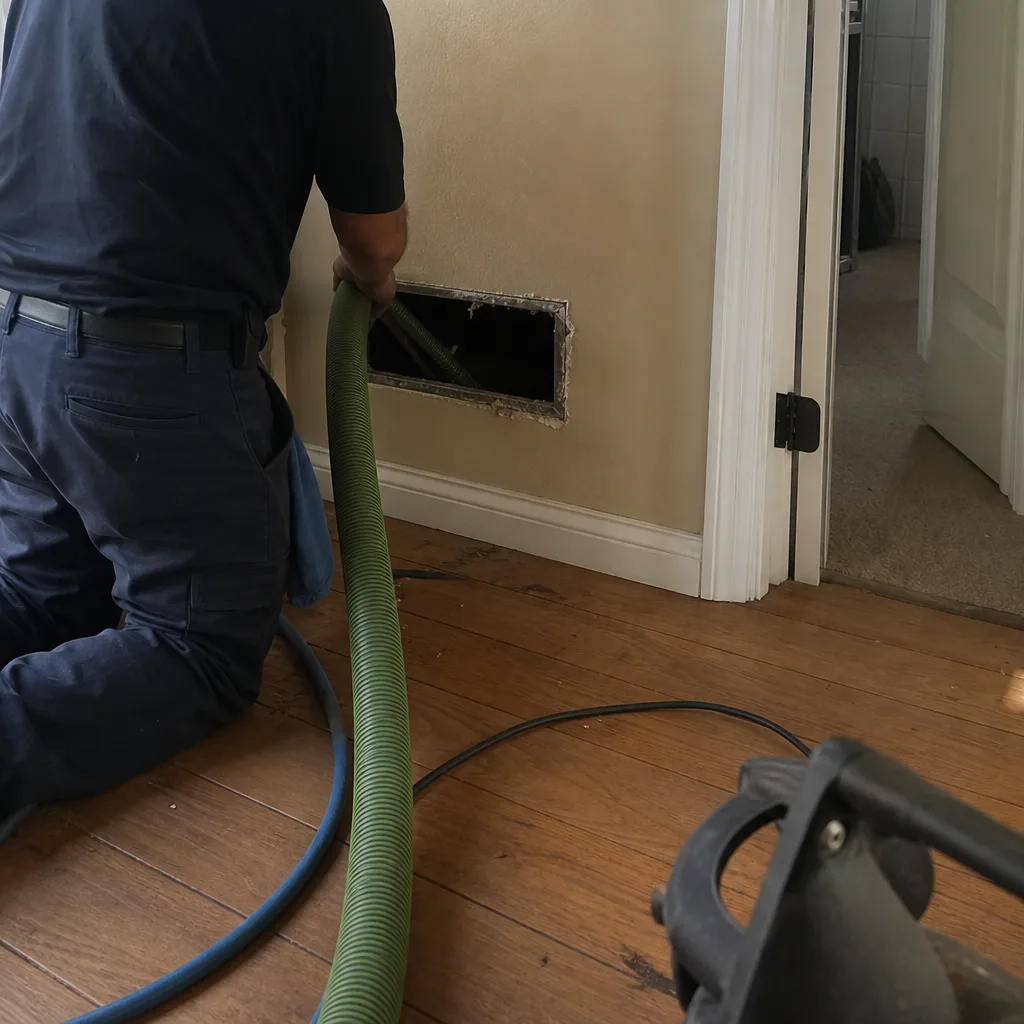 Before
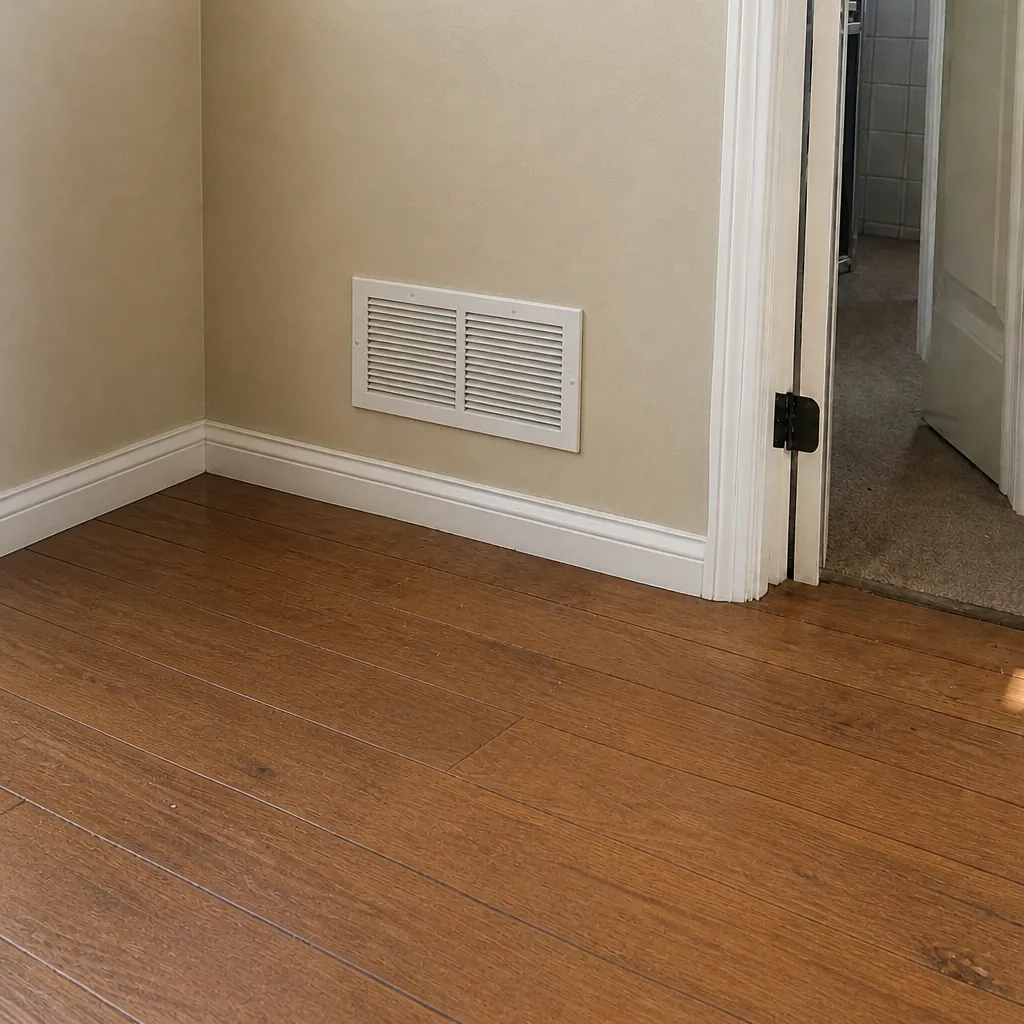 After
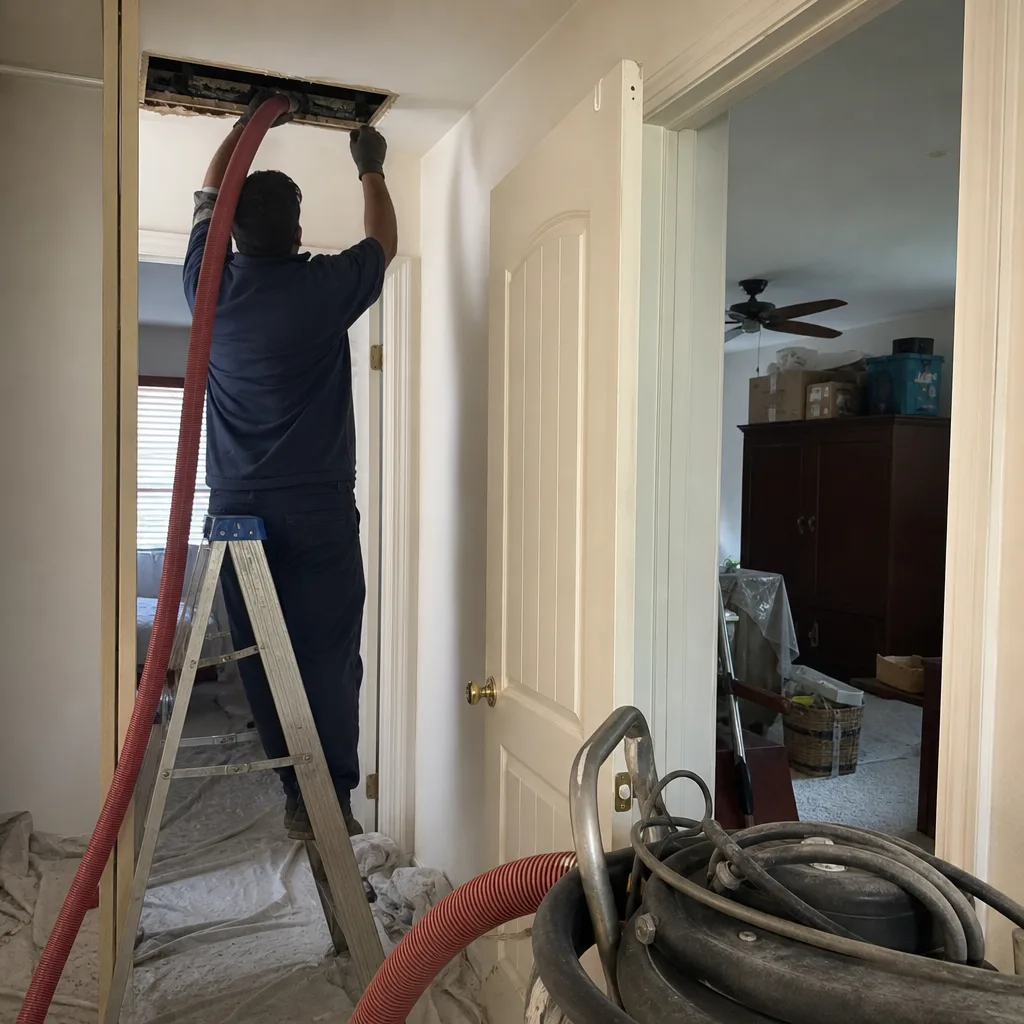 Before
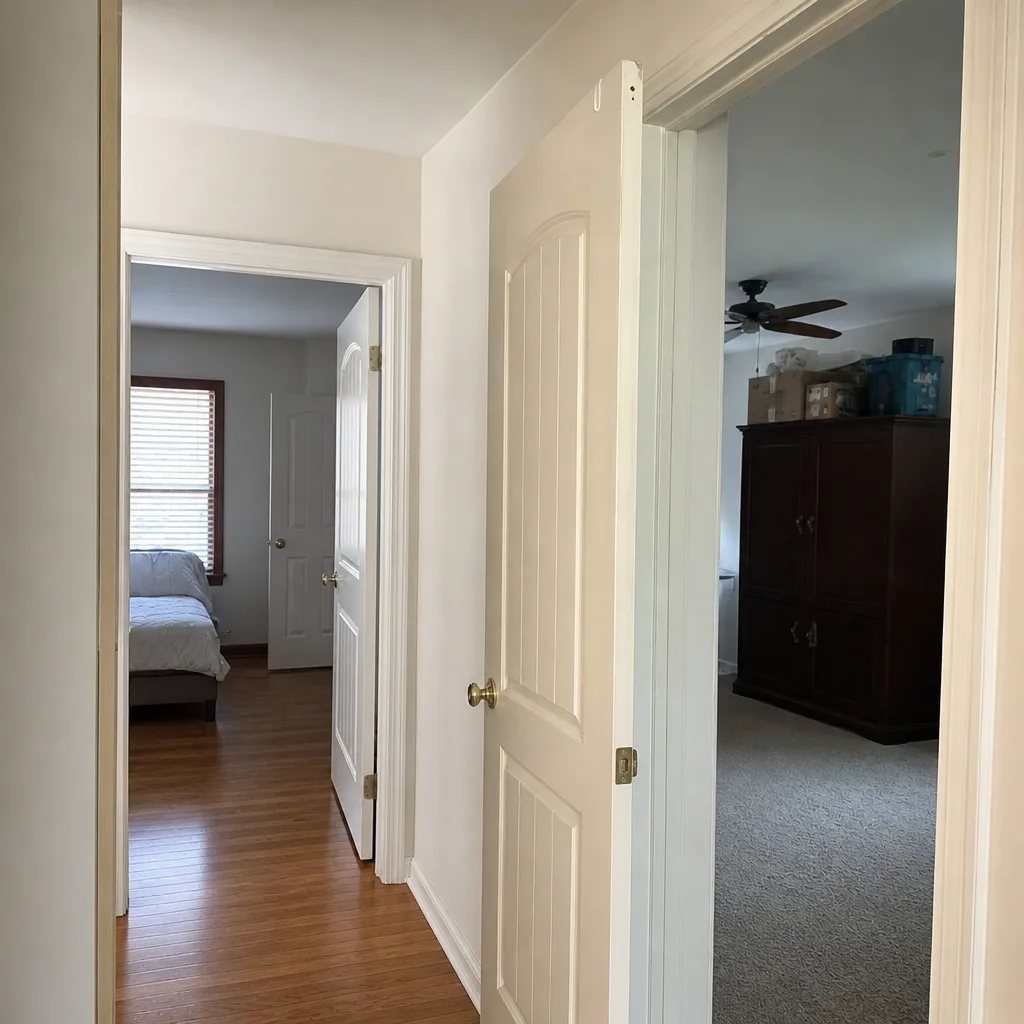 After
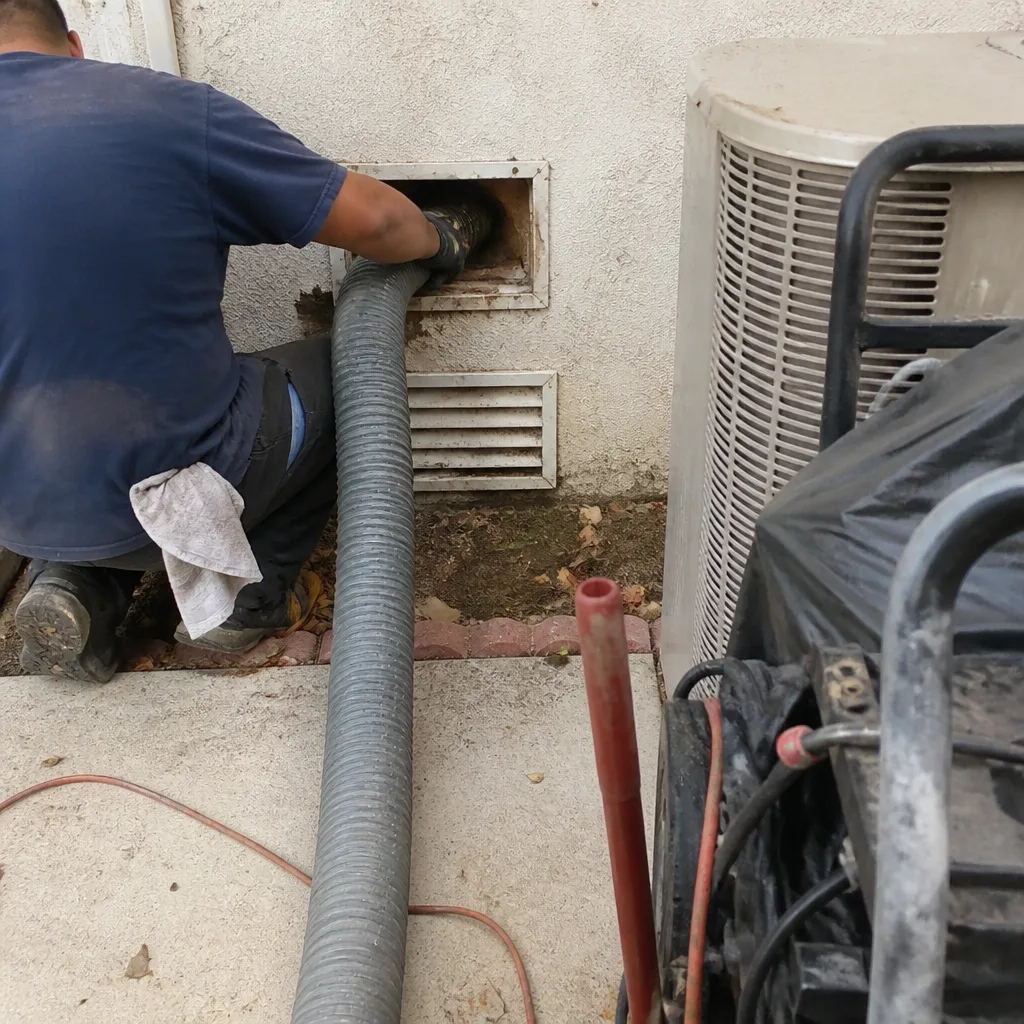 Before
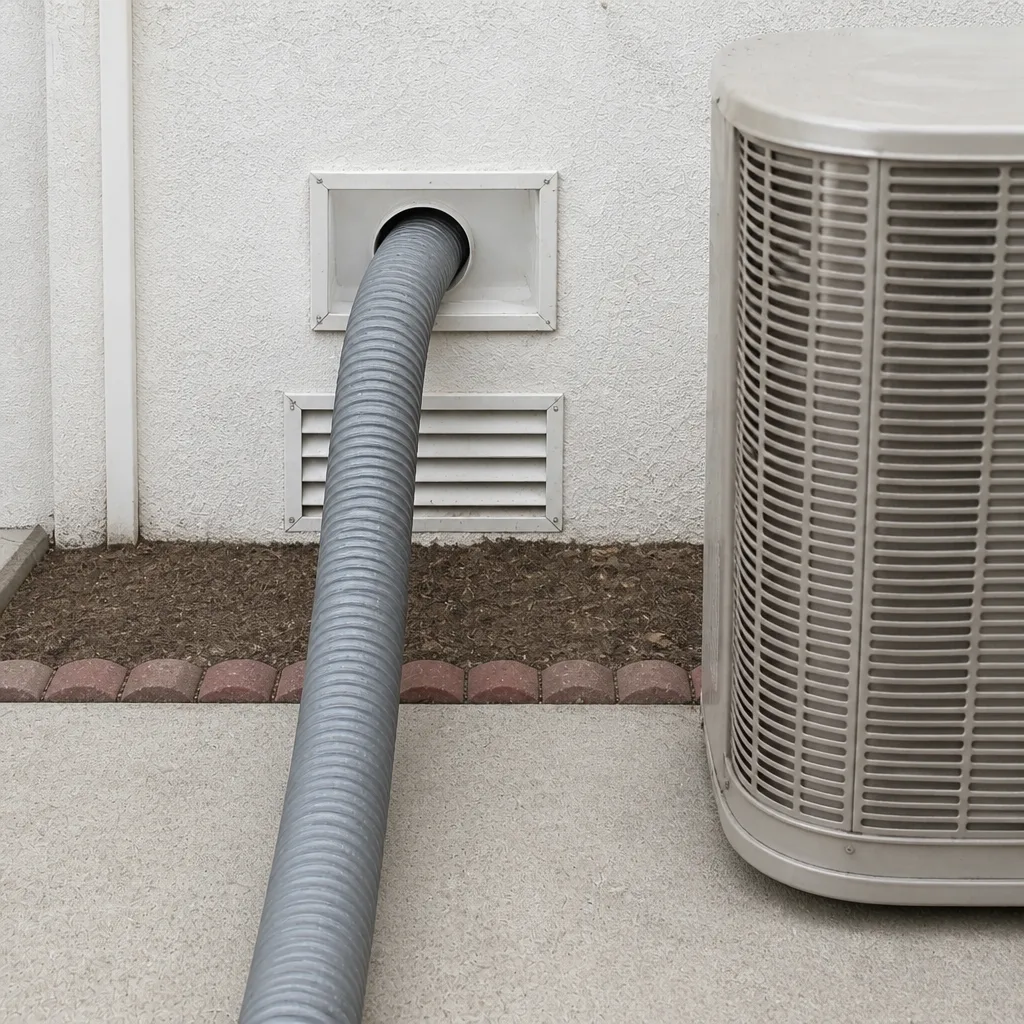 After
When to Call a Professional
Call a technician when your checks point to a cause you can’t resolve from the living space: weak airflow isolated to one branch after you’ve checked the grille and filter, dust returning within days of a cleaning, a musty smell that appears when the fan starts, or visible heat damage to a flex run in an attic. Also call if airflow drops suddenly, if the system short-cycles, or if you’ve never had the system cleaned and you’re seeing dust that won’t quit. Don’t open the air handler or climb into the attic yourself. Air Duct Cleaning Anaheim Hills offers free estimates in Anaheim Hills – call (855) 526-8990. We answer 24/7, and fast dispatch runs from 7am to 7pm, Sunday through Friday.
Frequently Asked Questions
Because the source was never in the ducts. Musty odor after a cleaning almost always comes from the evaporator coil, the drain pan and line, or a section of duct lining that’s held moisture, and none of those are reached by mechanical brushing. For duct infiltration, a disconnected run pulling in attic air can also carry odor. The fix is coil cleaning, sanitizing with products like Honeywell and Aprilaire treatments, and sealing the ductwork so infiltration stops. Call (855) 526-8990 for an exact quote – estimates are free.
The symptom tells you. System-wide dust and uniformly low airflow point to a cleaning; branch-specific weak airflow, kinks, or heat-damaged runs point to a repair and sealing job; persistent odor or repeated re-contamination after cleaning calls for full diagnostics with negative-pressure equipment. Many homes need two of the three. A free estimate separates them for you. Call (855) 526-8990 to schedule one.
Yes. Attics that regularly exceed 140°F in summer break down the outer jacket of flex duct over time, causing it to become brittle and crack, release insulation, and open seams. The symptoms are warm supply air in one room, dust appearing in summer, and higher energy use for the same temperature setpoint. It’s a repair and sealing issue, not a cleaning one. Call (855) 526-8990 for an inspection.
Usually because less is done. A low price often means a consumer-grade vacuum and a short visit that doesn’t agitate duct walls, clean the coil and blower, or seal anything – so the system re-contaminates and the low price becomes a repeat visit. Professional-grade equipment like the Rotobrush rotary-brush system and Nikro HVAC equipment take longer and cost more to run. The right comparison is a per-job price against the scope of work. Call (855) 526-8990 for a written, no-surprise estimate.
Ask for before-and-after photos of your system and a walkthrough of what was cleaned, sealed, and treated. A professional job leaves documentation: which duct runs were cleaned, whether the coil and blower were addressed, what was sealed, and what sanitizing was applied. If a company can’t tell you what it did and show you, the work you paid for is a guess. Call (855) 526-8990 to arrange an estimate and ask what you’ll receive.
Most homes don’t need annual cleaning. Every few years is reasonable, or sooner if you have a dusty return, have had a renovation, notice dust returning quickly, or have pets or allergy symptoms. What matters more than a fixed schedule is whether your system is sealed – a leaky system needs attention more often. Call (855) 526-8990 for an assessment of what your system actually needs.
The Bottom Line
Troubleshooting a duct problem comes down to matching the symptom to the cause. Weak airflow in one room points to a failed branch, not dirt. Dust returning in days points to a leak, not a bad cleaning. A musty smell that survives cleaning points to the coil or infiltration, not missed debris. And in Anaheim Hills, the summer attic heat makes flex duct degradation a real and often overlooked cause. Read your system correctly, don’t spend on a cleaning when you need a repair, and don’t clean what you won’t seal. When you’re ready to stop guessing, our team – professional-grade equipment, five services, one company for the whole system – will walk your system and tell you what it needs.
Written by the team at Air Duct Cleaning Anaheim Hills.