
Nikro Air Duct Cleaning in Anaheim Hills: A Homeowner’s Guide
A lot of companies will tell you they use “professional equipment.” Almost none will explain that the difference between a $99 duct cleaning and a $400 one often comes down to a single mechanical fact: whether the machine creates enough negative pressure to pull debris out of the system, or just stirs it around and pushes it back into your rooms. That distinction is the whole ballgame. In Anaheim Hills, where post-wildfire smoke has a habit of settling into return ducts, the equipment a company shows up with decides whether the job is real.
What does Nikro equipment actually do inside a duct system?
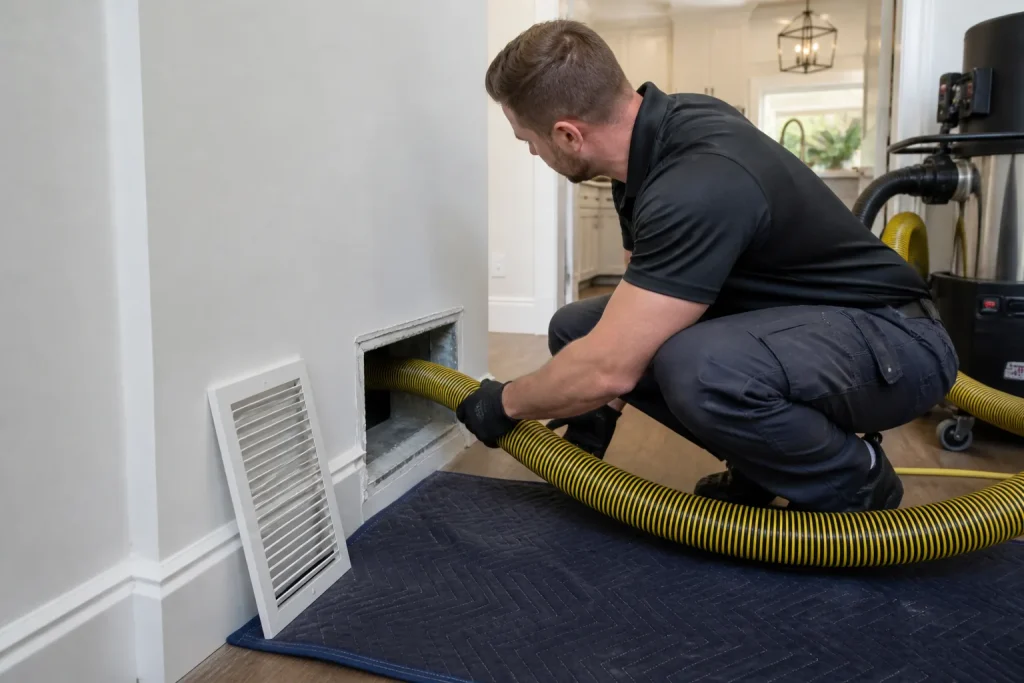
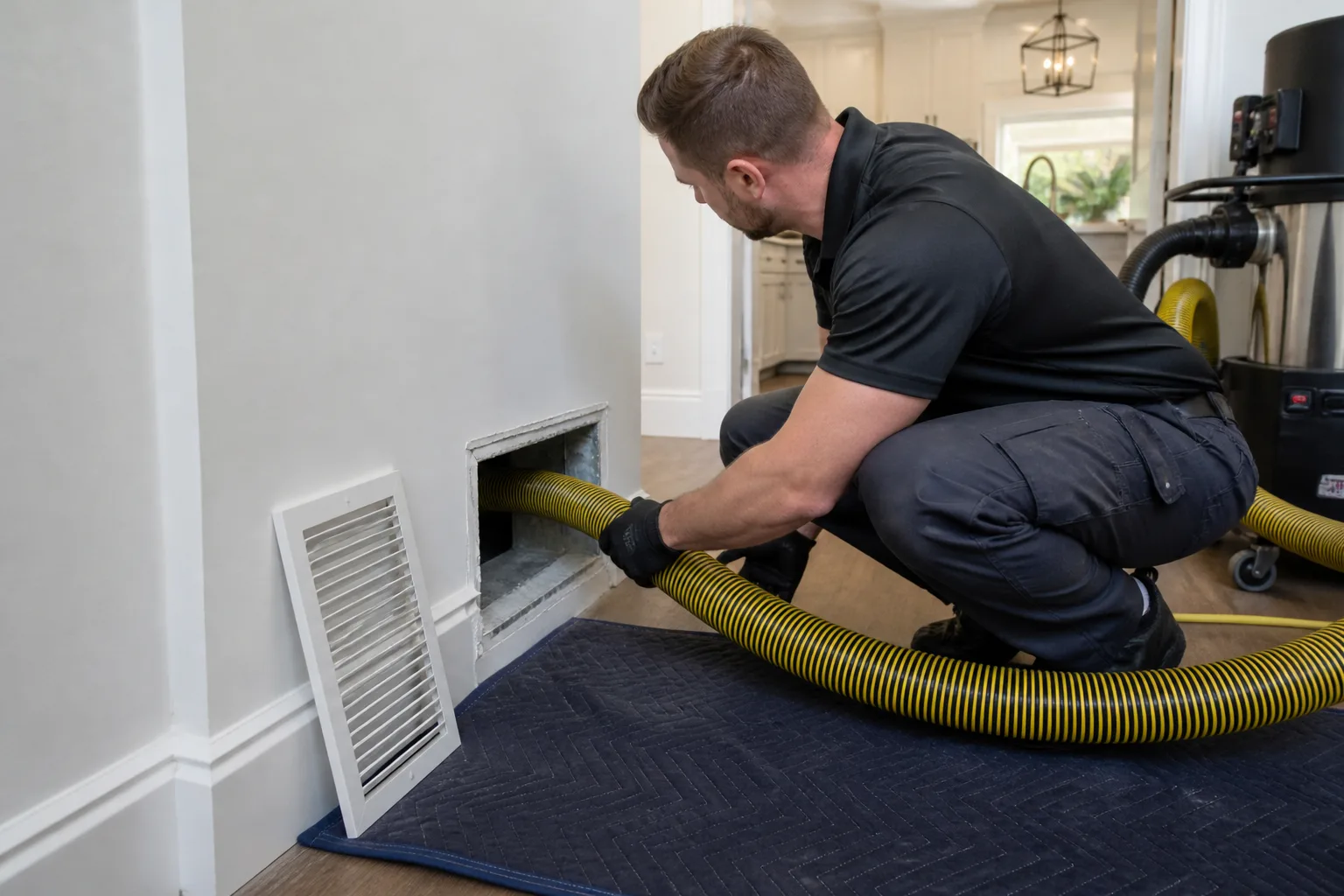
Nikro units work by negative-pressure source removal. The machine connects to the duct system, seals the opening, and pulls a strong, steady vacuum so contaminants travel toward the collection point instead of drifting into the living space. A HEPA filter rated at 0.3 microns catches what the vacuum captures, including fine smoke particles that a shop vacuum will simply blow out the exhaust. That is the core difference between a real clean and a cosmetic one.
Contact vacuuming, the method most franchise cleaners use, is a brush head on a hose touched to the visible duct interior. It cleans what the technician can reach and see. Source removal cleans the system. NADCA’s standard for duct cleaning is built around negative pressure for exactly this reason: you want debris captured at the source before it becomes airborne again. When we explain this to Anaheim Hills homeowners, the light usually goes on. The question is not whether the technician is careful. It’s whether the machine is capable.
What Nikro equipment is rated for:
- HEPA filtration down to 0.3 microns, which captures fine particulate a standard vacuum exhausts back into the room
- Continuous negative pressure, so a sealed system stays sealed while agitation tools work inside it
- NADCA-compliant source-removal configuration, the baseline the industry sets for legitimate cleaning
- Capacity to run as a truck-mount or portable unit, depending on the access and layout of the home
In our experience, the filtration rating is the spec that matters most in Anaheim Hills, and we’ll explain why next.
Why Nikro filtration matters for Anaheim Hills homes after a smoke event
Anaheim Hills sits on the eastern edge of the county, up against the hills, where Santa Ana winds and wildfire season push smoke and ash into neighborhoods that don’t always expect it. Fine smoke particulate is smaller than most people picture. It travels through return ductwork, settles on interior surfaces, and then circulates every time the HVAC system runs. A vacuum without proper HEPA filtration doesn’t remove it; it re-entrains it.
This is where the 0.3-micron rating becomes practical rather than technical trivia. Smoke particles land in that range. A HEPA-filtered Nikro unit pulls them into the collection chamber and holds them. A consumer-grade vacuum or a contact-only setup either misses them or pushes them back out. After a smoke event in Anaheim Hills, we recommend asking any duct cleaning company two questions before booking:
- What filtration class does your vacuum use, and is it HEPA-rated?
- Do you perform a negative-pressure test before and after cleaning?
If the answer to either is vague, the equipment likely isn’t set up for source removal. You can read more about our approach to Air Duct Cleaning Anaheim Hills if you want to see how we frame the process. The point isn’t to sell you; it’s to give you a yardstick for every quote you get.
Truck-mount or portable? How technicians choose the right Nikro setup
Nikro makes both truck-mounted and portable negative-pressure units, and a technician picks based on the home, not preference. Truck-mount units deliver higher airflow and are typically used on larger, straightforward residential systems where the truck can park close to the access point. Portable units do the same job at lower volume when access is tight: condos, hillside homes with long runs, or properties where the equipment can’t get within hose distance of the furnace.
Anaheim Hills has plenty of both. The hillside neighborhoods and older tract homes often have long duct runs and awkward access, so a portable Nikro setup plus careful sealing is the practical choice. A single-family home on a flatter lot with a clean crawl space and an accessible main trunk usually benefits from the truck-mount’s higher pull. A good technician will explain which setup applies and why before starting. If nobody mentions it, ask. A company that can’t tell you which machine it’s using probably hasn’t thought about your specific house.
For a fuller picture of how we deploy both setups, see air duct cleaning and how the equipment fits into the standard visit.
Why Nikro is paired with Rotobrush, not used alone
Negative pressure is the extraction system; it isn’t the whole clean. Debris clinging to duct walls, especially caked-on dust and ash in a return that hasn’t been touched in years, needs mechanical agitation to loosen it first. That’s what a rotary-brush system like Rotobrush does. The two tools work in sequence, and neither replaces the other.
The cleaning order looks like this:
- Set up negative pressure. The Nikro unit seals the system and starts pulling.
- Agitate. The Rotobrush rotary head travels the duct interior, loosening attached debris.
- Extract. Negative pressure carries the loosened material into the HEPA-filtered collection chamber.
- Verify. A negative-pressure test and visual check confirm the system is clean.
The result is a source-removal clean rather than a surface brush. In our experience, this is the sequence that actually changes what you notice: less dust settling on furniture, better airflow at the registers, and a return that doesn’t smell faintly of old smoke when the system kicks on. Anaheim Hills homeowners who’ve had a contact-vacuum job done before tend to notice the difference right away.
Cleaning also isn’t the end of the work. Once ducts are clean, degraded joints and leaking seams will let outside air and contaminants back in. Sealing afterward closes that loop, which is why we pair cleaning with HVAC cleaning and duct sealing in the same relationship.
The questions to ask any duct cleaning company (equipment checklist)
You don’t need to know the model number of the machine. You need to know what it can do. Here’s a short script to bring to every quote you get in Anaheim Hills, and it works whether the company uses Nikro, Rotobrush, or any other brand:
- What CFM does your vacuum pull? If they can’t tell you or won’t, that’s an answer.
- Is the filtration HEPA-rated, and to what micron level? “HEPA” alone is fine; “we don’t know” is not.
- Do you perform a negative-pressure test before and after? Verification is the difference between a claim and a result.
- Do you use mechanical agitation or vacuum only? Attached debris doesn’t move on suction alone.
- Do you seal the system after cleaning, or just clean? Sealing prevents re-contamination.
- Can I see before-and-after photos of my own ducts? Not stock photos. Yours.
In our experience, the companies that answer these calmly are the ones set up for the job. The ones that get defensive usually are not. That’s not a knock on price; it’s a matter of matching the tool to the task.
When to call a pro
Most homes don’t need duct cleaning every year, and no one should tell you they do. Call when you notice a specific change: visible dust streaking around the registers, a musty or smoky smell when the HVAC kicks on, airflow that’s clearly dropped, or a recent renovation that pushed drywall dust through the system. After a wildfire smoke event, a full source-removal clean is the move, not a contact-vacuum touch-up. Trust your nose and your eyes on this one.
Related services in Anaheim Hills: if you haven’t had your dryer vent cleaning done in a while, it’s worth pairing the visit. Lint buildup is a fire risk, and it’s the kind of thing most of us forget until the dryer starts taking two cycles to finish a load. And yes, there is a point where a homeowner can handle it with a shop vac. That point ends well before the duct run gets serious. Remember the negative-pressure test: if your equipment can’t pass it, it’s the wrong tool. We handle the full duct ecosystem in one visit, from supply and return runs to the HVAC unit and dryer vent, so you’re not coordinating three companies. Professional-grade equipment, not shop vacuums, is the whole point.
The Bottom Line
The equipment a duct cleaning company brings tells you most of what you need to know before work starts. Nikro negative-pressure systems paired with Rotobrush mechanical agitation, plus a HEPA filtration rating that handles 0.3-micron particulate and a negative-pressure test before and after, is the setup that actually removes debris instead of redistributing it. In Anaheim Hills, where smoke season is a real annual concern, that filtering spec isn’t a luxury.
Key takeaways:
- Source removal beats contact vacuuming for actual debris extraction
- HEPA filtration to 0.3 microns is the spec that matters after smoke events
- Agitation and extraction work together; neither is complete alone
- Sealing after cleaning prevents re-contamination
- Ask for the negative-pressure test and your own before-and-after photos
If you’re in Anaheim Hills and want a straight answer about what your duct system actually needs, we offer free estimates. Call (855) 526-8990. We answer 24/7. Fast dispatch from 7am to 7pm, Sunday through Friday. One flat price per system is agreed before work starts, and the written estimate sets the final price.
Frequently Asked Questions
Most whole-home duct cleaning jobs run in the low hundreds of dollars, and the exact figure depends on the size of the system and how many runs are involved. We set one flat price per system, agreed before work starts, with no per-vent pricing. Call (855) 526-8990 for an exact quote; estimates are free.
Cheap quotes usually reflect contact vacuuming with consumer-grade equipment, which cleans what the technician can reach and see rather than pulling debris out at the source. It’s not that those companies are dishonest; it’s that their tools can’t do source removal. Ask about CFM, HEPA filtration, and the negative-pressure test before you compare price. Call (855) 526-8990 if you want to talk through what a proper setup involves.
Ask for before-and-after photos of your own ducts and a negative-pressure test result. Both are verifiable. Stock photos and vague assurances are not. We provide both on every job. Call (855) 526-8990 to schedule an estimate.
There’s no fixed interval for every home. Most systems don’t need annual cleaning; call after a smoke event, a major renovation, a pest issue, or when you notice visible dust, smell, or airflow changes. A technician with a camera can tell you honestly whether it’s needed. Call (855) 526-8990 if you’d like an assessment.
Written by the team at Air Duct Cleaning Anaheim Hills.
Need Air Duct Cleaning Help?
Call Air Duct Cleaning Anaheim Hills - the local pro we connect you with is licensed and insured, here with fast help in Anaheim Hills.
(855) 526-8990