
Air Duct Cleaning: Repair or Replace? How Anaheim Hills Homeowners Decide
Most duct systems don’t need replacing. Most don’t need aggressive cleaning either. The right call usually comes down to three things: what your ducts are made of, how old they are, and how much air they’re losing. If your Anaheim Hills home was built between 1975 and 1995 and still has the original fiberglass duct board, there’s a reasonable chance a standard cleaning will dislodge more material than it removes – and that’s a conversation a qualified technician should have with you before the job starts, not after.
If you’d rather have someone look at it directly than work through a decision tree on your own, call (855) 526-8990. We answer 24/7. Fast dispatch from 7am to 7pm, Sunday through Friday.
Key Takeaways
- Material condition matters more than duct age. Degraded fiberglass duct board often can’t survive aggressive cleaning.
- Leakage above roughly 15% usually points toward sealing or replacement, not another cleaning.
- Anaheim Hills attic temperatures push past 140°F in summer and shorten flex duct service life faster than most homeowners expect.
- A real diagnosis includes visual inspection, pressure testing, and written documentation. A recommendation without those three is a sales pitch.
- Partial replacement is often the smart middle path when one branch is failing and the rest of the system is sound.
What are the three failure modes that make replacement the better call?
Replacement makes more sense than repair or repeat cleaning when the system has crossed from “dirty” into “structurally compromised.” In our experience across Anaheim Hills homes, three specific failure modes account for most of those cases.
1. Material degradation. Fiberglass duct board from the 1970s through the mid-1990s has a finite lifespan. When the inner facing starts to delaminate – you’ll see flaking, visible fibers, or a chalky residue inside the run – brushing it aggressively does more harm than good. The duct is already shedding material into the airstream; scrubbing accelerates it. If the board fails a light hand test, replacement of that section is the honest recommendation.
2. Geometric failure. Flexible duct collapses, kinks, or sags when it’s been run through a hot attic without proper support. A crushed flex run can lose most of its cross-section, which means the air that should reach a bedroom backs up and finds another path. You can’t clean a collapsed duct back into shape. You replace that run.
3. Systemic leakage above 15%. Every duct system leaks some. Once measured leakage climbs past roughly 15% of total airflow, sealing gets expensive fast, and the math starts favoring replacement of the worst branches. A system leaking 25% or more across multiple joints and connections is rarely worth chasing joint by joint.
If you recognize any of these, the next step is a proper assessment – not another cleaning invoice.
How do you read a duct leakage test result?
A duct leakage test measures how much of the air your system moves never reaches the rooms it’s meant to serve. The percentage is expressed against total system airflow, and the number tells you what to do next.
- Under 10%: Normal for older residential systems. Clean, seal obvious gaps at the plenum and register boots, and move on.
- 10-15%: Typically fixable with targeted sealing. Mastic at accessible joints and proper boot sealing usually recover most of the loss.
- 15-25%: This is the decision zone. Sealing can work if the leaks are concentrated and accessible. If they’re spread across flex runs buried in attic insulation or behind finished walls, partial replacement usually wins on cost per point of leakage recovered.
- Above 25%: Replacement of the failing sections is almost always the better return, especially if the material is also degraded.
One caution: a leakage test result means nothing without knowing where the leaks are. A good technician will pair the test with a visual inspection of accessible runs, and document what they found. A number alone isn’t a diagnosis.
How do Anaheim Hills attic conditions accelerate duct failure?
Anaheim Hills attics get brutally hot in summer. During a typical July afternoon, attic temperatures routinely exceed 140°F, and that heat does quiet, cumulative damage to the duct system running through it.
Flex duct is the most common victim. Its inner liner is a thin layer bonded to a wire helix and wrapped in insulation. Heat cycling breaks down that bond. Over time you get inner liner separation – the liner peels away from the wire and collapses inward, restricting airflow without any visible damage from the attic floor. You won’t see it unless someone gets up there and looks inside the run.
Signs of heat-accelerated degradation in Anaheim Hills attics include:
- Compressed or flattened insulation jacket on flex runs
- Visible inner liner separation at fittings and elbows
- Brittle or cracked outer jacket that’s lost its flexibility
- Condensation stains or discoloration on the jacket (a sign the run is sweating against hot attic air)
- Noticeably weaker airflow at registers on the far side of the house
Fiberglass duct board suffers too. Repeated heat exposure makes the board brittle and the facing more prone to cracking. If the original board in an Anaheim Hills home from the 1980s is still in place, expect at least one section that needs replacement, not just cleaning.
Partial replacement vs. full replacement vs. aggressive sealing: which makes financial sense?
This is the decision that most homeowners get pushed through without enough information. Here’s how we think about the three options.
Aggressive sealing makes sense when the material is sound, leakage is in the 10-15% range, and the leaks are concentrated at accessible points – plenum connections, register boots, and visible joints. That’s a targeted, lower-cost fix with real measurable improvement. It stops being the right answer when you’d be sealing a duct that’s already shedding fibers, or when the leaks are scattered through inaccessible attic runs.
Partial replacement is the option Anaheim Hills homeowners most often overlook. If one or two branches are degraded or collapsed and the rest of the system holds pressure well, replacing just those runs is far less expensive than tearing out everything. You also get the benefit of sealing the new connections properly at install.
Full replacement earns its cost when the material has failed throughout, leakage is high and spread out, or the layout itself is the problem. In those cases, sealing old ductwork just delays the inevitable invoice.
All three options need to be evaluated against two other factors: energy savings on your utility bill and how hard the HVAC equipment is working. A leaking, oversized, or collapsed duct system makes the air handler and blower run longer for less delivered comfort. That wear adds up. Replacement or proper sealing can extend the equipment’s working life and reduce runtime – which shows up where you care most, in the rooms that used to feel weak.
What should a qualified contractor’s assessment actually include?
A repair-or-replace recommendation is only worth acting on if it’s backed by three things. Demand all three before you approve any work.
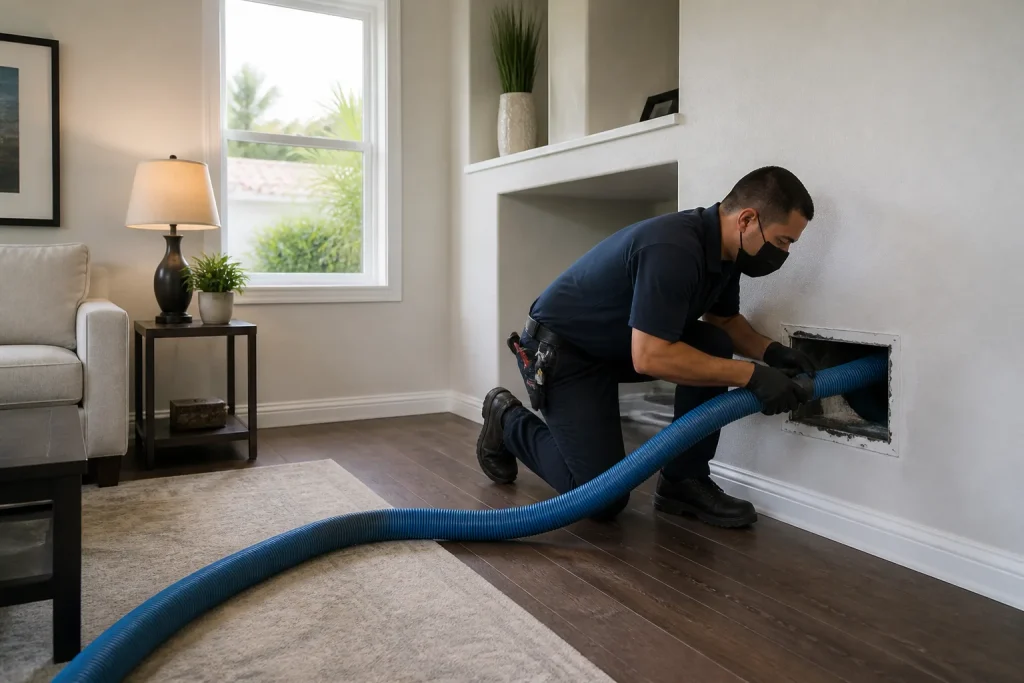
- Visual inspection of accessible ductwork. The technician should get into the attic, look inside the runs, and identify material type, age, and condition. Photos of what they found should be part of the report.
- Pressure or leakage testing. A measured leakage number tells you how serious the problem is. Without it, any recommendation is a guess.
- Written documentation. You should receive findings, a clear recommendation, and a flat price per system or per replacement section agreed before work starts. Quotes that shift once the technician is on site are the exact pattern behind this industry’s bait-and-switch reputation.
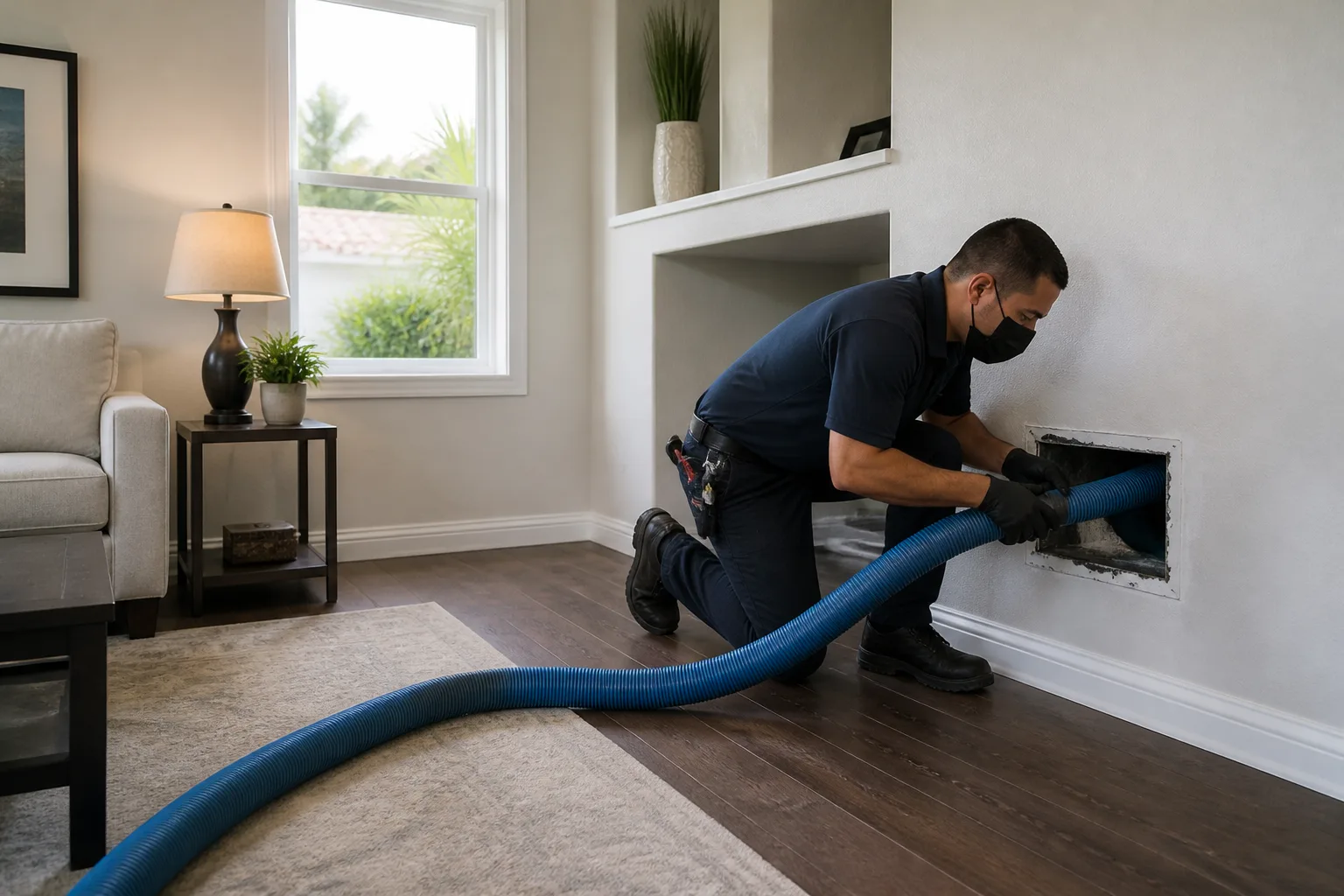
When it’s time to clean the ducts that are still serviceable, professional equipment matters. We use the Rotobrush rotary-brush system on every job, with Nikro equipment for HVAC cleaning, so the cleaning is thorough without being destructive to fragile duct work. That’s the balance a good assessment should protect.
When to call a pro
If you’re unsure which failure mode you’re looking at, or you’ve been told you need full replacement and want a second opinion, that’s the moment to loop in a specialist. A real diagnosis involves equipment, not just a flashlight and a sales pitch.
Related services in Anaheim Hills
If cleaning alone is the answer, our air duct cleaning service handles the full system. If the recommendation turns out to be repair, we also offer duct repair and sealing after the clean. And if the assessment points to the dryer vent or the HVAC unit itself, our dryer vent cleaning and HVAC cleaning services cover those too, so you’re not coordinating between three different contractors. For the full picture of what we do, see Air Duct Cleaning Anaheim Hills.
The Bottom Line
Repair beats replacement when the material is sound and the leaks are concentrated. Replacement beats repair when the ducts are shedding fibers, a flex run has collapsed, or leakage is spread through inaccessible runs above roughly 15%. Cleaning alone rarely fixes a compromised system – and in a hot Anaheim Hills attic, compromised happens faster than most homeowners expect. Get the visual inspection and the pressure test before you accept any recommendation, and get a flat price in writing before work starts.
If you’re in Anaheim Hills and need help deciding, Air Duct Cleaning Anaheim Hills offers free estimates – call (855) 526-8990. We answer 24/7. Fast dispatch from 7am to 7pm, Sunday through Friday. Our technicians have up to 13 years of experience with the same professional-grade Rotobrush and Nikro equipment on every job, and every estimate is free with a flat price per system agreed before work begins.
Frequently Asked Questions
Yes. If the duct board has begun to delaminate, aggressive brushing can dislodge more material than it removes. A qualified technician should test the surface by hand before cleaning and recommend partial replacement for any section that fails. In our experience, original 1970s-1990s duct board in Anaheim Hills homes is the most common case. Call (855) 526-8990 to schedule an assessment – estimates are free.
There’s no single cutoff, but leakage above roughly 15% is where sealing starts losing value relative to partial or full replacement – especially if the ducts are also degraded or the leaks are inaccessible. A proper diagnosis pairs the pressure test with a visual inspection. Call (855) 526-8990 for an exact quote on your system – estimates are free.
Partial replacement is often the better value when one or two branches are failing and the rest of the system holds pressure well. Full replacement earns its cost when the material has failed throughout or leakage is high and spread out. The right answer depends on the assessment, not the salesperson’s preference. Call (855) 526-8990 and we’ll walk you through what the numbers mean for your home – estimates are free.
Ask for before-and-after photos of your own ducts, not stock images. A technician should be able to show you what they found, what they cleaned, and what was replaced or sealed, with documentation tied to your address. That’s the standard we hold to on every job in Anaheim Hills. Call (855) 526-8990 if you’d like an estimate built that way – estimates are free.
Written by the team at Air Duct Cleaning Anaheim Hills.
Need Air Duct Cleaning Help?
Call Air Duct Cleaning Anaheim Hills - the local pro we connect you with is licensed and insured, here with fast help in Anaheim Hills.
(855) 526-8990